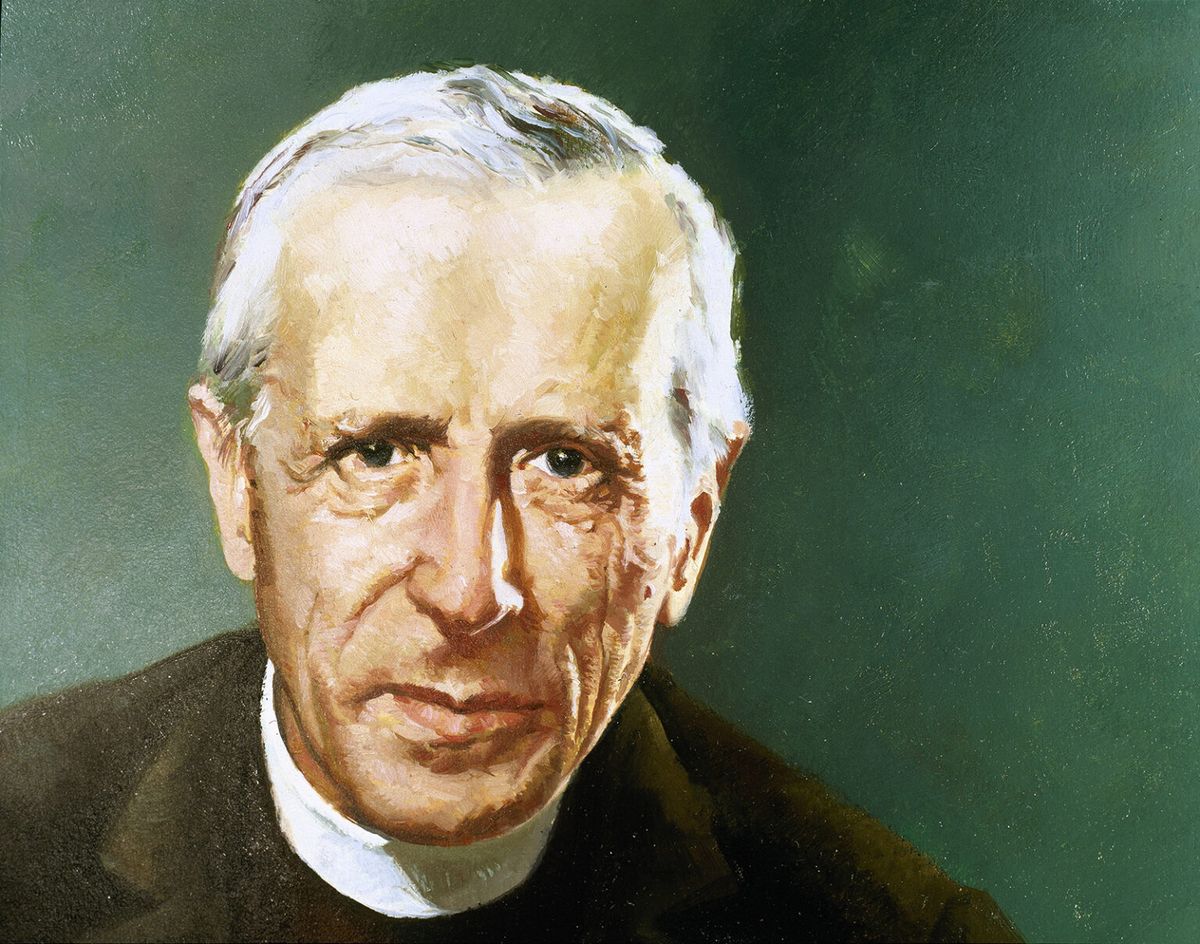
Pierre Teilhard de Chardin
Pierre Teilhard de Chardin (1881–1955)
Pierre Teilhard de Chardin was a French Jesuit priest, theologian, philosopher, and scientist whose groundbreaking ideas bridged the realms of faith and science. Born on May 1, 1881, in Orcines, France, Teilhard showed an early fascination with nature, which led him to pursue studies in both theology and geology. Ordained as a Jesuit priest in 1911, he simultaneously cultivated his passion for paleontology and evolutionary science.
Teilhard’s scientific contributions were significant. He participated in numerous paleontological expeditions, including the discovery of Peking Man in China, which advanced the understanding of human evolution. His deep scientific knowledge informed his theological and philosophical perspectives, leading to a vision of the universe as a dynamic, evolving creation that moves toward a divine culmination he called the "Omega Point."
In works like The Phenomenon of Man, Teilhard articulated his belief that evolution is not merely a biological process but a spiritual one, guided by God toward greater complexity, consciousness, and unity. This synthesis of evolutionary theory and Christian theology was controversial during his lifetime, leading the Catholic Church to restrict the publication of some of his writings.
Despite ecclesiastical challenges, Teilhard remained committed to his vision of faith as fully compatible with scientific discovery. He envisioned humanity as co-creators with God, participating in the unfolding of creation through love, creativity, and spiritual growth.
Teilhard de Chardin passed away on April 10, 1955, in New York City, but his ideas have continued to inspire thinkers across disciplines. Today, he is celebrated for his prophetic insights into the interconnectedness of all life, his profound integration of science and spirituality, and his enduring hope in humanity’s ultimate union with the divine. His legacy remains a powerful influence on theology, ecology, and the dialogue between faith and science.