Pastor: By grace, through Jesus, God calls us His children so that we might become more like Him, setting our hope on His grace, and living as holy people who fear the Lord and love one another. Whe...
Matthew 6:1-6, 16-21, Deuteronomy 6:4-9, Matthew 23:4, 5, 13-36, Mark 12:42, Luke 21:2, Isaiah 58:6, Joel 2:1-2, 12-17
AIM Commentary Ancient Lens What can we learn from the historical context? "Hear O Israel..." The Shema (Deuteronomy 6:4-9) commands the Israelites to love the Lord their God with h...
Colossians 1:15-16, Luke 9:23-24, Romans 7:18-19, 1 John 1:9, Hebrews 4:16, Psalm 51:10
Lord Jesus Christ, you are loving and merciful. Forgive us for being so captivated by Christmas that we forget that you, the little baby in the manger, grew up as the Lord over all creation. It is som...
Matthew 6:1-6, Deuteronomy 6:4-9, Matthew 23:4, 5, 13-36, Mark 12:42, Luke 21:2, Isaiah 58:6, Joel 2:1-2, 12-17
Ancient Lens What can we learn from the historical context? "Hear O Israel..." The Shema (Deuteronomy 6:4-9) commands the Israelites to love the Lord their God with heart, soul, and m...
This is one of Jesus’ most vivid parables. He paints a dramatic picture of two figures, with a twist to upend his hearer’s expectations. While the context of this passage involves the dynamics of an a...
This is one of Jesus’ most vivid parables. He paints a dramatic picture of two figures, with a twist to upend his hearer’s expectations. While the context of this passage involves the dynamics of an a...
Ancient Lens What can we learn from the historical context? A Hard Saying There are (at least) two leaps that Jesus’s listeners have to make here. One is the reality of the incarnation and the o...
Ancient Lens What can we learn from the historical context? A Hard Saying There are (at least) two leaps that Jesus’s listeners have to make here. One is the reality of the incarnation and the o...
Introduction Hard Sayings These hard sayings of Jesus come at the end of a section spanning two chapters (Luke 13:10-14:35). In it, Jesus’s actions and teachings are set in parallel structure: hea...
Philippians 2:6-8, John 1:10-11, Isaiah 53:3-4, Matthew 11:19, Mark 15:34, Isaiah 53:12, Luke 15:20-24, Revelation 7:13-14
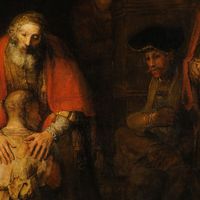
In this excerpt, the French monastic leader Frere Pierre Marie, shares an interpretation of Jesus as the true prodigal son—bringing all of us home with him: He, who is born not from human stock, or ...
Context: The Grumblers Jesus tells the three parables of Luke 15 to “the Pharisees and scribes” who were grumbling. Throughout Luke’s gospel account Jesus has been involved in controversy with the Ph...
Introduction Sometimes verses 1-4 are separated from 5-10 in preaching. N. T. Wright points out, however, that in both sections, the need for humility binds the passages together. A teacher must prac...
Context: The Grumblers Jesus tells the three parables of Luke 15 to “the Pharisees and scribes” who were grumbling. Throughout Luke’s gospel account Jesus has been involved in controversy with the Ph...
Luke 17:5-10, Luke 17:1-4, 1 Corinthians 6:19-20, John 15:15
Introduction Our lectionary text is inextricably linked with the five verses that precede it. For that reason, I’ll give a summary of verses 1-4. It’s possible the lectionary authors chose to separat...
Colossians 1:9-10, Acts 17:10-12, 2 Timothy 3:16-17, James 1:5, John 16:13, Psalm 119:105
Dear Lord and God, I thank and praise You for Your Word, the Holy Scriptures, and for the promise that Your Holy Spirit will guide me into all truth. Give me a teachable spirit so that I may learn all...
Introduction Hard Sayings These hard sayings of Jesus come at the end of a section spanning two chapters (Luke 13:10-14:35). In it, Jesus’s actions and teachings are set in parallel structure: hea...
I’ve been reading Donald Miller’s Searching for God Knows What . Miller took this point to an even further extreme. In his book, he tells a story about one occasion when he was speaking to a class at...
Discipleship on the Road Mark 10 is set along Jesus’ journey through Judea, on his way to Jerusalem. Along the way Jesus has a series of encounters with people who present very earthy and urgent issu...
Leader: Praise the Lord! People: I will give thanks to the Lord with my whole heart, in the company of the upright, in the congregation. Leader: Great are the works of the Lord. People: They are st...
Leader: Come, Let us worship. People: Teach us your way, O Lord, we will walk in your truth; unite our hearts to fear your name. Leader: We praise you, O Lord our God, with all our hearts: and we ...
Discipleship on the Road Mark 10 is set along Jesus’ journey through Judea, on his way to Jerusalem. Along the way Jesus has a series of encounters with people who present very earthy and urgent issu...
Ancient lens What's the historical context? Jesus' Strangest Tales Occasionally Jesus tells a parable that just doesn’t quite fit the framework of his teaching. Already in Luke we had...
O God, this day we thank you for your Book. For those who wrote it, for those who lived close to you, so that you could speak to them and so give them a message for their day and for ours; We thank ...
Ancient lens What's the historical context? Jesus' Strangest Tales Occasionally Jesus tells a parable that just doesn’t quite fit the framework of his teaching. Already in Luke we had...
Ancient Lens What can we learn from the historical context? Small Town Boys The towns in this area were small and close together, but they were not particularly large. As such, even a few thousa...
Ancient Lens What can we learn from the historical context? Small Town Boys The towns in this area were small and close together, but they were not particularly large. As such, even a few thousa...
Introduction Luke 16:1-13 isn’t an easy parable to preach on. It looks for all the world like Jesus is commending a guy who’s basically a dishonest rascal. You will sometimes see interpreters tying ...
Mark 10:42-45, Matthew 20:25-28, 1 Corinthians 1:12-13, 1 Timothy 4:12, John 7:16, Galatians 1:10, 2 Timothy 4:3-4, 2 Corinthians 4:5, John 3:30, 1 Corinthians 2:1-2
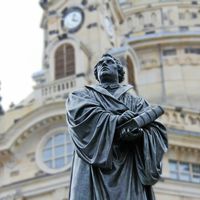
When Martin Luther discovered that some had begun calling the first Protestants “Lutherans,” he strongly objected. It is funny to think that some 500 years later, many are still known by his name: ...