1 Kings 3:16-28, Micah 6:8, Proverbs 3:5-7, Matthew 22:15-22 , James 1:5 , Psalm 119:105
Richard Mouw, the former president of Fuller Seminary and a professor of philosophy, shares an amusing anecdote from a lecture by the esteemed Catholic ethicist Charles Curran. During his talk, Curran...
* This story is debated among Galileo scholars, though most would agree that the story conveys Galileo’s unique approach to learning. Galileo Galilei was a man who dared to look beyond what othe...
The point of discourse is to learn with and from one another. I used to tell my students that at least 20 percent of what I was telling them was wrong, but I didn't know which 20 percent it was: I...
2 Samuel 7:18-19, Isaiah 66:2 , Matthew 23:11-12, Philippians 2:3-4 , Luke 18:9-14, Psalm 51:17
The priest Henri Nouwen learned humility on a mission trip to South America. He went expecting to pass on his wisdom to the poor and unenlightened. During his six-month stay, Nouwen concluded that a d...
Galatians 6:10, John 13:1-17, Luke 10:25-37, Colossians 3:14, 1 Corinthians 13:4-7, Philippians 2:3-4, 1 John 4:7-8
Is life not full of opportunities for learning love? Every man and woman every day has a thousand of them. The world is not a playground; it is a schoolroom. Life is not a holiday, but an education. A...
Cross-bearing is the long lesson of our mortal life. It is a part of God’s salvation, called sanctification. It is a lesson set before us every moment of every day.” “If life were an art lesson…we cou...
Matthew 20:26-28, Micah 6:8, Philippians 2:3, Ephesians 4:2, 1 Peter 5:5, Colossians 3:12, James 4:10
I begin with humility, I act with humility, I end with humility. Humility leads to clarity. Humility leads to an open mind and a forgiving heart. With an open mind and a forgiving heart, I see every p...
Ancient lens What’s the historical context? Wisdom Song It is not too far a stretch to imagine an eager young person sitting at the feet of a well-seasoned elder and receiving the words of thi...
Perhaps the history of the errors of mankind, all things considered, is more valuable and interesting than that of their discoveries. Truth is uniform and narrow; it constantly exists, and does not se...
When people fail, we are inclined to find fault with them, but if you look more closely, you will find that God had some particular truth for them to learn, which the trouble they are in is to teach t...
Revelation 21:4, Psalm 34:18, Psalm 147:3, 1 Peter 4:12-19, John 16:33, 2 Corinthians 1:3-4, 1 Peter 5:10, Romans 5:3-5, Romans 8:28
Books on the problem of pain divide neatly into two groupings. The older ones, by people like Aquinas, Bunyan, Donne, Luther, Calvin, and Augustine, ungrudgingly accept pain and suffering as God’s use...
Gracious Lord, like Nicodemus, we come to the word with many questions. Like the Pharisees, we can be captivated by correctness, intent on right answers. As we turn to your word, Spirit of God, do not...
The bottom line is this: never grow complacent. Never grow tired of learning. As soon as we stop learning we lose the capacity to grow and mature in our work and our relationships. This continual lear...
Matthew 18:15-17, Luke 15:11-32 , Hebrews 12:11, Genesis 18:19, Psalm 25:4
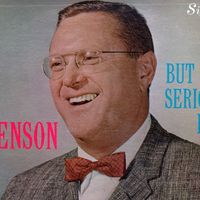
The late comedian Sam Levenson enjoyed sharing funny anecdotes about his childhood, especially his early school days. One of his favorite stories was about his first day of school, when his overly pro...
IDENTITY AND SUFFERING The key to understanding today’s readings lies in the first half of 1 Peter. Two themes dominate Peter’s encouragement to these early Christians: identity and suffering. Knowi...
Peter Drucker suggests that we should always sustain two streams of learning and self-improvement. And though he is speaking specifically about work and career, what he says is equally applicable whet...
James 1:22-24, Matthew 7:24-27, Colossians 3:16, 2 Timothy 3:16-17, Hebrews 5:12-14
I’m a huge advocate of catechisms, for example, having used this approach with my kids. I even wrote one. The strength of a catechism isn’t in memorizing the questions and answers of the catechism; th...
The prefrontal cortex is responsible for the success of the human species. It enables us to learn from our mistakes and make plans. When the PFC is healthy, we behave consistently in ways that enable ...
Ancient Lens What can we learn from the historical context? Paul’s Relationship to Philippi There is practically no debate that Philippians was written by Paul. This letter is an intimate portray...
On December 2, 1943, a German air raid in Italy sank over a dozen ships docked in port. Among them was an American vessel carrying over two thousand mustard gas bombs intended for the war. Soon, toxic...
1 Corinthians 3:2, Hebrews 5:12-14, Luke 10:25-26, Deuteronomy 6:7, James 1:22
[M]y husband, Nick, tells a story of when he was a teenager riding his bike with his friends, and his chain came off his bike. Nick took the bike to his dad, who said, “I'll fix it, you watch”. Hi...
The point of discourse is to learn with and from one another. I used to tell my students that at least 20 percent of what I was telling them was wrong, but I didn't know which 20 percent it was: I...
A Note of Understanding The Lectionary and the Liturgical Calendar Preaching from the lectionary isn’t always easy. When the assigned texts align with major moments in the liturgical calendar—Christ...
You know by instinct that it is impossible to “teach” democracy, or citizenship or a happy married life . . . They come, not from a course, but from a teacher; not from a curriculum, but from a human ...
Proverbs 16:18–19, 2 Chronicles 26:16–21 , Daniel 4:28–37, Luke 14:7–11, Philippians 2:3–8, Psalm 25:8–9
At eighteen, a self-assured Benjamin Franklin returned to Boston, the city he had fled just seven months earlier. Dressed in a fine new suit, with a watch on his wrist and a pocket full of coins, he p...