Benjamin Franklin
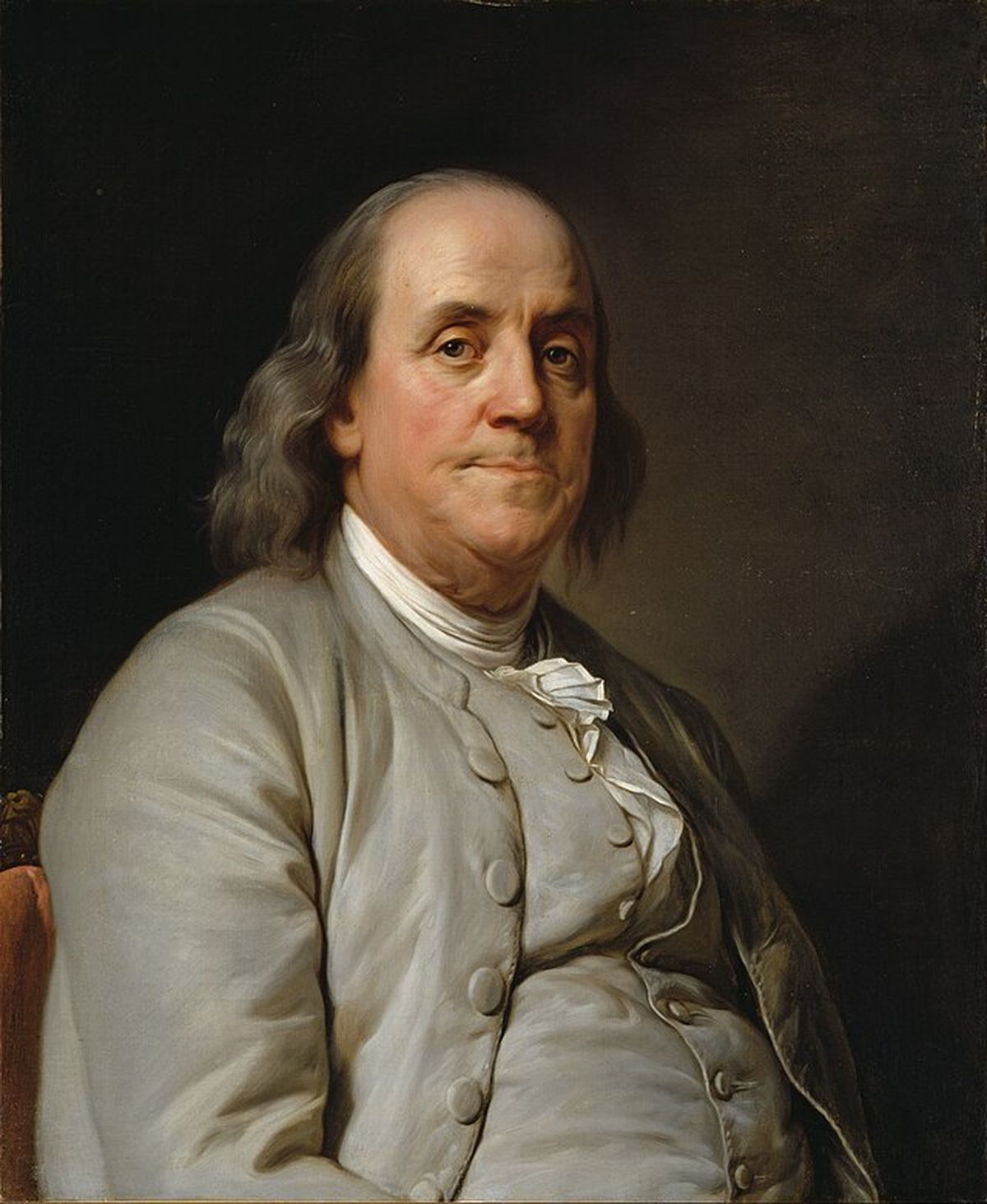
Benjamin Franklin (1706–1790) was one of the most influential figures in American history, known for his wide-ranging contributions as a statesman, scientist, inventor, writer, and philosopher. Born in Boston, Massachusetts, Franklin rose from humble beginnings to become one of the most prominent leaders of the American Enlightenment, playing a key role in the founding of the United States.
Franklin’s career spanned a diverse array of fields. As a scientist, he made groundbreaking discoveries, particularly in the study of electricity. His famous experiment with a kite and key in a thunderstorm led to the development of the lightning rod, a pivotal invention that helped protect buildings from lightning strikes. He also contributed to the understanding of electricity and energy through his work with electric charges and the invention of the Franklin stove, a more efficient heater.
In addition to his scientific achievements, Franklin was a talented writer and printer. His publication, Poor Richard’s Almanack, published annually from 1732 to 1758, offered practical advice, witty sayings, and moral aphorisms that became famous across the colonies. Franklin’s philosophical musings on self-improvement, virtue, and civic responsibility resonated deeply with the public.
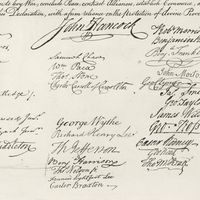
As a statesman, Franklin was integral to the American Revolution. He served as a diplomat in France, securing crucial support for the American cause, and was a signer of both the Declaration of Independence and the U.S. Constitution. His political work emphasized the importance of liberty, democracy, and the rights of individuals.
Benjamin Franklin's contributions to American society, from science to politics to culture, have left an indelible mark. His legacy continues to inspire generations in the pursuit of knowledge, freedom, and the betterment of society. Franklin’s life embodies the ideals of curiosity, ingenuity, and public service that remain central to the American spirit.