Isaiah 29:13, Judges 2:10-13 , 1 Samuel 8:4-9, Matthew 23:27-28 , 2 Timothy 3:1-5 , Psalm 10:4
Even though it’s now associated with him, Nietzsche didn’t coin the phrase God is dead. As the son of a Lutheran pastor, he would have heard that line in a Lutheran Holy Saturday hymn. And although...
In this excerpt, author David Zahl challenges the common belief that religion is “in decline.” He argues that while Westerners, particularly younger generations, may be distancing themselves from the ...
We have the same biblical texts that earlier generations of Christians thought their way through, of course, but our reflections are shaped by six unique factors. (1) Especially in the Anglo-Saxon wo...
The Church was the one institution whose mission depended on galvanizing attention; and through its daily and weekly offices, as well as its sometimes-central role in education, that is exactly what i...
The world that we enter in the book of Acts is the most modern in all the Bible by virtue of its urban identity. Most of the action occurs in the famous cities of the Greco-Roman world, not in the loc...
1 Kings 19:11-13, Ecclesiastes 5:1-2 , Isaiah 30:15, Luke 10:38-42 , Mark 1:35 , Psalm 46:10
The journalist Andrew Sullivan has some strong words of advice for the modern church, If the churches came to understand that the greatest threat to faith today is not hedonism but distraction, p...
Mark 8:36, Matthew 16:26, Romans 12:2, 1 Corinthians 1:26-31, Mark 4:18-19, Mark 10:43-44, Matthew 19:23-24, Matthew 6:19-21, 24-34, Luke 12:13-21, Luke 12:32-34, Mark 10:24-25, Hebrews 10:25
The defining problem driving people out is …just how American life works in the 21st century. Contemporary American life simply isn’t set up to promote mutuality, care, or common life. Rather, it is d...
In this short (and humorous) excerpt, author David Zahl shares a definition of the secular: Perhaps secular warrants its own explanation, though. My most immediate association comes from the belov...
Edward T. Hall likened the effects of culture to an iceberg. Some aspects of a culture are overt, in clear view above the waterline, so to speak. But most are hidden deep below the surface, forming th...
Genesis 11:1-9 , Jonah 1:4, Daniel 1:6 , Matthew 28:18-20, Acts 17:16-34, Psalm 2:
If one looks at the world scene from a missionary point of view, surely the most striking fact is that, while in great areas of Asia and Africa the church is growing, often growing rapidly, in the lan...
In one generation, the place of Christianity within culture dramatically shifted as we experienced what theologians and sociologists of religion call the “death of Christendom.” Christendom isn’t Chri...
Today, much of the church has gone in for theatrics, running a showboat instead of a lifeboat; staging a performance instead of living an experience; having a “form of godliness without the power ther...
One of the seductions that continues to bedevil Christian obedience is the construction of utopias, whether in fact or fantasy, ideal places where we can live the good and blessed and righteous life w...
The disastrous and widening cleavage between the Church and the Arts on the one hand and between the State and the Arts on the other leaves the common man with the impression that the artist is someth...
One key difference between much of the early church vs. the church of today (at least in the West) was the belief in, and regular experience of, miracles. As Joel Green, the noted professor and writer...
Culture is like gravity. We never talk about it, except in physics classes. We don’t include gravity in our weekly planning processes. No one gets up thinking about how gravity will affect their day. ...
The problem is not recognizing the importance of the individual. The problem is the glorification of the individual. When the individual self is glorified over the greater good of the community, right...
We have been so soaked in the individualism of modern Western culture that we feel threatened by the idea of our primary identity being that of the family we belong to-especially when the family in qu...
Titus 2:7-8, Jeremiah 2:4-9, Romans 12:21, Matthew 5:13-16, Genesis 41:
While there is a place for condemning, critiquing, consuming and copying culture, the primary posture Christ followers are to have in the world is as culture makers. In regard to history, the word cul...
Ephesians 1:9-10, Romans 13:11-12, Matthew 13:39-43, Revelation 22:6-7, Luke 21:24-28, 1 Corinthians 10:11, Psalm 98:7-9
Early Christian writing has the ends of the world upon it, hence its emphasis on fulfillment, fullness of time: the shape of the world-plot can now be seen.
Matthew 28:18-20, Acts 1:8, Acts 10:34-35, Galatians 3:28, Romans 1:16, John 4:21-24, Psalm 22:27-28
[Speaking of the early church] A cosmopolitan spirit grew, particularly in the cities, that transcended national barriers. Old tribal distinctions and identities were breaking down, leaving people rip...
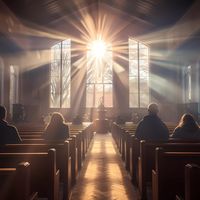
I was in London browsing one of the ubiquitous British tabloids and an advertisement for a new health club grabbed my attention. The picture was of a magnificent gothic church sanctuary that had been ...
James 1:27, Isaiah 1:17, Psalm 68:5, Matthew 25:34-40, 1 Timothy 5:3-4, Zechariah 7:9-10, Matthew 12:48-50, Romans 8:14-17, Luke 4:18, Acts 4:34-35, James 2:15-16
Christianity revitalized life in Greco-Roman cities by providing new norms and new kinds of social relationships able to cope with many urgent urban problems. To cities filled with the homeless and im...
Hebrews 13:16, 1 Peter 4:10, Luke 10:27, Romans 13:8-10, Galatians 5:14, 1 John 4:20, Matthew 22:37-40
Social responsibility becomes an aspect not of Christian mission only, but also of Christian conversion. It is impossible to be truly converted to God without being thereby converted to our neighbor.
The church is a community that exists because something has happened that makes the entire process of self-justification irrelevant. God’s truth and mercy have appeared in concrete form in Jesus and, ...
Genesis 18:1-8 , 2 Kings 4:1-7, Micah 6:8, Luke 10:25-37, Mark 10:45, Psalm 82:3-4
Leonard Sweet shares an interesting story in the introduction to Neil Cole’s book, Organic Church , about a parish pastor who lived in a Scottish village near Edinburgh called Davidson’s Mains. ...
God built into the creation a variety of cultural spheres, such as the family, economics, politics, art, and intellectual inquiry. Each of these spheres has its own proper "business" and nee...
Before Christians can say things about what the church ought to be, their first need is to say what the Church is, here and now amid its own failures and the questionings of the bewildered. Looking at...







![[Speaking of the early church] A](https://a-us.storyblok.com/f/1016915/1200x801/ed572a4861/the-early-church.jpg/m/200x200/smart)


![[Culture is] The collective programming](https://images.unsplash.com/photo-1544550285-bb77ca19c0e8?ixid=M3w1NzU0OTZ8MHwxfHNlYXJjaHwxfHxDdWx0dXJlfGVufDF8Mnx8fDE3MTA1MzQwNzR8MA&ixlib=rb-4.0.3&q=80&auto=compress&fit=crop&w=200&h=200)