Many of us presume that atheists and agnostics don’t think or care one bit for God. But this is not the case. Heinrich Böll, a German writer and devout Catholic, once joked, “I don’t like these atheis...
In an article entitled, What the New Atheists Don’t See , the British author Theodore Dalrymple shares his honest struggles with atheism. The subtitle of his article is fascinating, “To regret re...
Many have heard of the polymath and famous atheist Bertrand Russell (1872-1970), whose career as a public intellectual touched on a variety of disciplines, including philosophy (he is considered one o...
The atheist author Richard Dawkins, who wrote, “The universe, at the bottom, has no design, no purpose, no evil, and no other good. Nothing but blind, pitiless indifference. DNA neither knows nor care...
The test of a first-rate intelligence is the ability to hold two opposing ideas in the mind at the same time, and still retain the ability to function.
The Russian writer Leo Tolstoy describes a view (not his own view, because Tolstoy was a Christian) of the human person, based on a theory of reality he saw emerging in his day. It is a narrative that...
As a college student, I was returning to school one year on a Greyhound bus. One of the other passengers was a middle-aged man who seemed to be making the rounds, engaging various people in quiet conv...
The story is told of a farmer in a Midwestern state who had a strong disdain for “religious” things. As he plowed his field on Sunday morning, he would shake his fist at the church people who passed b...
If you’ve been around a kid who’s just learned to ask “why?”, it can be a bit much. You’ll be asked, “why is grass green?” “Why do birds fly?” “Why do I get hungry?” and much, much, more. Pa...
Psalm 37:7, Proverbs 19:2, Lamentations 3:25-26, 2 Peter 3:9, James 5:7-8, Ecclesiastes 3:1
In our culture slow is a pejorative. When somebody has a low IQ, we dub him or her slow. When the service at a restaurant is lousy, we call it slow. When a movie is boring, again, we complain that it’...
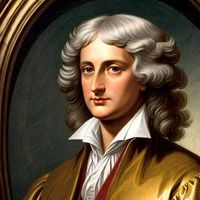
Sir Isaac Newton was one of the great scientists of all time. Most men of science today agree that his great book Principia is the greatest scientific book ever written. Yet of his achievemen...
Ecclesiastes 3:1-8, James 4:13-15, Matthew 24:42, Psalm 90:
Have you ever heard of "Stein’s Law"? Named after University of Virginia economics professor Herbert Stein, it states: "If something cannot go on forever, it will stop." Do you...
Isaiah 40:31, Ecclesiastes 3:1-8 , Matthew 11:28-30, Luke 10:38-42, Philippians 4:6-7, Psalm 131:1-2
[T]he old adage “it’s the journey, not the destination that matters most” is particularly true of modern pilgrimage. If the destination is the point, I can get to Santiago from anywhere in the world i...
Some while ago, I picked up a book in a second hand bookshop. It was an old, slightly faded paperback with what looked like an intriguing title: The God I Want. Published in the late 1960s, it was a c...
We delude ourselves into believing that if we can just get everything done, if we can only tie up all the loose ends, if we can even once get ahead of the crush, we will prove our worth and establish ...
Charles Darwin, known for his theory of natural selection, noticed that his later life included a “loss of happiness.” While he never acknowledged that it might have been related to his changing world...
Psalm 90:17, 1 Peter 3:3-4, James 1:10-11, Ecclesiastes 3:11, 2 Corinthians 4:18, Isaiah 40:7-8, 1 Samuel 16:7
Though beauty gives you a weird sense of entitlement, it's rather frightening and threatening to have others ascribe such importance to something you know you're just renting for a while.
Thomas Aquinas, the famous medieval theologian, created one of the greatest intellectual achievements of Western civilization in his Summa Theologica. It’s a massive work: thirty-eight treatises, thre...
Exodus 20:8–10, 1 Kings 19:11–12, Ecclesiastes 3:1, Mark 6:31, Matthew 11:28–29, Psalm 23:2–3
People in a hurry never have time for recovery. Their minds have little time to meditate and pray so that problems can be put in perspective. In short, people in our age are showing signs of physiolog...
Isaiah 43:19, Song of Solomon 4:7, Philippians 4:8, 2 Corinthians 4:16, Ecclesiastes 3:11, Psalm 147:3, Isaiah 61:3
If the too obvious, too straight branches of Truth and Good are crushed or amputated and cannot reach the light—yet perhaps the . . . unexpected branches of Beauty will make their way through and soar...
Our family is radical, but we are definitely not Amish—although we love to eat the fruit, vegetables, meat, and cheese produced by our Amish neighbors forty miles away in Lancaster County, Pennsylvani...
As I have worked to clarify my calling, I have learned to pay attention to my energy levels in response to different activities. If I experience a particular activity as being inordinately draining, I...
Job 38:1-7, Ecclesiastes 3:11, Genesis 32:22-32, Luke 1:26-38, Matthew 16:13-17, Psalm 8:3-4
It is as if in creating us God asked a question, and in awakening us to contemplation He answered the question, so that the contemplative is at the same time, question and answer.
“No, don’t! Don’t dig up the past! Dwell on the past and you’ll lose an eye.” But the proverb goes on to say: “forget the past and you’ll lose both eyes.”