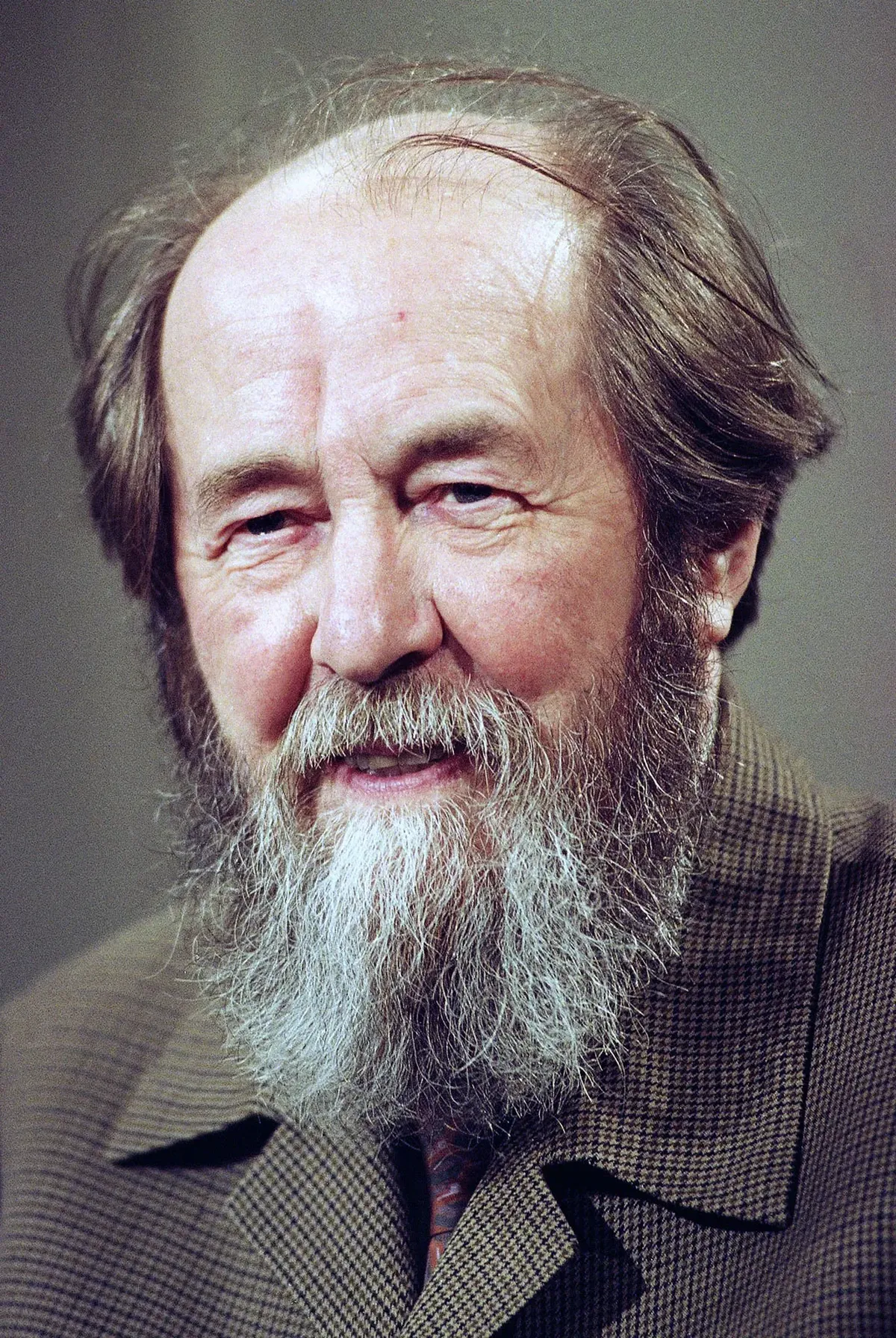
Aleksandr I. Solzhenitsyn
Aleksandr I. Solzhenitsyn (1918–2008) was a renowned Russian writer, dissident, and Nobel laureate whose works exposed the brutal realities of life under Soviet totalitarianism. Born in Russia to a middle-class family, Solzhenitsyn initially pursued a career in mathematics and physics. However, his life took a dramatic turn during World War II, when he was arrested for criticizing Joseph Stalin in a letter to a friend. He was sentenced to eight years in a labor camp, a harsh experience that would shape his literary career and political views.
Solzhenitsyn’s most famous work, One Day in the Life of Ivan Denisovich (1962), was the first major literary account of the Soviet Gulag system, offering a stark portrayal of the suffering and resilience of prisoners in forced labor camps. The novella brought global attention to the Soviet regime's repression and helped spark international criticism of the government's human rights abuses. His subsequent works, such as The Gulag Archipelago (1973), a monumental three-volume chronicle of the Soviet prison system, further cemented his reputation as a voice for the oppressed.
Throughout his career, Solzhenitsyn remained deeply critical of the Soviet government and its authoritarian policies. His works were often censored in the Soviet Union, and in 1974, he was exiled for his outspoken criticism of the regime. He spent years living in the West, where he continued to write and speak out against totalitarianism. His return to Russia in 1994 marked the beginning of a new chapter in his life, as he became involved in the political and spiritual revival of post-Soviet Russia.
Solzhenitsyn’s legacy as a literary giant and human rights advocate endures. His works remain powerful testimonies to the resilience of the human spirit in the face of oppression, and his life stands as a testament to the importance of truth, freedom, and moral courage.