1 Corinthians 12:8-12, John 1:, John 17:18, Philippians 2:6-11, 1 John 1:7, Romans 8:1, Colossians 1:13-14
The Cave One of the most famous passages in Plato's Republic is his "Allegory of the Cave," which is found at the beginning of book seven . Socrates imagines the human condition al...
Isaiah 9:6, Philippians 2:6-7, 1 Corinthians 1:27-29, Luke 2:10-12, Micah 5:2, Matthew 2:1-2, 11, John 1:14, Isaiah 52:2-3, John 18:36
Politicians compete for the highest offices. Business tycoons scramble for a bigger and bigger piece of the pie. Armies march and scientists study and philosophers philosophise and preachers preach an...
Matthew 5:48, 1 John 3:2-3, Galatians 5:16-17, Philippians 3:13-14, Colossians 3:1-2, Ephesians 4:22-24
The scholastics used to say: Homo non proprie humanus sed superhumanus est —which means that to be properly human, you must go beyond the merely human.
1 Samuel 16:7, Proverbs 11:3, Matthew 5:8 , Philippians 4:8, Psalm 15:1-2
Bernard de Fontenelle (1657–1757), was a French author and philosopher, and was once engaged in conversation with the “Sun King”, Louis XIV. Louis began expressing his skepticism about the existence...
1 Corinthians 13:2, James 2:19-20, 1 Corinthians 8:1-2, Ecclesiastes 1:18, 1 Corinthians 2:5, Philippians 3:10, Matthew 7:21, 24-27, James 1:22
The Oxford scholar and apologist C. S. Lewis... once closed a lecture to a group of apologists like this: I have found that nothing is more dangerous to one’s own faith than the work of an apologis...
1 Timothy 6:6-8, Proverbs 15:16, Matthew 6:19-21, Philippians 4:11-13, John 6:
The story is told of Socrates walking through the market in Athens, with its groaning abundance of options, and saying to himself, “Who would have thought that there could be so many things that I can...
A friend of mine, lecturing in a theological college in Kenya, introduced his students to “The Quest for the Historical Jesus.” This, he said, was a movement of thought and scholarship that in its ear...
2 Corinthians 12:2-10, Philippians 2:7-8, John 1:11, John 14:2-3
Inexpressible Things This chapter of Paul’s Corinthian correspondence is rich indeed, revealing so much about Paul and his relationship to the Corinthian church, a church which he himself founded. Bu...
Matthew 22:37-39, 1 Corinthians 8:1-3, Ezekiel 36:26-27, Colossians 1:9-10, Philippians 3:10-14, James 1:22, John 14:21
In a journal entry by the Danish Philosopher Søren Kierkegaard, the great existentialist philosopher describes the importance not simply of grasping the truth of the Christian faith, but having the tr...
Paul give us an excellent example of what looking at people from a worldly point of view looks like in Philippians chapter 3: If someone else thinks they have reasons to put confidence in the flesh, ...
Colossians 3:12, Romans 12:3, 1 Peter 3:8, Proverbs 22:4, James 4:6, Philippians 2:5-8, Luke 18:14
In the Greco-Roman world of Paul’s day, humility was a despised trait. They viewed it as a sign of weakness. And our culture today is no different from that world of two thousand years ago. Maybe it’s...
Traditional The peace of God, which passeth all understanding, keep your hearts and minds in the knowledge and love of God, and of his Son Jesus Christ our Lord; and the blessing of God Almighty, th...
Ancient Lens What can we learn from the historical context? Philippian Joy During Division and Persecution For an in-depth description of the context of Paul’s letter to the Philippians, see last...
Ancient Lens What can we learn from the historical context? Paul’s Relationship to Philippi There is practically no debate that Philippians was written by Paul. This letter is an intimate portray...
The challenge each of these faced in their deconstruction—and what we may face—is walking the tightrope between becoming our own person and honoring our past. In The Homeless Mind , sociologist P...
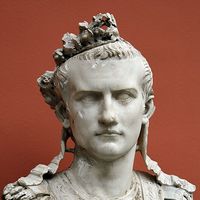
During each full moon, believing himself equal to the Roman gods, the Roman emperor Caligula would summon the moon goddess to share his bedchamber. When he asked Aulus Vitellius—a member of the Roman ...
Context of Galatians I still remember my intro to New Testament class in college and the professor discussing Paul’s letter to the Galatians. All of Paul’s other letters begin with words of adoration...
Matthew 5:9, Colossians 4:6, Proverbs 17:27, Ecclesiastes 3:7, 1 Peter 3:15, Philippians 2:3
In his book, Soul Keeping, pastor John Ortberg describes his mentorship by Dallas Willard early in his ministry. The following vignette occurred while Willard was teaching a philosphy course at the Un...
Theophan the Recluse…is well recognized in Eastern Orthodoxy, specifically the Russian Orthodox tradition. Theophan was a complex and intriguing personality, but today we know him mostly because of hi...
In his poem Cocktail Party , T. S. Eliot captures a fundamental truth about human nature and the source of much hurt in the world. People’s actions are rarely driven by outright malice—intended t...
Jeremiah 29:13, Psalm 63:1-4, 1 Samuel 3:, Colossians 3:16, Philippians 4:8, Matthew 22:37-38
To love God intellectually is to become a student of God—a student who really takes an interest in God. Have you ever noticed that a fair number of Christians are not particularly interested in God? S...
Ancient Lens What can we learn from the historical context? Broader Context of Philippians Paul is concerned that Judaizers (those that require Christians to follow the Torah) are going to corrup...
Ancient Lens What can we learn from the historical context? A letter of friendship Paul’s letter to the Philippians is from Paul and his companions to the saints in Philippi. It is a letter fro...
The recognition of humanity's flawed nature is not exclusive to Christianity. Aristotle, in his work Ethics , compares human nature to a warped piece of wood. To rectify this warp, a skilled ...