Philippians 2:5-8, Luke 2:6-7, Isaiah 53:2-3, John 13:4-5, Hebrews 2:14-17, Luke 22:27, Mark 10:42-45
Humble. Before Jesus, almost no pagan author had used “humble” as a compliment. Yet the events of Christmas point inescapably to what seems like an oxymoron: a humble God. The God who came to earth ca...
Myself unholy, from myself unholy to the sweet living of my friends I look—eye-greeting doves bright-counter to the rook, fresh sand to salt sand-teasing waters shoaly:—and they are purér, but alas! n...
Isaiah 43:19, Song of Solomon 4:7, Philippians 4:8, 2 Corinthians 4:16, Ecclesiastes 3:11, Psalm 147:3, Isaiah 61:3
If the too obvious, too straight branches of Truth and Good are crushed or amputated and cannot reach the light—yet perhaps the . . . unexpected branches of Beauty will make their way through and soar...
Matthew 6:24, 1 Kings 3:1-15, Luke 10:38-42, Philippians 3:7-8, Colossians 3:2, 1 John 2:15-17
For though [something] be good, it may be loved with an evil as well as with a good love: it is loved rightly when it is loved ordinately; evilly, when inordinately.
Where there’s humility there is majesty; where there’s weakness, there’s might; where there is death, there’s life. If you want to get these things don’t disdain those.
Philippians 4:8, Exodus 32:, Ecclesiastes 12:13, Matthew 19:16-30, Proverbs 4:23, Romans 12:2, 1 John 2:15-17
Orwell feared we would become a captive culture. Huxley feared that we would become a trivial culture. . . . Orwell feared that what we hate will ruin us. Huxley feared that what we love will ruin us.
Matthew 23:12, Romans 12:3, 1 Peter 5:5, Daniel 4:37, Philippians 2:3-4
One of the great ironies of sin is that when human beings try to become more than human beings, to be as gods, they fall to become lower than human beings. To be your own God and live for your own glo...
John 10:17-18, Philippians 2:8, 1 Corinthians 1:18, Hebrews 12:2, Colossians 2:15, 1 Peter 3:18
He, the Life of all, our Lord and Saviour, did not arrange the manner of his own death lest He should seem to be afraid of some other kind. No. He accepted and bore upon the cross a death inflicted by...
I remember playing a game as a child in which we would bend one knee and grab our foot behind us and then try to race—limping, stumbling and falling over as we struggled across the grass toward a fini...
In this beautiful poem by the English Divine John Donne, our nature as both redeemed and still sinful is eloquently described: We think that Paradise and Calvary, Christ’s Cross and Adam’s Tree, ...
When he found himself desiring to be treated as one of the pigs, he realized he was not a pig but a human being, a son of his father. This realization became the basis for his choice to live instead o...
2 Timothy 2:12, James 1:2-4, Matthew 5:11-12, Philippians 1:29, Romans 8:18, 2 Corinthians 4:17, John 15:20
Nevertheless, what was shameful, even odious, to the critics of Christ, was in the eyes of his followers most glorious. They had learnt that the servant was not greater than the master, and that for t...
1 John 4:10-11, John 13:1-17, Romans 12:9-10, John 15:12-13, Philippians 2:3-4, 1 Corinthians 13:4-7
Love seeketh not Itself to please, Nor for itself hath any care; But for another gives its ease, And builds a Heaven in Hell’s despair. So sung a little Clod of Clay, Trodden with the cattle’s feet; B...
Matthew 16:24-25, Philippians 1:21, Romans 8:18, Matthew 23:12, James 4:10, Psalm 23:4
Lord, high and holy, meek and lowly, Thou hast brought me to the valley of vision, where I live in the depths but see thee in the heights; hemmed in by mountains of sin I behold thy glory. Let me lear...
Ephesians 5:31-33, Matthew 19:4-6, Romans 8:28, Proverbs 22:1, 1 Timothy 3:7, Titus 2:7-8, Philippians 2:15, 1 Peter 2:12, Galatians 6:4-5, Daniel 1:17-21
While movies and novels often present stories of a budding love interest willing to give up everything for “true love” (Romeo and Juliet, for example), the renowned poet, and later clergyman, John Don...
Proverbs 22:1, Luke 16:10, Philippians 2:4, Romans 12:10, Psalm 15:2
In his book A Better Way to Think about Business, the late business philosopher Robert Solomon, a student of business jargon, speaks of having been struck by the imagery that peppers many [business] p...
Matthew 5:48, 1 John 3:2-3, Galatians 5:16-17, Philippians 3:13-14, Colossians 3:1-2, Ephesians 4:22-24
The scholastics used to say: Homo non proprie humanus sed superhumanus est —which means that to be properly human, you must go beyond the merely human.
Kevin Vanhoozer draws on 1 Corinthians 4 to argue powerfully for reading and teaching the Bible as drama. As Paul talks about his apostolic ministry, he says this: “For, I think, God has exhibite...
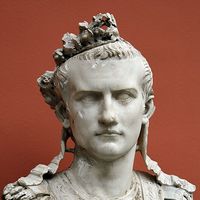
During each full moon, believing himself equal to the Roman gods, the Roman emperor Caligula would summon the moon goddess to share his bedchamber. When he asked Aulus Vitellius—a member of the Roman ...
John 14:2-3, Revelation 21:4, Revelation 22:1-2, Matthew 25:34, 1 Corinthians 2:9, Philippians 3:20-21
No sign that ever was given To faithful or faithless eyes Showed ever beyond clouds riven So clear a paradise. Earth’s creeds may be seventy times seven And blood have defiled each creed But if such b...
1 Timothy 6:6-8, Proverbs 15:16, Matthew 6:19-21, Philippians 4:11-13, John 6:
The story is told of Socrates walking through the market in Athens, with its groaning abundance of options, and saying to himself, “Who would have thought that there could be so many things that I can...
Genesis 22:1-14 , Daniel 3:16-28 , Esther 4:14-16 , Philippians 1:20-24 , Luke 9:23-25 , Psalm 31:14-15
In Four Quartets , T. S. Eliot writes that “any action is a step to the block.” He means that our actions always draw us closer to death, and in that sense every action we take is a wager of our ...
Colossians 1:20, Ephesians 2:10, John 12:32, 1 Peter 2:24, Philippians 1:6
Every cross adorning a church is in itself a sermon—a sermon proclaiming that if Christ can transform the Roman instrument of execution into a thing of beauty, there is hope that in Christ all things ...



![For though [something] be good, it may](https://a-us.storyblok.com/f/1016915/1200x800/d96dc3a9e0/love.jpg/m/200x200/smart)





![[I]f we chose to project the human](https://images.unsplash.com/photo-1571984269640-474565658a7f?ixid=M3w1NzU0OTZ8MHwxfHNlYXJjaHwxM3x8aHVtYW4lMjB8ZW58MHwwfHx8MTczODMzNzAwMnww&ixlib=rb-4.0.3&q=80&auto=compress&fit=crop&w=200&h=200)