John Donne
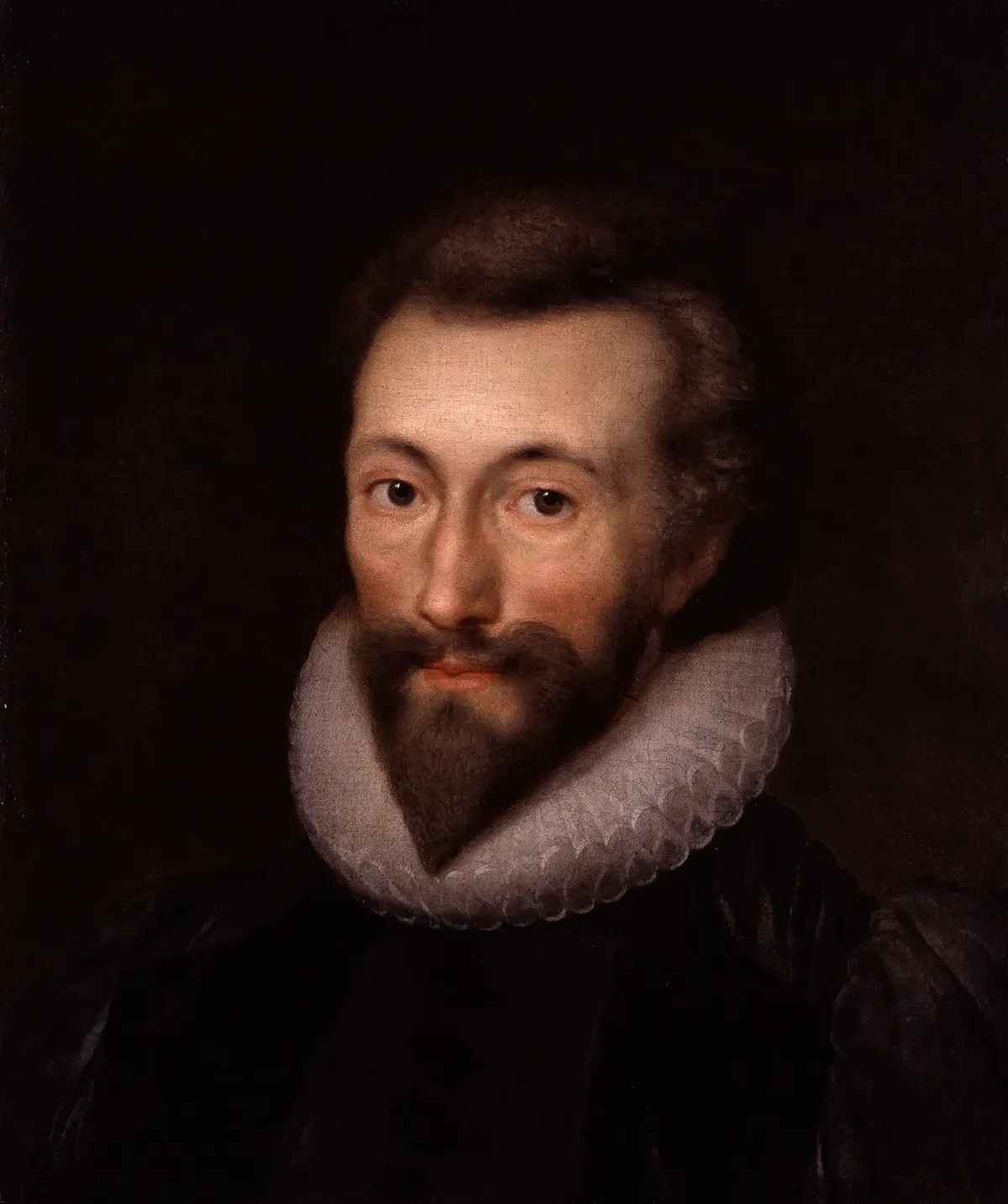
John Donne (1572–1631) was a renowned English poet, preacher, and theologian, widely regarded as one of the most significant figures in English literature. His work traverses a wide range of themes, from love and spirituality to death and divine judgment, and he is known for his profound exploration of the human condition and the divine.
Donne was born into a Catholic family during a time of religious turmoil in England. His early education was influenced by his religious heritage, although he later converted to Anglicanism. Donne’s early years were marked by a rebellious spirit and a career in law before he eventually turned to writing and ministry. He was ordained as an Anglican priest in 1615, and much of his later work reflects his spiritual journey and the theological insights he gained through his ministry.
Donne's poetry is famous for its intellectual rigor, complex metaphors, and dramatic intensity. His early poems, often concerned with themes of love, seduction, and personal longing, are marked by wit and boldness. His later works, particularly his religious poems and sermons, reveal a more contemplative and reflective style, grappling with existential concerns, death, and the nature of God. His Holy Sonnets, a series of 19 poems that reflect his spiritual anxieties and quest for divine grace, are among his most well-known works.
In addition to his poetry, Donne is celebrated for his powerful sermons, which combine deep theological insights with eloquent prose. His skillful oratory made him a sought-after preacher in the Anglican Church, where he served as Dean of St. Paul’s Cathedral in London until his death.
Donne’s legacy endures through his rich body of work, which continues to captivate readers with its profound emotional depth, intellectual complexity, and exploration of faith, love, and mortality.