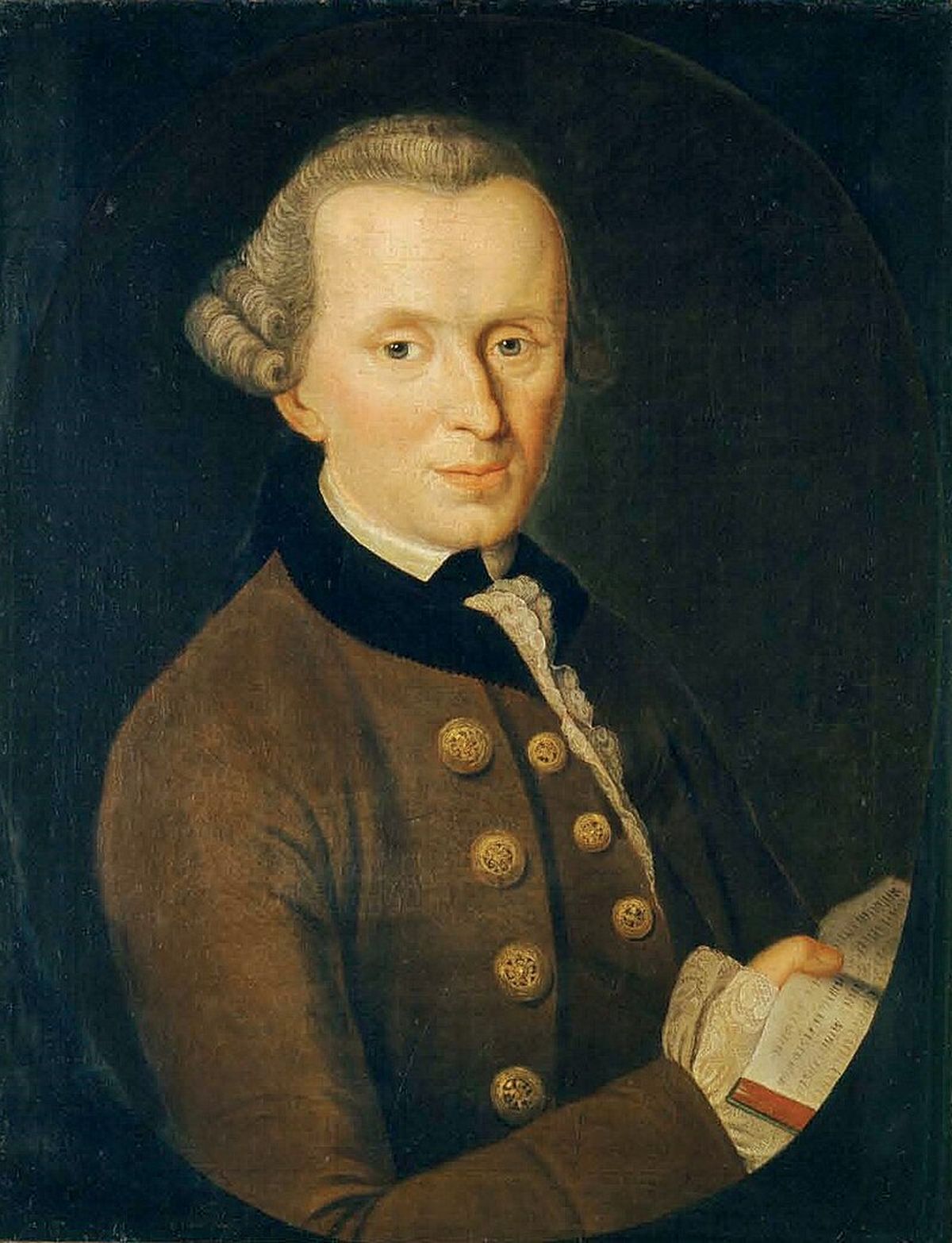
Immanuel Kant
Immanuel Kant (1724–1804) was a German philosopher and one of the most influential thinkers in Western philosophy. Born in Königsberg (now Kaliningrad, Russia), Kant spent his entire life in his hometown, where he developed groundbreaking ideas that shaped modern thought in ethics, metaphysics, epistemology, and aesthetics.
Kant's most famous work, Critique of Pure Reason (1781), addresses the limits and capacities of human understanding. In it, he explores how knowledge arises from the interplay between sensory experience and the mind’s innate structures. This work introduced his "Copernican Revolution" in philosophy, arguing that the mind actively shapes our experience of reality, rather than passively receiving it.
In ethics, Kant’s Groundwork for the Metaphysics of Morals (1785) and Critique of Practical Reason (1788) outline his concept of the categorical imperative, a universal moral law grounded in reason and autonomy. His ethical philosophy emphasizes duty and the inherent worth of individuals, forming the foundation for modern deontological ethics.
Kant’s contributions extend to political philosophy, where he argued for perpetual peace and the establishment of international cooperation, ideas that influenced the development of democratic principles and international law. In aesthetics, his Critique of Judgment (1790) examined the nature of beauty, art, and the sublime.
Kant's meticulous lifestyle, marked by his unwavering daily routine, mirrored the precision of his thought. Despite rarely traveling, his ideas transcended boundaries, shaping debates in philosophy, science, and theology for generations.
Immanuel Kant’s profound insights into the nature of human reason, morality, and freedom have made him a central figure in the history of philosophy. His legacy endures as a cornerstone of Enlightenment thought, offering a framework for understanding the relationship between knowledge, ethics, and the human condition.


