Mark 12:37, Matthew 19:24, Matthew 7:5, Mark 3:25, Mark 7:27, Mark 8:15, Luke 15:11–32, Luke 10:25–37, Luke 18:9–14-, 25:31–46
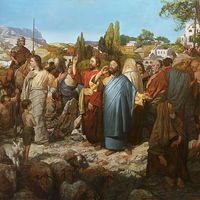
One of my daughters has been singing a song about Jesus that contains the line “Jesus was a story-tellin’ man.” When I first heard that line it seemed a bit flip, as so many contemporary Christian son...
Jesus showed his solidarity with the poor through his teaching, parables and lifestyle. It is no coincidence that in his very first recorded message he referenced the poor… Imagine God incarnate makin...
Mark 8:35-36, Mark 10:25, Matthew 19:16-26, Luke 18:18-29
Those not familiar with ancient Greek philosophy may be surprised to find deep resonance with the teachings of Jesus. When on trial for his life, the 70-year-old Socrates pugnaciously responded that,...
Matthew 13:, Mark 4:1-20, Luke 8:4-15, Mark 4:30-32, Matthew 13:47-50, Luke 18:1-8, Matthew 13:44
Parables were the means Jesus used most frequently to explain the kingdom of God and to show the character of God and the expectations that God has for humans.
Philippians 2:6-8, John 1:10-11, Isaiah 53:3-4, Matthew 11:19, Mark 15:34, Isaiah 53:12, Luke 15:20-24, Revelation 7:13-14
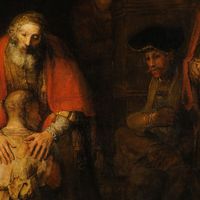
In this excerpt, the French monastic leader Frere Pierre Marie, shares an interpretation of Jesus as the true prodigal son—bringing all of us home with him: He, who is born not from human stock, or ...
Isaiah 9:6-7, Philippians 2:9-11, Mark 1:16-20, Matthew 11:28-30, John 10:10
H.G. Wells, himself an atheist, makes this point about the nature of greatness as it relates to Jesus: A historian like myself, who doesn’t even call himself a Christian, finds the picture centering...
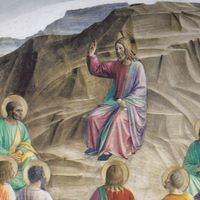
The Sermon on the Mount is probably the best-known part of the teaching of Jesus, though arguably it is the least understood, and certainly it is the least obeyed. It is the nearest thing to a manifes...
John 14:6, Isaiah 55:8-9, Matthew 9:10-13, John 18:36, Luke 19:1-10
With a certain oversimplification we can trace easily enough the three options open to Jews in Jesus’ day. … First, the quietist and ultimately dualist option, taken by the writers of the Dead Sea Scr...
Matthew 13:, Exodus 14:21-31, Daniel 3:13-30 , 1 Kings 18:20-40, Luke 15:11-32, Psalm 23:
In the second century before Christ the great rival to Roman power in the Mediterranean world was Carthage, the Phoenician city-state located on the north African coast. It had been founded in 822 B.C...
Matthew 6:1-6, Deuteronomy 6:4-9, Matthew 23:4, 5, 13-36, Mark 12:42, Luke 21:2, Isaiah 58:6, Joel 2:1-2, 12-17
Ancient Lens What can we learn from the historical context? "Hear O Israel..." The Shema (Deuteronomy 6:4-9) commands the Israelites to love the Lord their God with heart, soul, and m...
Matthew 5:20, Romans 14:17, Luke 17:20-21, Matthew 28:18-20, Philippians 2:14-15
T. S. Eliot once described the current human endeavor as that of finding a system of order so perfect that we will not have to be good. The way of Jesus tells us, by contrast, that any number of syste...
There’s a quote by H. Richard Niebuhr that I believe is absolutely true. “The great Christian revolutions,” he argued, “come not by the discovery of something that was not known before. They happen w...
Exodus 18:13-24 , Nehemiah 6:1-4, Ruth 1:16-17 , Matthew 6:24, Luke 10:38-42, Psalm 127:1-2, Luke 14:16-23
Jesus’ parable [of the banquet in Luke 14:16-23] makes it clear that there are business and career invitations . Some people had real estate that demanded attention, and others had invested in ox...
Exodus 34:29-35, Isaiah 60:1-3, Ezekiel 1:26-28, John 1:4-5, 14, Matthew 17:1-2, Psalm 104:1-2, John 8:12
In dictionaries, definitions of glory use words like radiance, splendor, luster, majesty, brilliance, resplendence, grandeur, and effulgence. It is notable that many of these words are associated with...
Matthew 6:1-6, 16-21, Deuteronomy 6:4-9, Matthew 23:4, 5, 13-36, Mark 12:42, Luke 21:2, Isaiah 58:6, Joel 2:1-2, 12-17
AIM Commentary Ancient Lens What can we learn from the historical context? "Hear O Israel..." The Shema (Deuteronomy 6:4-9) commands the Israelites to love the Lord their God with h...
Mark 4:26-34, Matthew 13:31-32, Luke 13:18-19, Matthew 13:33, Luke 13:20-21, Matthew 13:44, Matthew 13:45-46
If we only had eyes to see and ears to hear and wits to understand, we would know that the Kingdom of God in the sense of holiness, goodness, beauty is as close as breathing and is crying out to born ...
Matthew 16:21-28, Genesis 4:1-11, Psalm 62:12, Proverbs 24:12, Luke 9:51
At the Turning Point Following Simon Peter’s climatic height of his faith, his confession that Jesus was the “Messiah, the Son of the living God,” Peter now exemplifies our humbling, human tendency t...
Matthew 22:15-22, Matthew 20:18-19, Matthew 22:18-20, Acts 5:29, Matthew 20:25-28
A Notoriously Difficult Passage This passage includes one of the most iconic and quotable of Jesus’s interactions with his contemporary opponents. Jesus deftly steps out of a trap set for him by the ...
Matthew 14:13-21, Matthew 13:55, Matthew 14:2, Matthew 16:16, Matthew 17:1-13, Isaiah 55:1, John 6:1-15, Matthew 13:31, 2 Kings 4:42-44, Matthew 26:26, Matthew 8:null, Galatians 6:2
Context The feeding of the 5,000 in Matthew occurs within a section where questions of Jesus’ identity are heightened. Two incorrect answers of who Jesus truly is are given in 13:55 (“isn’t this the...
Matthew 14:13-21, Matthew 13:55, Matthew 14:2, Matthew 16:16, Matthew 17:1-13, Isaiah 55:1, John 6:1-15, Matthew 13:31, 2 Kings 4:42-44, Matthew 26:26, Matthew 8:null, Galatians 6:2
Preaching Commentary Context The feeding of the 5,000 in Matthew occurs within a section where questions of Jesus’ identity are heightened. Two incorrect answers of who Jesus truly is are given in...
Matthew 25:15-22, Matthew 20:18-19, Matthew 21:45-46, Matthew 22:18-20, Exodus 20:4, Acts 5:29, Matthew 20:25-28
Preaching Commentary A Notoriously Difficult Passage This passage includes one of the most iconic and quotable of Jesus’s interactions with his contemporary opponents. Jesus deftly steps out of a t...
John 18:1-19:42, John 18:1-40, John 19:1-42, Matthew 27:24, Psalm 22:15, Psalm 69:21, Matthew 25:21
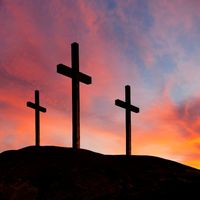
Preaching Commentary Introduction The lectionary text from John is an exceedingly long passage, but covers the main events that we commemorate on Good Friday. For that reason, I am going to break u...
Matthew 16:21-28, Luke 9:51, Genesis 4:1-11, Psalm 62:12, Proverbs 24:12
Preaching Commentary At the Turning Point Following Simon Peter’s climatic height of his faith, his confession that Jesus was the “Messiah, the Son of the living God,” Peter now exemplifies our hum...
John 18:1-19:42, Exodus 4:13-15, Romans 5:null, Matthew 27:24, Psalm 22:15, Psalm 69:21, Matthew 25:21
Preaching Commentary The lectionary text from John is an exceedingly long passage, but covers the main events that we commemorate on Good Friday. For that reason, I am going to break up the text int...
Luke 24:1-12, Matthew 2:11, Matthew 16:21-22, 1 Corinthians 15:17, Ephesians 3:20-21
The resurrection was inconceivable for the first disciples, as impossible for them to believe, as it is for many of us today. Granted, their reasons would have been different from ours. The Greeks did...
Luke 24:1-12, Matthew 2:11, Matthew 16:21-22, 1 Corinthians 15:17, Ephesians 3:20-21
Preaching Commentary The resurrection was inconceivable for the first disciples, as impossible for them to believe, as it is for many of us today. Granted, their reasons would have been different f...
John 18:1-19:42, John 18:1-40, John 19:1-42, Matthew 27:24, Psalm 22:15, Psalm 69:21, Matthew 25:21
The lectionary text from John is an exceedingly long passage, but covers the main events that we commemorate on Good Friday. For that reason, I am going to break up the text into manageable chunks. I ...