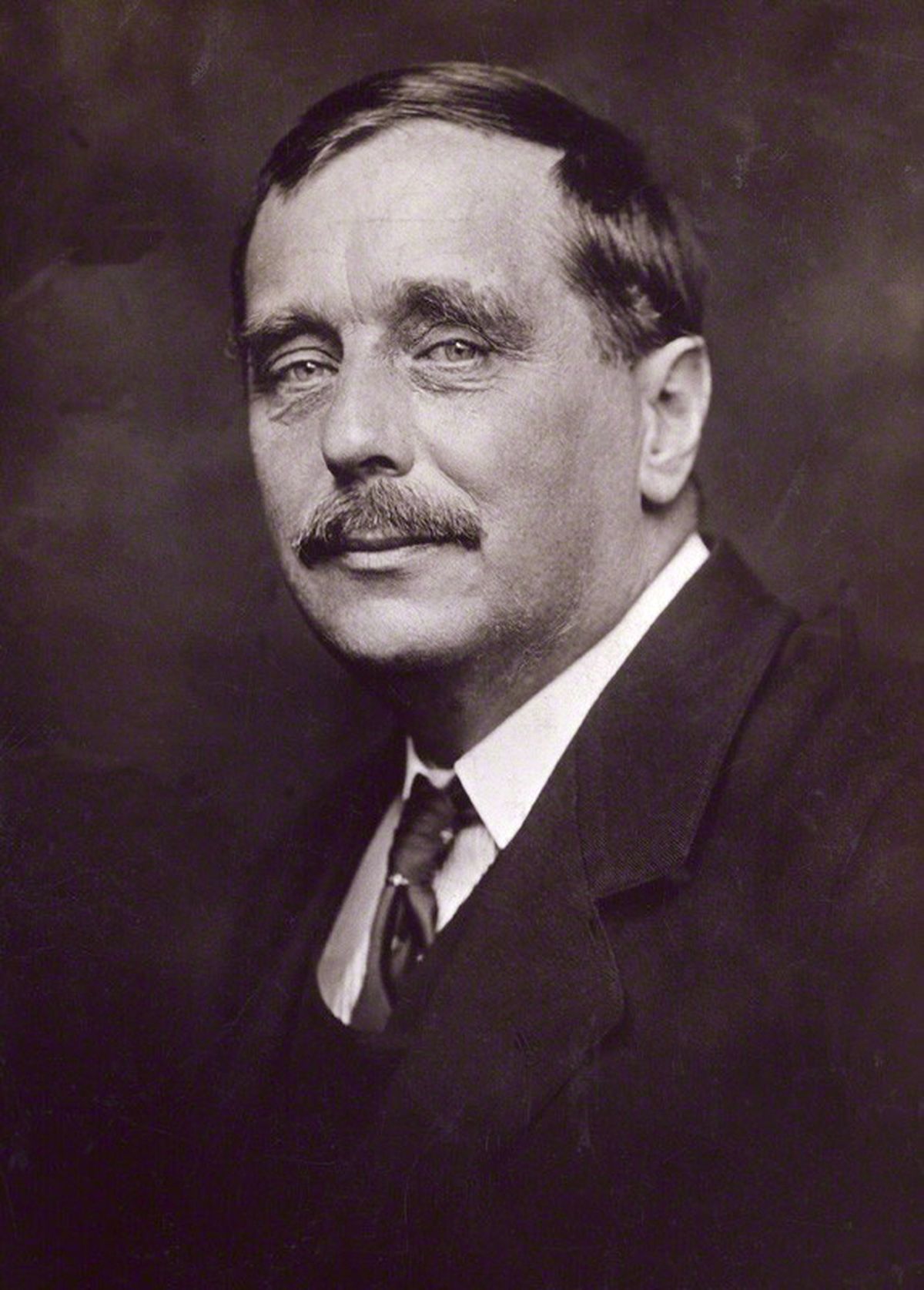
H. G. Wells
Herbert George Wells (1866–1946) was a renowned English writer, best known for his pioneering works in the science fiction genre. Born in Bromley, Kent, Wells was the son of a shopkeeper and a domestic servant. His early life was marked by financial struggles, but he showed an aptitude for education and was able to attend the Normal School of Science in London, where he studied biology under Thomas Henry Huxley. Wells began his career as a teacher and journalist before turning to writing full-time.
Wells' literary legacy is deeply tied to his innovative approach to science fiction. His works often explored the impact of science and technology on society, with a particular focus on social and political issues. His first major success came with The Time Machine (1895), which introduced the concept of time travel, a theme that would become central to many of his works. This was followed by The Invisible Man (1897), The War of the Worlds (1898), and The Island of Doctor Moreau (1896), each of which became iconic in the genre. These stories not only captivated readers with their imaginative narratives but also challenged prevailing ideas about human nature, ethics, and the future.
Wells was also a prolific writer outside of science fiction, producing novels, essays, and social commentaries on topics ranging from history to politics. He was deeply interested in the possibilities of social reform, and his utopian vision is reflected in works like A Modern Utopia (1905) and The Shape of Things to Come (1933). Throughout his life, Wells was engaged in the major issues of his time, including the rise of imperialism, war, and the evolution of democracy.
A visionary thinker, Wells left an indelible mark on literature and continues to influence writers and thinkers in the realm of speculative fiction.