Matthew 16:24-26, Colossians 3:1-3, Romans 8:12-13, Romans 6:18-19, Galatians 2:20, Colossians 3:5, 2 Timothy 2:3-4, 1 Peter 4:1-2, Luke 9:23, Mark 8:34-38, Luke 14:26-28
Give up yourself, and you will find your real self. Lose your life and you will save it. Submit to death, death of your ambitions and favourite wishes every day and death of your whole body in the end...
Discipleship on the Road Mark 10 is set along Jesus’ journey through Judea, on his way to Jerusalem. Along the way Jesus has a series of encounters with people who present very earthy and urgent issu...
Discipleship on the Road Mark 10 is set along Jesus’ journey through Judea, on his way to Jerusalem. Along the way Jesus has a series of encounters with people who present very earthy and urgent issu...
AIM Commentary Ancient Lens What’s the historical context? Mixed Loyalties Diving straight into 2 Corinthians 4:3-6 without giving a nod to 2 Corinthians 3:1-4:2 gives a strange impression, bec...
Context This text comes near the midpoint of the Gospel of Mark, and its central narrative position is more than matched by its pivotal thematic content. Jesus has turned from his focus on ministry i...
Mark 14:36, Colossians 3:12, Matthew 6:1, Philippians 2:6-11, Romans 1:1, Isaiah 53:7, Mark 14:61, 1 Timothy 1:15, Ephesians 2:8, Luke 18:10-14, Matthew 5:23-24, Mark 7:8, Matthew 7:1-6, Matthew 16:52
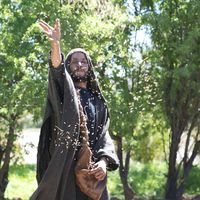
Gentled by grace. That’s the incredible and inspiring story of Abba Moses the Black. He was a violent thief who became a humble and kind monk and one of the great Desert Fathers who served the Lord ...
Context This text comes near the midpoint of the Gospel of Mark, and its central narrative position is more than matched by its pivotal thematic content. Jesus has turned from his focus on ministry i...
Exodus 12:1-14, Psalm 31:9-16, Philippians 2:5-11, Mark 11:1-11
AIM commentary Ancient lens What's the historical context? Original Passover If you frequent any web sites that have thread or message board formats, you occasionally run into the acronym “...
Mark 11:1-11, Mark 14:, Mark 15:, Mark 8:32, Mark 9:32, Mark 10:37, Zechariah 9:9, Genesis 49:11, Mark 1:1, Mark 5:7, 2 Samuel 7:12-16, 1 Kings 1:38, Revelation 4:8, Psalm 146:2-8
Ancient Lens What can we learn from the historical context? Connecting the Triumphal Entry and the Passion At last we come to Jerusalem. On this sixth Sunday of Lent, lectionary-following congreg...
Mark 11:1-11, Mark 14:, Mark 15:, Mark 8:32, Mark 9:32, Mark 10:37, Zechariah 9:9, Genesis 49:11, Mark 1:1, Mark 5:7, 2 Samuel 7:12-16, 1 Kings 1:38, Revelation 4:8, Psalm 146:2-8
Lent 2021: A 40-day Heart Restoration The Triumphal Entry Bonus Content: Video prep session with Heather Ghormley on Mark 11:1-11 . Passcode: 0DU^5?GZ AIM Commentary Ancient Lens What can w...
James 4:6, Mark 8:36, 1 John 2:17, 1 Corinthians 4:7, Jeremiah 9:23-24, Revelation 3:17
Who, then, are we, we prideful late-twentieth-century creatures? Lord knows, we no longer think of ourselves as belonging to anyone or anything. We do not belong – we own; we possess. And that, to say...
Exodus 24:15–18, 1 Kings 19:9–12, Isaiah 30:15, Mark 1:35, Luke 5:15–16, Psalm 2:1–2
Recently a professor shared with me a college student’s reflections in response to my earlier writings on solitude and silence: I was not born into a world relatively unaffected by technology lik...
Jeremiah 17:10, Mark 4:1-41, Mark 4:19, Matthew 13:22, Matthew 13:18-23, Luke 10:25-37
Thomas Merton describes those who never experience the gift of a contemplative life. His explanation for why some people never experience this can be found in his book, New Seeds of Contemplation: [T...
Matthew 6:1-6, Deuteronomy 6:4-9, Matthew 23:4, 5, 13-36, Mark 12:42, Luke 21:2, Isaiah 58:6, Joel 2:1-2, 12-17
Ancient Lens What can we learn from the historical context? "Hear O Israel..." The Shema (Deuteronomy 6:4-9) commands the Israelites to love the Lord their God with heart, soul, and m...
1 Samuel 15:10-23 , 2 Chronicles 26:16-21 , Ecclesiastes 2:4-11, Mark 10:35-45 , Luke 18:9-14 , Psalm 49:16-20
William James, in a famous letter to H. G. Wells in 1906, credited what he called American “moral flabbiness” to “the exclusive worship of the bitch-goddess Success. That—with the squalid cash interpr...
John 6:68, Matthew 7:28-29, Mark 12:29-31, Matthew 5:7, John 14:6, Matthew 16:15-16, John 18:33-38
The discrepancy between the depth and sanity, and (let me add) shrewdness, of his moral teaching and the rampant megalomania which must lie behind his theological teaching unless he is indeed God, has...
1 Corinthians 2:14, 2 Corinthians 4:4, Matthew 13:13-15, Acts 28:27, Hebrews 3:7-8, Jeremiah 7:24, John 10:27, Mark 6:52
Jesus is clear that it is dangerous to close one’s ears, eyes, and heart to the leadings of the Holy Spirit. In The Magician’s Nephew , a novel from C. S. Lewis’ Chronicles of Narnia series, Narnia i...
[cf. Mk 8:34-35] Jesus’ words about “saving” and “losing” our “life,” although they can certainly be applied to martyrdom, are not necessarily restricted to it. For our “life” is our psyche, our self,...
Mark 10:35-45, Philippians 2:3-7, Psalm 139:23-24, John 3:1-17, Mark 10:17-27
Savior Jesus, we confess that all too often we are incapable of looking beyond our own ambitions. We get wrapped up in prestige and position, leaving you behind for our own aspirations. Forgive our mi...
Malachi 3:1-4, Matthew 11:10, Mark 1:2, Matthew 4:17, Mark 13:null, Matthew 25:null, Revelation 22:null
Ancient Lens What can we learn from the historical context? Malachi’s Context The book of Malachi, the last book in the OT canon, is often dated to some time in the first half of the 400’s BC. Th...
Mark 9:42-47, Matthew 18:1-10, Luke 17:1-4, Matthew 7:1-5, Luke 6:37-42
Holy God, we confess that we are quick to look through the window and slow to look in the mirror. We confess that we can see how others stumble, but we do not see how we contributed to their stumble. ...
Matthew 17:20, Matthew 19:20, Mark 10:27, Luke 1:37, Luke 18:27, Colossians 3:23-24, 1 Corinthians 15:58, Ephesians 2:10, Philippians 4:13, Philippians 2:13
God is looking for people through whom He can do the impossible. What a pity that we plan only the things we can do by ourselves.
Ezekiel 36:26, Mark 10:21-22, James 1:14-15, Jeremiah 17:9-10, Psalm 139:23-24, Matthew 6:22-24
In her engaging treatment, Teach us to Want , Jen Pollock Michel describes both the beauty and pain of seeing our own sinful nature: It is often true that once we are made to see, we don’t like w...
Galatians 5:6, John 20:27, Mark 9:24, 2 Corinthians 4:18, Romans 8:24-25, James 1:5-6
In this excerpt from his book Faith in the Shadows, pastor and author Austin Fischer shares a surprising truth about the need to be vulnerable with our own faith if we are likely to have a positive im...
Luke 18:13-14, Romans 5:8, Mark 2:17, 1 John 1:8-10, Isaiah 53:6, Jeremiah 17:9, Romans 3:23
A recovery of the old sense of sin is essential to Christianity. Christ takes it for granted that men are bad. Until we really feel this assumption of His to be true, though we are part of the world H...
Luke 15:11-32, Matthew 18:22-35, Luke 16:19-31, Matthew 13:3-8, Matthew 20:1-16, Matthew 13:24-33, Matthew 13:44-50, Mark 4:26-29
The child became a man and the man became a preacher whose sermons were full of commonplace things: seeds and nets, coins and fishes, lilies of the field, and birds of the air. Wherever he was, he had...
Philippians 2:5-8, Matthew 20:26-28, 1 Peter 5:5-6, Luke 14:11, Matthew 5:3, Mark 10:43-45
Lord Jesus Christ, you gave up everything to come down from heaven in order to love and serve us. Unlike you, we find self-sacrifice hard. Most of us look for ways to puff ourselves up, so that we loo...
Mark 6:14-29, Mark 6:6b-13, Mark 6:30, John 1:14, Mark 6:30, Mark 8:29, Mark 6:4, Mark 8:27-28, 1 Kings 19:1-10, 1 Kings 21:17-26, Mark 9:13, Romans 7:18-25, Mark 14:1-12
Between the Sending and Return of the Twelve The fate of John the Baptist appears in a Markan ‘sandwich,’ where the story is told almost as a detour between the sending (ἀποστέλλω) of the Twelve (6...











![[cf. Mk 8:34-35] Jesus’ words about](https://a-us.storyblok.com/f/1016915/1200x800/55a01b5e43/salvation.jpg/m/200x200/smart)