Genesis 2:1-3, Exodus 20:8-11, Deuteronomy 5:12-15, Mark 2:27-28, Matthew 12:8, Luke 6:5
For the most part, contemporary Christians pay little attention to the Sabbath. We more or less know that the day came to reflect, in U.S. culture, the most stringent disciplinary faith of the Puritan...
Genesis 3:1-24, Isaiah 6:1-8, Genesis 50:15-21, John 8:1-11, Luke 15:11-32, Psalm 51:1-17
In Guilt and Grace , Swiss physician and Christian, Paul Tournier, writes… I cannot study this very serious problem of guilt with you without raising the very obvious and tragic fact that rel...
Acts 9:1-22, Galatians 2:16, Ephesians 2:4-5, Romans 5:8, John 4:4-26, Luke 18:9-14
[For Christians] the entire religion shop has been closed, boarded up, and forgotten. The church is not in the religion business. It never has been and it never will be, in spite of all the ecclesiast...
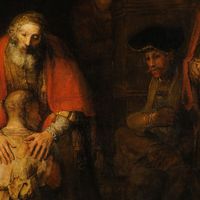
In his excellent book, The Prodigal God , Timothy Keller corrects the notion that this classic parable (The Parable of the Prodigal Son, Lk. 15) is not only about the lostness of the younger ...
Luke 19:7, Matthew 21:31, John 1:11, Luke 7:34, Mark 2:17
There is a story of a public sinner who was excommunicated and forbidden from entering the church, He took his woes to God. "They won't let me in, Lord, because I am a sinner." "W...
The 19th and 20th century Canadian-American pastor Harry Ironside once told a story of a new Christian who gave his testimony during a church service. Beaming with joy, the man spoke of how God had re...
Introduction Leaning Toward the Light What does it mean to lean towards the light of Christ? What does it mean to be open to the work of God? For the Pharisee in Jesus’ time, the answer was clear: y...
AIM Commentary Introduction Leaning Toward the Light What does it mean to lean towards the light of Christ? What does it mean to be open to the work of God? For the Pharisee in Jesus’ time, the an...
Matthew 6:1-6, Deuteronomy 6:4-9, Matthew 23:4, 5, 13-36, Mark 12:42, Luke 21:2, Isaiah 58:6, Joel 2:1-2, 12-17
Ancient Lens What can we learn from the historical context? "Hear O Israel..." The Shema (Deuteronomy 6:4-9) commands the Israelites to love the Lord their God with heart, soul, and m...
This is one of Jesus’ most vivid parables. He paints a dramatic picture of two figures, with a twist to upend his hearer’s expectations. While the context of this passage involves the dynamics of an a...
This is one of Jesus’ most vivid parables. He paints a dramatic picture of two figures, with a twist to upend his hearer’s expectations. While the context of this passage involves the dynamics of an a...
Mark 2:23-28, 3:1-6, Mark 2:23-28, Mark 3:1-6, Acts 12:12, Acts 12:25, Acts 15:37-39, Colossians 4:10, 2 Timothy 4:11, Philemon 1:24, 1 Peter 5:13, Mark 1:14-15, Mark 2:1-22, Exodus 20:8-11, Deuteronomy 5:12-15, Exodus 34:21, 1 Samuel 21:1-6, Luke 11:37-54, Mark 2:1-17, Genesis 1:26-31, Genesis 2:1-2, Genesis 3:null, John 19:30
Preaching Commentary Context Authorship of Mark Mark’s account of the story of Jesus is commonly held to be the earliest of the four canonical Gospels. Early church tradition identifies the author...
Matthew 6:1-6, 16-21, Deuteronomy 6:4-9, Matthew 23:4, 5, 13-36, Mark 12:42, Luke 21:2, Isaiah 58:6, Joel 2:1-2, 12-17
AIM Commentary Ancient Lens What can we learn from the historical context? "Hear O Israel..." The Shema (Deuteronomy 6:4-9) commands the Israelites to love the Lord their God with h...
1 Corinthians 13:1-7, Galatians 5:22-23, Matthew 22:36-40, Luke 10:25-37, Ruth 1:16
If love is the soul of Christian existence, it must be at the heart of every other Christian virtue. Thus, for example, justice without love is legalism; faith without love is ideology; hope without l...
John 14:6, Isaiah 55:8-9, Matthew 9:10-13, John 18:36, Luke 19:1-10
With a certain oversimplification we can trace easily enough the three options open to Jews in Jesus’ day. … First, the quietist and ultimately dualist option, taken by the writers of the Dead Sea Scr...
Luke 12:33-34, Luke 18:28-30, Acts 2:44-45, Matthew 19:21, Mark 10:29-30, Luke 14:26
Family and property, then, were not for the ancient Jew simply what they are to the modern western world. Both carried religious and cultural significance far beyond personal, let alone “individual,” ...
Matthew 5:20, Romans 14:17, Luke 17:20-21, Matthew 28:18-20, Philippians 2:14-15
T. S. Eliot once described the current human endeavor as that of finding a system of order so perfect that we will not have to be good. The way of Jesus tells us, by contrast, that any number of syste...
Exodus 20:1–17, Genesis 22:1–14 , Micah 6:6–8 , Luke 10:25–37 , Matthew 5:17–20, Psalm 82:3–4
Interpretive strategies have gone through cycles of strict-constructionist (or Originalism) and broad-constructionist (or Living Constitution) perspectives. Originally the procedure of interpreting th...
Mark 2:23-28, Mark 3:1-6, Acts 12:12, Acts 12:25, Acts 15:37-39, Colossians 4:10, 2 Timothy 4:11, Philemon 1:24, 1 Peter 5:13, Mark 1:14-15, Mark 2:1-22, Exodus 20:8-11, Deuteronomy 5:12-15, Exodus 34:21, 1 Samuel 21:1-6, Luke 11:37-54, Mark 2:1-17, Genesis 1:26-31, Genesis 2:1-2, Genesis 3:null, John 19:30
Context Authorship of Mark Mark’s account of the story of Jesus is commonly held to be the earliest of the four canonical Gospels. Early church tradition identifies the author as Mark (or John Mark)...
Isaiah 44:20, Luke 16:13, Jeremiah 2:13, 1 John 5:21, Matthew 6:21
Sin isn’t only doing bad things, it is more fundamentally making good things into ultimate things. Sin is building your life and meaning on anything, even a very good thing, more than on God. Whatever...
Galatians 5:1, 2 Corinthians 3:17, Colossians 2:20-23, Matthew 11:28-30, Luke 10:41-42
The purpose of the Disciplines is freedom. Our aim is the freedom, not the Discipline. The moment we make the Discipline our central focus, we will turn it into law and lose the corresponding freedom....
We might not say we believe a Jesus-plus-our-efforts idea of the gospel, but when we place our performances on the pedestal of personal progress, we’re not relying on the grace of God. We’re worshipin...
Matthew 7:9-11, Luke 15:11-32, Galatians 4:6-7, 1 John 3:1, Proverbs 3:11-12, 2 Corinthians 6:18, Hebrews 12:7-10
In his excellent book, The Magnificent Story , James Bryan Smith shares a true story from Japanese culture that illustrates just how demanding strict disciplinarian fathers can be. The Japanese...
Luke 18:9-14, James 4:6, Proverbs 3:34, 2 Corinthians 12:9-10, Micah 6:8, Philippians 2:3-4, 1 Peter 5:5-6
Almighty God, we take pride in our self-sufficiency while we look down on the weak who cannot provide for themselves. We praise others for their efforts, yet we demand perfection from our own families...
When the Reformers broke with Rome and claimed the view that the Bible was to be the supreme authority of the church (sola Scriptura), they were very careful to define basic principles of interpretati...
Leviticus 25:10-17, Deuteronomy 15:7-11, Amos 5:11-15, James 82:, Luke 4:18-19
There is no social evil, no form of injustice whether of the feudal or the capitalist order which has not been sanctified in some way or other by religious sentiment and thereby rendered more impervio...
The prophet Isaiah describes God as a purveyor of righteousness and justice continually, and speaks to God’s expectation that his children will bring about righteousness and justice as well. Justice i...
Introduction Jesus is the deliverer of Israel (1:54–55, 69–75, 77–79) Jesus states his mission in Luke 4:16-19: to proclaim good news to the poor, liberty to captives and the oppressed. The word ...
Philippians 2:3-8, Colossians 3:23-24, Mark 10:42-45, 1 John 4:19, Luke 10:38-42
The fact that our works are done in the service of God is not enough, by itself, to prevent us from losing our interior life if we let them devour all our time and all our strength. Work is good and n...