Exodus 1:8–22, 1 Kings 21:, Daniel 5:, Luke 22:24–27 , Acts 12:20–23, Psalm 2:
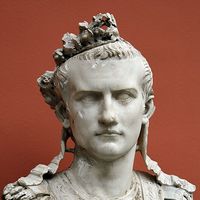
Gaius Caesar, more commonly known as Caligula (AD 12–41), was a Roman emperor notorious for his cruelty. He developed an insatiable appetite for gladiatorial games and other violent spectacles. On one...
There was a time when adults were neatly categorized into one of two groups: you were either neurotic or psychotic. Psychotic meant that you were out of touch with reality and afraid; neurotic meant t...
Exodus 35:30-35, Genesis 41:14-39 , Proverbs 8:22-31 , Matthew 14:28-31, Luke 10:38-42 , Psalm 1:1-3
The truly inventive state of mind approaches the plane of consciousness you’d hope to attain if you were driving down an icy highway and skidded into the path of an oncoming truck ... concentration is...
Exodus 18:13-27 , 1 Kings 19:1-9 , Deuteronomy 5:12-15 , Mark 6:30-32, Matthew 11:28-30, Psalm 23:1-3
Dangerous levels of exhaustion usually accumulate over a longer period of time in which we are consistently living beyond human limits, functioning outside our giftedness, or not paying attention to t...
Exodus 14:10-16, 1 Kings 18:21-39, Matthew 14:28-31, James 1:5-6, Psalm 121:1-2
An atheist fell off a cliff. As he tumbled downward, he caught hold of the branch of a small tree. There he hung between heaven above and the rocks a thousand feet below, knowing he wasn’t going to be...
Exodus 18:13–27, Ecclesiastes 2:22–23 , Isaiah 40:28–31 , Luke 10:38–42, Matthew 11:28–30, Psalm 127:1–2
The picture shows cartoon villain Cruella de Vil, bloodshot eyes staring straight ahead, hands clutching the wheel of her infamous coupe, black-and-white hair waving wildly in the wind, oversi...
An attempt to wrest from God the prerogatives of absolute freedom and infinity leads to the inversion of Pentecost and what is in effect a new Babel. 'Postmodernism' represents that Babel perf...
Addiction goes deeper than obsession and compulsion. It is worship. It is giving my heart and soul over to something that I believe will ease my pain and provide an outlet for my fury at being out of ...
The drug problems in the U.S. demonstrate this pattern: by heightening powers of perception, chemical stimulants open up a new world to a generation that has never learned to appreciate fully the worl...
Exodus 20:8–10, 1 Kings 19:11–12, Ecclesiastes 3:1, Mark 6:31, Matthew 11:28–29, Psalm 23:2–3
People in a hurry never have time for recovery. Their minds have little time to meditate and pray so that problems can be put in perspective. In short, people in our age are showing signs of physiolog...
Genesis 50:15-21 , Exodus 16:2-15 , Jonah 3:4, Psalm 103:8-12 , Matthew 20:1-16 , Luke 15:11-32
One of the biggest challenges in the Christian journey is grasping the heart of grace. Oftentimes there is an internal battle between our theology and our lived experience. In this short excerpt, Fred...
Transcendent Lord, in the midst of ordinary days draw us to wonder to fall on our knees and cry, “Glory!” You are the Holy One, Above and Other. May we tremble, knowing how deeply you know us and lov...
Introduction Leaning Toward the Light What does it mean to lean towards the light of Christ? What does it mean to be open to the work of God? For the Pharisee in Jesus’ time, the answer was clear: y...
When we fight this work-six-days, Sabbath-one-day rhythm, we go against the grain of the universe. And to quote the philosopher H. H. Farmer, “If you go against the grain of the universe, you get spli...
Romans 7:15-20, John 8:34, Exodus 20:3-5, Matthew 6:24, 1 John 2:15-16, Psalm 115:4-8
For generations, psychologists thought that virtually all self-defeating behavior was caused by repression. I have now come to believe that addiction is a separate and even more self-defeating force t...
In 1889, the French novelist Paul Bourget penned The Disciple , where he depicted the life of a renowned philosopher and psychologist, whose existence was marked by a seemingly monotonous routine...
In 1882—seven years before his descent into madness—Friedrich Nietzsche published a parable called The Madman . In the parable, a madman comes into a village on a bright, sunny morning holding al...
God uses our identity crises to reveal who we are and who he is. Sometimes these crises come out of nowhere. Something devastating happens. Someone close to us dies. We are diagnosed, or someone we kn...
Romans 5:18-19, Exodus 1:14, Luke 15:11-32, John 3:16-17, 1 Corinthians 15:22, Romans 3:23-24, Genesis 3:1-7
The first attempt at a response: there must have been a fall, a decline, and the road to salvation can only be the return of the sensible finite into the intelligible infinite.
To enter into the realm of contemplation one must in a certain sense die: but this death is in fact the entrance into a higher life. It is a death for the sake of life, which leaves behind all that we...
Kate Bowler is a gifted scholar and writer who, as a young wife and mom, was diagnosed with stage 4 colon cancer—kept going six months at a time thanks to immunotherapy. She writes honestly about how ...
We will have to start over, with a different and much older premise: the naturalness and, for creatures of limited intelligence, the necessity of limits.
In embarking on the journey, we must leave the world of certainty. We must courageously journey to a strange place where there are a lot of risks and much is at stake, a place where there are new prob...
Genesis 12:1-4, Exodus 13:17-18, Matthew 4:18-22, Psalm 23:, John 16:33
The journey has to feel like night because it leads to the unknown. If Christianity meant mere maintenance, then bewilderment or darkness would spell disaster. But . . . darkness is a condition of the...