By misinterpreting the Enlightenment and the corresponding rise of empiricism as an existential threat to Christian faith, many frightened Christians sequestered themselves into rooms of certitude.
From a historical perspective it is atheism that was old and the Christian faith and its good news that burst on the world as new. Once commonly called “atomism,” the genealogy of atheism can be trace...
Context of Galatians I still remember my intro to New Testament class in college and the professor discussing Paul’s letter to the Galatians. All of Paul’s other letters begin with words of adoration...
Ancient lens? What can we learn from the historical context? Context and Tone Paul was writing from prison to a Christian community that he didn’t establish. Rather, it was his co-laborer, Epaphr...
Introduction Easter stands out from every other day. It’s time to celebrate and to reflect: how will you “preach the resurrection” and proclaim the new life we have in Jesus Christ? How do we invite ...
Matthew 5:13-16, Ephesians 5:8-9, Colossians 4:6, John 8:12-20, Luke 14:34-35
Salt and light are indispensable household commodities. Several commentators quote Pliny’s dictum that nothing is more useful than ‘salt and sunshine’ (sale et sole). The need for light is obvious. Sa...
Jonathan Edwards is one of America’s most influential philosophers and theologians. Edwards wrote dozens of books, sparked the First Great Awakening, and was influential in the lives of hundreds of mi...
The current understanding of the physical sciences, which contrasts sharply with the strictly mechanical perspectives prevalent in earlier centuries, aligns closely with the New Testament’s portrayal ...
Matthew 5:18, John 1:1-14, Colossians 2:9, 1 Corinthians 15:20-22, Philippians 2:9-11, 2 Timothy 3:16-17, Hebrews 4:12, 2 Peter 1:20-21
The great American statesman and president Thomas Jefferson was a man of science who did not believe in miracles but really liked Jesus. Unfortunately, right next to Jesus’ ethical teachings are stori...
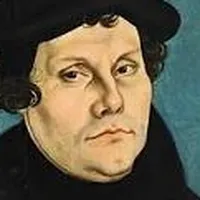
Noteworthy in this regard is the contribution of the Reformers, particularly Martin Luther, though John Calvin’s contribution is also very significant. Both called for a spirituality in the world that...
In the Middle Ages there were theologians who wrote volumes on proofs of God. Anselm (1033–1109) came up with the ontological proof of God that there exists in our minds an idea of a being than which ...
Matthew 5:48, 1 John 3:2-3, Galatians 5:16-17, Philippians 3:13-14, Colossians 3:1-2, Ephesians 4:22-24
The scholastics used to say: Homo non proprie humanus sed superhumanus est —which means that to be properly human, you must go beyond the merely human.
Teenagers whine about it constantly. Office mates step out multiple times a day to Starbucks to escape it. Parents die of it every night as they try to get small children to fall asleep. We use the wo...
What we need to realize, however, is that there is no such thing as autonomous or “self-grounding” knowledge. All systems of interpretation and all claims to true knowledge are ultimately grounded out...
A doctor, an engineer, and a politician were arguing as to which profession was older. “Well,” argued the doctor, “without a physician mankind could not have survived, so I am sure that mine is the ol...
Proverbs 1:5, Jeremiah 9:23-24, Matthew 11:25, James 1:21, Colossians 2:3, Matthew 18:3
Becoming a teachable person has two prerequisites: There must be a teacher and a person willing to be taught. Increasingly, Western culture has become an environment that celebrates and platforms the ...
Tradition has it that Jennie Jerome, who would eventually become Winston Churchill’s mother, once had dinner with the British politician William Gladstone. She left the meal thinking Gladstone was the...
Galatians 5:1, 2 Corinthians 3:17, Colossians 2:20-23, Matthew 11:28-30, Luke 10:41-42
The purpose of the Disciplines is freedom. Our aim is the freedom, not the Discipline. The moment we make the Discipline our central focus, we will turn it into law and lose the corresponding freedom....
Deconstruction isn’t a trendy thing to do, but it is a trend that is happening at scale in our country and passing from person to person. Anecdotally, when I look up various hashtags on TikTok, th...
Scientist John Haldane once proposed to the English priest Ronald Knox that, given the vast number of planets in the universe, the emergence of life by sheer chance was inevitable. Knox responded with...
Creeds must disagree: it is the whole fun of the thing. If I think the universe is triangular, and you think it is square, there cannot be room for two universes. We may argue politely, we may argue h...
Matthew 22:37-39, 1 Corinthians 8:1-3, Ezekiel 36:26-27, Colossians 1:9-10, Philippians 3:10-14, James 1:22, John 14:21
In a journal entry by the Danish Philosopher Søren Kierkegaard, the great existentialist philosopher describes the importance not simply of grasping the truth of the Christian faith, but having the tr...
1 Corinthians 12:8-12, John 1:, John 17:18, Philippians 2:6-11, 1 John 1:7, Romans 8:1, Colossians 1:13-14
The Cave One of the most famous passages in Plato's Republic is his "Allegory of the Cave," which is found at the beginning of book seven . Socrates imagines the human condition al...
Almighty God, the fountain of all wisdom: Enlighten by your Holy Spirit those who teach and those who learn, that, rejoicing in the knowledge of your truth, they may worship you and serve you from gen...
Colossians 3:16, Acts 17:10-12, Luke 2:41-52, 1 Kings 3:5-14, Ephesians 1:17-18, James 1:5, Proverbs 2:6
God, source of all light, by your Word you give light to the soul. Pour out upon us the spirit of wisdom and understanding that, being taught by you in Holy Scripture, our hearts and minds may be open...
Søren Kierkegaard told a parable about a rich man riding in a lighted carriage driven by a peasant who sat behind the horse in the cold and dark outside. Precisely because he sat near the artificial l...
Former Archbishop of Canterbury William Temple describing original sin I am the centre of the world I see; where the horizon is depends on where I stand…Education may make my self-centeredness less ...



![[The decay of Logic results from an]](https://images.unsplash.com/photo-1709399610754-921b7a9ef3b7?ixid=M3w1NzU0OTZ8MHwxfHNlYXJjaHw0NXx8bG9naWN8ZW58MHwwfHx8MTcxMjA3NTI4Mnww&ixlib=rb-4.0.3&q=80&auto=compress&fit=crop&w=200&h=200)