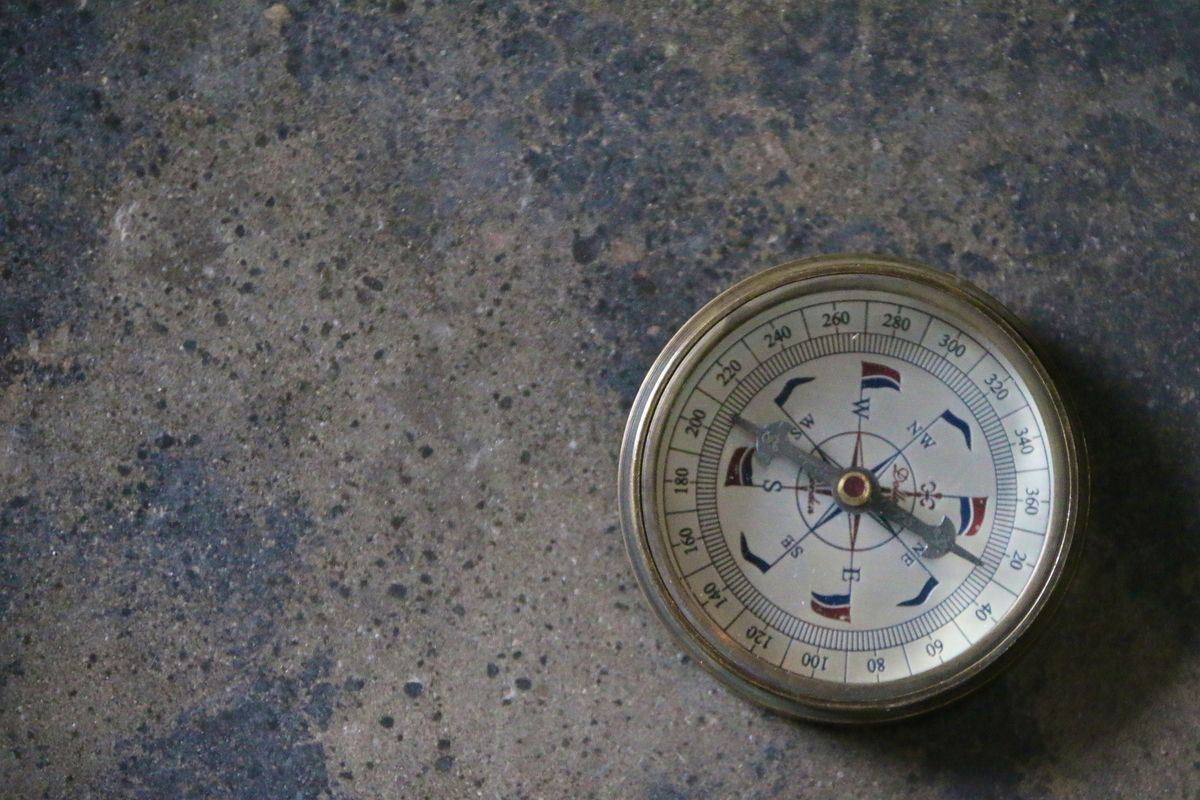
In his thoughtful book, Our Good Crisis: Overcoming Moral Chaos with the Beatitudes , Jonathan K. Dodson provides a wonderful analogy of what happens when we cultivate the virtues in our lives: W...
How are vices and virtues distinguished? How is a vice different from sin?…Although most references to the lists of seven use “vice” and “sin” in a roughly synonymous way, distinguishing the two turns...
Alasdair MacIntyre’s After Virtue reconnected thinking about ethics back to virtue by connecting virtue to the story a life is a part of. In order to know how we ought to live, we first need to answ...
A close friend who started a financial loan business took thirty of his executives to the poverty- and violence-filled section of Montreal where he grew up in order to introduce them to the section of...
Human will-power alone is not enough. Will-power is excellent and we should always be using it; but it is not enough. A desire to live a good life is not enough. Obviously we should all have that desi...
We might say that convictions are firmly held moral or religious beliefs that guide our beliefs, actions, or choices…[M]ost Christians attach their convictions to Christ personally. In other words, we...
Two things fill me with constantly increasing admiration and awe, the longer and more earnestly I reflect on them: the starry heavens without and the Moral Law within.
It is always easier for us to want to purify other people, and attempt a moral reformation among our neighbors. (Yet) how much have I helped to make her what she is?
So how can we form deep Christian convictions without dividing the church? Let’s take a deeper look at convictions themselves. Convictions are like light: they come in many colors and form across a sp...
“Moral”…is an orientation toward understandings about what is right and wrong, just and unjust, that are not established by our own actual desires or preferences but instead are believed to exist apar...
These, then, are the two points I wanted to make. First, that human beings, all over the earth, have this curious idea that they ought to behave in a certain way, and cannot really get rid of it. Seco...
Galatians 5:6, John 20:27, Mark 9:24, 2 Corinthians 4:18, Romans 8:24-25, James 1:5-6
In this excerpt from his book Faith in the Shadows, pastor and author Austin Fischer shares a surprising truth about the need to be vulnerable with our own faith if we are likely to have a positive im...
Am I a good person? Deep down, do I even really want to be a good person, or do I only want to seem like a good person so that people (including myself) will approve of me? Is there a difference? How ...
Romans 3:10-12, James 2:10, Luke 18:9-14, Matthew 5:48, Ecclesiastes 7:20
To see with God’s eyes, suppose we were to compare one person’s morals to being in Death Valley, 280 feet below sea level; another person’s morals to being in Denver, the mile-high city; and another p...
Context of Galatians I still remember my intro to New Testament class in college and the professor discussing Paul’s letter to the Galatians. All of Paul’s other letters begin with words of adoration...
Preaching Commentary Context of Galatians I still remember my intro to New Testament class in college and the professor discussing Paul’s letter to the Galatians. All of Paul’s other letters begin ...
Prayer is often a temptation to bank on a miracle of God instead of on a moral issue, i.e., it is much easier to ask God to do my work than it is to do it myself. Until we are disciplined properly, we...
The man of pseudo-faith will fight for his verbal creed but refuse flatly to allow himself to get in a predicament where his future must depend upon that creed being true. He always provides himself w...
In reality, moral rules are directions for running the human machine. Every moral rule is there to prevent a breakdown, or a strain, or a friction, in the running of that machine. That is why these ru...
Matthew 7:3-5, Proverbs 27:2, James 4:6, 1 Corinthians 10:12, Romans 12:3, Luke 18:11-14, Jeremiah 17:9
Researchers at the University of London concluded that “a substantial majority of individuals believe themselves to be morally superior to the average person” and that this illusion of ours is “unique...