1 Peter 5:7, 2 Corinthians 1:3-4, Psalm 34:15, Mark 4:39-40, Luke 7:12-15, Mark 10:46-52, Luke 19:5-6
Lord—You’re the God who notices. You notice a desperate woman who touches Your garments in a crowd. You notice a lonely, little tax-collector in a tree. You notice a blind man on the roadside, a widow...
1 Kings 19:11-13, Exodus 33:12-14, Isaiah 30:15-21, Mark 5:25-34, Mark 1:35-38, Psalm 46:10
Jesus knew his spiritual journey depended on responsiveness to God’s invitations. Although his job was the most crucial in human history, Jesus did not get compulsive, preoccupied or unable to practic...
The Fast-Paced Gospel “Immediacy” defines the Gospel of Mark’s rendition of Jesus’ ministry. Its fast pace reads like a comic strip of heroic proportions. Before one miraculous event is over another ...
Preaching Commentary The Fast-Paced Gospel “Immediacy” defines the Gospel of Mark’s rendition of Jesus’ ministry. Its fast pace reads like a comic strip of heroic proportions. Before one miraculous...
Mark 13:1-8, Mark 11:, Mark 12:, Ezekiel 10:18-19, Ezekiel 11:22-23
Context In the Book of Mark Mark 13 contains the “Olivet Discourse,” also called “the Little Apocalypse.” At the beginning of this chapter (and our reading), the disciples marvel at Herod’s spectacu...
Introduction Jesus is the deliverer of Israel (1:54–55, 69–75, 77–79) Jesus states his mission in Luke 4:16-19: to proclaim good news to the poor, liberty to captives and the oppressed. The word ...
Introduction Jesus is the deliverer of Israel (1:54–55, 69–75, 77–79) Jesus states his mission in Luke 4:16-19: to proclaim good news to the poor, liberty to captives and the oppressed. The word J...
Intertwined Narratives Jesus’ encounters with Jairus’ daughter and the bleeding woman are sandwiched together with the intention that the two narratives would unlock and help to interpret the other....
Intertwined Narratives Jesus’ encounters with Jairus’ daughter and the bleeding woman are sandwiched together with the intention that the two narratives would unlock and help to interpret the other....
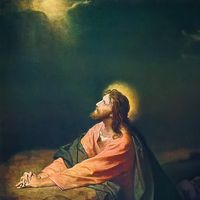
Matthew 14:13, Matthew 4:1-11, Luke 6:12, Matthew 14:23, Mark 1:35, Mark 6:31, Luke 5:16, Matthew 17:1-9, Matthew 26:36-46
In the midst of an exceedingly busy ministry Jesus made a habit of withdrawing to “a lonely place apart” (Matt. 14:13; see also Matt. 4:1-11, Luke 6:12, Matt. 14:23, Mark 1:35, Mark 6:31, Luke 5:16, M...
Matthew 19:14, Mark 10:16, John 8:7-11, Matthew 14:14, John 4:9-10, Matthew 15:32
The kindness of Jesus. We are quick to think of his power, his passion, and his devotion. But those near him knew and know God comes cloaked in kindness
The witness of the New Testament is, therefore, twofold: it transcends the land, Jerusalem, the Temple. Yes: but its History and Theology demand a concern with these realities also. Is there a reconci...
It is as strange a scene as there is in the Gospels. Even without the voice from the cloud to explain it, they had no doubt what they were witnessing. It was Jesus of Nazareth all right, the man they&...
Mark 2:17, Luke 15:1-2, Luke 19:1-10, Matthew 11:28-30, Romans 5:8, 2 Corinthians 5:18-20
But it wasn’t just his new message that made Jesus irresistible. It was Jesus himself. People who were nothing like him liked him. And Jesus liked people who were nothing like him. Jesus invited unbel...
Genesis 22:1-18, Isaiah 50:4-7 , 1 Samuel 3:1-10, Matthew 3:16-17 , John 5:19-20 , Psalm 40:6-8
In stark contrast to ourselves, when Jesus needed to know who he was, he listened to his Father’s voice, trusted that voice and claimed its truth for his own life.
Matthew 14:13, Matthew 4:1-11, Luke 6:12, Matthew 14:23, Mark 1:35, Mark 6:31, Luke 5:16, Matthew 17:1-9, Matthew 26:36-46
In the midst of an exceedingly busy ministry Jesus made a habit of withdrawing to “a lonely place apart” (Matt. 14:13; see also Matt. 4:1-11, Luke 6:12, Matt. 14:23, Mark 1:35, Mark 6:31, Luke 5:16, M...
We should also note that while Jesus had the biggest work assignment in human history-he had been invited to "save the world"-he never spent weeks writing a vision statement with steps for s...
In the midst of a busy schedule of activities—healing suffering people, casting out devils, responding to impatient disciples, traveling from town to town, and preaching from synagogue to synagogue—we...
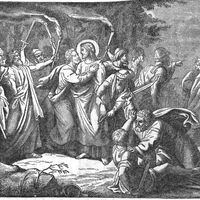
Mark 14:10, Romans 8:32, Matthew 27:1-2, Luke 23:1-3, John 19:16
I was invited to visit a friend who was very sick. He was a man about fifty-three years old who had lived a very active, useful, faithful, creative life. Actually, he was a social activist who had car...
Jesus cared that they were scared It was their fear that drew Him near He heard their cry He saw that they were terrified So He came close He walked beside He got in He didn’t pass by And He sai...
Colossians 1:15, John 1:14, Hebrews 1:3, John 14:9, Philippians 2:6-7
Origen, in the third century, had a great analogy. He told of a village with a huge statue—so immense you couldn’t see exactly what it was supposed to represent. Finally, someone miniaturized the stat...
Leviticus 13:45-46, Isaiah 53:3-5, 2 Samuel 9:3, 6-7, Mark 1:40-42, Luke 7:37-38, John 20:27
Sociologist Erving Goffman wrote in his classic study Stigma: Notes on the Management of Spoiled Identity that the term stigma originated with the ancient Greeks, roughly during Jesus’ tim...
Matthew 14:19-20, John 9:6-7, Mark 2:3-4, John 13:4-5, Mark 1:40-42, Luke 2:7, John 1:14
The gospels are earthy. People are close to the earth. They travel here and there by foot. They eat the live heads of grain growing from the soil as they walk through the fields. They get grubby and h...
John 1:46, 1 Corinthians 1:26-29, Matthew 20:16, Luke 1:51-53, James 2:1-9, Matthew 11:25, Isaiah 52:2-3, Philippians 2:5-8
The world has always despised people from the wrong places and with the wrong credentials. We are always trying to justify ourselves. We need desperately to feel superior to others. And everything abo...
Exodus 3:11-12 , 1 Kings 19:9-13, Isaiah 42:1 , Matthew 3:16-17 , Luke 9:28-36, Psalm 22:1
Jesus needed, not once, but again and again at each stage of his mission and each crisis in his living and dying, a freshly confirmed knowledge of his own identity.
Luke 7:36-50, Romans 5:8, John 4:7-26, Matthew 11:19, Luke 19:5-10, Mark 2:15-17
Why did it disturb the religious leaders that Jesus ate with “sinners”? To eat with someone is an important symbol of fellowship. And in those days, the Jews had a rule: one is not to have such fellow...
During the life of Jesus on earth, the word He chiefly used when speaking of the relations of the disciples to Himself was: “Follow me.” When about to leave for heaven, He gave them a new word, in whi...