John 6:15, Matthew 5:38-39, Matthew 7:24-27, Matthew 15:1-9, Matthew 16:13-17, John 18:36, Luke 4:18-19, Acts 9:1-9, Psalm 1:
Jesus is understood in the light of the assumptions which control our culture. When “reason” is invoked as a parallel or supplementary authority to “Scripture” and “tradition,” what is happening is t...
There may have been a time when people found it easy to believe anything. But we are finding it vastly easier to disbelieve anything. Both processes save the human mind from the disgusting duty of dis...
Creeds must disagree: it is the whole fun of the thing. If I think the universe is triangular, and you think it is square, there cannot be room for two universes. We may argue politely, we may argue h...
1 Corinthians 12:8-12, John 1:, John 17:18, Philippians 2:6-11, 1 John 1:7, Romans 8:1, Colossians 1:13-14
The Cave One of the most famous passages in Plato's Republic is his "Allegory of the Cave," which is found at the beginning of book seven . Socrates imagines the human condition al...
John 15:4-5, 1 John 3:18-19, Matthew 7:21, Romans 10:9-10, Hebrews 11:1, Galatians 2:20
I do not put much stock in "believing in God." The grammar of "belief" invites a far too rationalistic account of what it means to be a Christian. "Belief" implies propos...
Abba – Father: Because of Your love and strength, we trust You … believing You are faithful, true and gracious. Thank You for coming into our world when we could not and would not come to You. You wal...
Compared to our personality traits, character traits are more malleable. Our personalities can only be managed (or tamed, some might say). Our characters can be shaped, although this isn’t easy and ha...
If I am to give you credit, I need to find you credible, while avoiding the risk of seeming credulous in giving credence to your discreditable account. From religious credos to street cred, from profe...
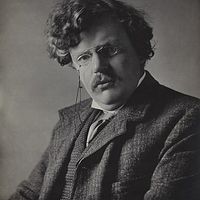
G. K. Chesterton was well-known (and iconoclastic) in his defense of tradition in a time when progress was all the rage in Western Europe- in technology, in the sciences, in philosophy. Chesterton, on...
In this excerpt, author David Zahl challenges the common belief that religion is “in decline.” He argues that while Westerners, particularly younger generations, may be distancing themselves from the ...
Core beliefs can be hard to change because they’ve generally been with us for a long time, and we assume that they’re true. Perhaps the biggest obstacle to changing our core beliefs is that they are s...
Just as the word itself suggests, a worldview is an overall view of the world. It’s not a physical view of the world, like the sight of planet Earth you might get from an orbiting space station. Rathe...
In his book The Contrarian’s Guide to Leadership, former president of the University of Southern California Steven Sample, details a critical element leaders must possess if they wish to make sound ju...
Titus 3:4-7, John 3:16, Ephesians 2:8-9, 1 Peter 3:18, Romans 5:8, Colossians 1:19-20, Philippians 2:6-8
To tell someone what you believe may be to answer the wrong question—better to say, instead, what the church believes, better to use the language the church has bequeathed to us to shape our experienc...
Let’s talk about how our beliefs shape our actions, especially when fear is involved. You've probably heard the phrase, "ideas have consequences," right? It's easy to see this in act...
Luke 4:21-30, Mark 6:2-3, 1 Kings 17:7-34, 2 Kings 5:
Preaching Commentary Leaving Home I moved away from my hometown for graduate school when I was just shy of 30. I never went back. When I struck out from home, I lived in cities larger and more dive...
Genesis 22:1-19, Numbers 13:14, Job 1:42, Matthew 14:22-33, Psalm 43:
The root of our English term doubt has to do with duplicity. It is being divided or doubled up in our thinking. But this isn’t a matter of simply being confused or unable to make up our mind or ...