Descend upon our hearts, Spirit of God, For our wills are weak, and we need your power. Our spirits are dry, and we need your refreshment. Our minds cannot comprehend, and we need your enlightenment....
By misinterpreting the Enlightenment and the corresponding rise of empiricism as an existential threat to Christian faith, many frightened Christians sequestered themselves into rooms of certitude.
Romans 15:4, Acts 8:26-40, Luke 24:13-35, Hebrews 4:12, Psalm 119:105, 2 Peter 1:20-21, 2 Timothy 3:16-17
Eternal God, your Spirit inspired those who wrote the Bible and enlightens us to hear your Word fresh each day. Help us to rely always on your promises in Scripture. In Jesus’ name we pray. Amen.
Ephesians 1:7-8, Revelation 5:9, Acts 20:28, Titus 2:13-14, 1 Peter 1:18-19, Hebrews 9:12, Romans 3:23-24
In Christ we have redemption through his blood, the forgiveness of our trespasses, according to the riches of his grace, which he lavished upon us, in all wisdom and insight. Together we affirm that b...
Matthew 5:14-16 , 1 John 4:18-19 , Acts 4:29-31 , Romans 12:9-11 , 2 Corinthians 3:12, Esther 4:14, James 2:14-17
Gracious God, you have called us to be light in a dark world, and we have remained hidden. Thinking of ourselves first, we have withheld courage and compassion. Merciful God, hear our confessions and ...
One key difference between much of the early church vs. the church of today (at least in the West) was the belief in, and regular experience of, miracles. As Joel Green, the noted professor and writer...
Romans 12:9-10, Luke 6:31, John 15:13, Ecclesiastes 4:9-10, Proverbs 27:9, Proverbs 27:6, Proverbs 17:17
The [true] story is told that Voltaire, the French Enlightenment philosopher, was speaking at the funeral of an aristocrat. In the speech he declared, “He was a great patriot, a humanitarian, a loyal ...
Romans 8:6-11, Psalm 130:, John 11:1-41, Ezekiel 37:1-14
Ancient Lens When Paul writes to the church about struggles between body and spirit, he is not the first to join this discussion. Even if you limit the conversation to just the Mediterranean world,...
Ancient Lens What can we learn from the historical context? Body versus Spirit When Paul writes to the church in Rome about struggles between body and spirit, he is not the first to join this di...
1 Peter 3:8-9, Galatians 3:28, Proverbs 31:8-9, Matthew 5:9, Romans 12:18
Just as Socrates felt that it was necessary to create a tension in the mind so that individuals could rise from the bondage of myths and half-truths to the unfettered realm of creative analysis and ob...
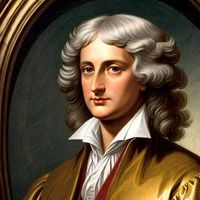
Sir Isaac Newton was one of the great scientists of all time. Most men of science today agree that his great book Principia is the greatest scientific book ever written. Yet of his achievemen...
In 1889, the French novelist Paul Bourget penned The Disciple , where he depicted the life of a renowned philosopher and psychologist, whose existence was marked by a seemingly monotonous routine...
Jonathan Edwards is one of America’s most influential philosophers and theologians. Edwards wrote dozens of books, sparked the First Great Awakening, and was influential in the lives of hundreds of mi...
Charles Darwin, known for his theory of natural selection, noticed that his later life included a “loss of happiness.” While he never acknowledged that it might have been related to his changing world...
These, then, are the two points I wanted to make. First, that human beings, all over the earth, have this curious idea that they ought to behave in a certain way, and cannot really get rid of it. Seco...
Romans 16:17-18, 1 Corinthians 1:10-13, Titus 3:9-11, Mark 3:24-26
In the mid-2000s, a Trans-Atlantic movement emerged, characterized by a rejection of organized religion and the ascent of what came to be known as the “New Atheism.” This trend gained notable traction...
Thomas Aquinas, the famous medieval theologian, created one of the greatest intellectual achievements of Western civilization in his Summa Theologica. It’s a massive work: thirty-eight treatises, thre...
Its [Romans] message is not that ‘man was born free, and everywhere he is in chains’, as Rousseau put it at the beginning of The Social Contract (1762); it is rather that human beings are born in sin ...
1 Corinthians 1:10-13, Mark 3:24-25, Philippians 2:3-4, James 3:16, Ephesians 4:3-6, Romans 12:8
Our first president, George Washington, refused to run as a member of any political party. He wanted to be a president to all Americans. Washington firmly believed that political parties would divide ...
Genesis 4:6-7 , Ecclesiastes 2:10-11, Daniel 3:16-18, Romans 12:1-2 , Luke 9:23-24 , Psalm 73:25-26
Modern man is a bleak business. To our chagrin we discover that the declaration of autonomy has issued not in a race of free, masterly men, but rather in a race that can be described by its poets and ...
Every five hundred years, give or take a decade or two, Western culture, along with those parts of the world that have been colonized or colonialized by it, goes through a time of enormous upheaval, a...
In the Middle Ages there were theologians who wrote volumes on proofs of God. Anselm (1033–1109) came up with the ontological proof of God that there exists in our minds an idea of a being than which ...
In this excerpt, author David Zahl challenges the common belief that religion is “in decline.” He argues that while Westerners, particularly younger generations, may be distancing themselves from the ...
An attempt to wrest from God the prerogatives of absolute freedom and infinity leads to the inversion of Pentecost and what is in effect a new Babel. 'Postmodernism' represents that Babel perf...
The search for knowledge can go wrong, not as a result of individual, erroneous judgments or of mistakes creeping in at different points, but because of one single mistake at the beginning… Faith does...












![[The decay of Logic results from an]](https://images.unsplash.com/photo-1709399610754-921b7a9ef3b7?ixid=M3w1NzU0OTZ8MHwxfHNlYXJjaHw0NXx8bG9naWN8ZW58MHwwfHx8MTcxMjA3NTI4Mnww&ixlib=rb-4.0.3&q=80&auto=compress&fit=crop&w=200&h=200)