John Fiske, a Harvard scholar, once visited Herbert Spencer, regarded as one of the greatest philosophers of his time in England. During their conversation, Spencer asked about Mrs. Fiske and the chil...
Isaiah 55:1-3, John 3:1-5, Matthew 1:25-27, John 3:16-17, Psalm 145:8-9
Justin Martyr (ca. 100–165), the most renowned apologist of the second century, dedicated his life to defending Christianity as the one true philosophy. Engaging the Greek philosophers and intellectua...
In 1889, the French novelist Paul Bourget penned The Disciple , where he depicted the life of a renowned philosopher and psychologist, whose existence was marked by a seemingly monotonous routine...
1 Corinthians 2:1-16, Matthew 5:13-20, Isaiah 6:1-13, Psalm 112:1-10
Ancient Lens What can we learn from the historical context? Relevant Background 1. The Purpose of Paul’s Letter 1 Corinthians is written to a local church with the purpose of reproof and cor...
In an article entitled, What the New Atheists Don’t See , the British author Theodore Dalrymple shares his honest struggles with atheism. The subtitle of his article is fascinating, “To regret re...
If you’ve been around a kid who’s just learned to ask “why?”, it can be a bit much. You’ll be asked, “why is grass green?” “Why do birds fly?” “Why do I get hungry?” and much, much, more. Pa...
Genesis 2:7, 1 Kings 19:4-8 , Ecclesiastes 12:7 , Matthew 11:28-30, 3 John 1:2, Psalm 43:5, Psalm 42:5
The soul can be difficult to define. The great theologian Karl Barth confessed, “We shall search the Old and New Testaments in vain for a theory of the relation between the soul and body.” Your soul i...
This is in fact one of the many sharp edges of “the problem of evil.” Evil isn’t simply a philosophers’ puzzle but a reality which stalks our streets and damages people’s lives, homes and property. Th...
Jonathan Edwards is one of America’s most influential philosophers and theologians. Edwards wrote dozens of books, sparked the First Great Awakening, and was influential in the lives of hundreds of mi...
I found what I was looking for and purchased a paperback copy of Dostoevsky’s The Idiot. The Idiot was published in 1868 and was Dostoevsky’s attempt to create a perfect soul in the character of Princ...
Exodus 1:15–21, Daniel 3:16–18 , 1 Kings 3:16–28 , Matthew 4:1–11, Galatians 1:6–10, Psalm 73:
Pragmatism may be defined simply as the approach to reality that defines truth as “that which works.” The pragmatist is concerned about results, and the results determine the truth. The problem with t...
One discovery was a time-released revelation to me. On my way to classes each week, I had been passing Emerson Hall, the building that houses the philosophy department at Harvard. The enormous inscrip...
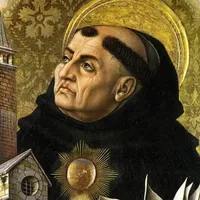
Thomas Aquinas, the famous medieval theologian, created one of the greatest intellectual achievements of Western civilization in his Summa Theologica. It’s a massive work: thirty-eight treatises, thre...
Intellect is therefore a vital force in history, but it can also be a dissolvent and destructive power. Out of every hundred new ideas ninety-nine or more will probably be inferior to the traditional ...
The search for knowledge can go wrong, not as a result of individual, erroneous judgments or of mistakes creeping in at different points, but because of one single mistake at the beginning… Faith does...
Many have heard of the polymath and famous atheist Bertrand Russell (1872-1970), whose career as a public intellectual touched on a variety of disciplines, including philosophy (he is considered one o...
1 Samuel 16:7, Proverbs 11:3, Matthew 5:8 , Philippians 4:8, Psalm 15:1-2
Bernard de Fontenelle (1657–1757), was a French author and philosopher, and was once engaged in conversation with the “Sun King”, Louis XIV. Louis began expressing his skepticism about the existence...
Of the medieval church’s many intellectual leaders, none has had more influence than the philosophical theologian Thomas Aquinas. He was born to a noble family near Naples, Italy, and joined the Domin...
Isaiah 29:13, Judges 2:10-13 , 1 Samuel 8:4-9, Matthew 23:27-28 , 2 Timothy 3:1-5 , Psalm 10:4
Even though it’s now associated with him, Nietzsche didn’t coin the phrase God is dead. As the son of a Lutheran pastor, he would have heard that line in a Lutheran Holy Saturday hymn. And although...
A friend of mine, lecturing in a theological college in Kenya, introduced his students to “The Quest for the Historical Jesus.” This, he said, was a movement of thought and scholarship that in its ear...
Isaiah 29:13, Amos 5:21-24, Proverbs 1:7, James 1:22-25 , Matthew 23:27-28, Psalm 51:16-17
We artful dodgers act as if we do not understand the New Testament, because we realize full well that [if we let on that we did] we should have to change our way of life drastically. That is why we in...
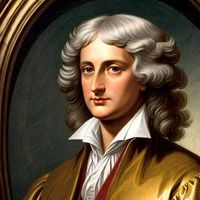
Sir Isaac Newton was one of the great scientists of all time. Most men of science today agree that his great book Principia is the greatest scientific book ever written. Yet of his achievemen...
Romans 8:6-11, Psalm 130:, John 11:1-41, Ezekiel 37:1-14
Ancient Lens When Paul writes to the church about struggles between body and spirit, he is not the first to join this discussion. Even if you limit the conversation to just the Mediterranean world,...
Luke 13:31-35, Luke 11:51, Jeremiah 23:6, Deuteronomy 32:11, Ruth 2:12, Psalm 17:8, Isaiah 31:5
Ancient Lens What can we learn from the historical context? On the Road to Jerusalem Luke 13 begins with Jesus teaching on the nature of the kingdom of God and it concludes with our passage, in w...
John 6:15, Matthew 5:38-39, Matthew 7:24-27, Matthew 15:1-9, Matthew 16:13-17, John 18:36, Luke 4:18-19, Acts 9:1-9, Psalm 1:
Jesus is understood in the light of the assumptions which control our culture. When “reason” is invoked as a parallel or supplementary authority to “Scripture” and “tradition,” what is happening is t...
Revelation 21:4, Psalm 34:18, Psalm 147:3, 1 Peter 4:12-19, John 16:33, 2 Corinthians 1:3-4, 1 Peter 5:10, Romans 5:3-5, Romans 8:28
Books on the problem of pain divide neatly into two groupings. The older ones, by people like Aquinas, Bunyan, Donne, Luther, Calvin, and Augustine, ungrudgingly accept pain and suffering as God’s use...