Walter Brueggemann writes that the movement of the psalms is from orientation to disorientation and then to new orientation. The psalms give us a language for transformation in desert spaces: we move ...
Psychologists tell us that one of the most difficult conditions a person can be forced to bear is light deprivation. Darkness, in fact, is often used in military captivity or penal institutions to bre...
In Annie Dillard's Pulitzer Prize winning book, Pilgrim at Tinker Creek, she mentioned the work of Marius Von Senden who became curious about the effect it had on people who had been born blind to...
For many of us, life can easily become disorienting and discouraging. Existential questions often emerge that never have before. As stressful as modern life can be, it is somewhat comforting to know t...
When I graduated from college I was given one of the greatest opportunities of my young life. A group of my friends were told that if we were able to purchase a flight to the Cayman Islands, we would ...
Psalm 119:105, Proverbs 3:5-6, Isaiah 30:21, James 1:5, John 14:6
In 1914, not long after the sinking of the Titanic, Congress convened a hearing to discern what happened in another nautical tragedy. In January of that year, in thick fog off the Virginia Coast, the ...
The drug problems in the U.S. demonstrate this pattern: by heightening powers of perception, chemical stimulants open up a new world to a generation that has never learned to appreciate fully the worl...
Jeremiah 29:11, Proverbs 3:5-6, Psalm 119:105, Matthew 7:7-8, Isaiah 30:21, Matthew 16:24-26
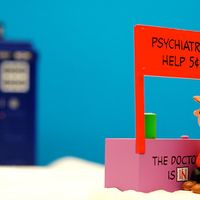
In a “Peanuts” comic strip, Lucy sets up a small stand with a sign: “Advice—5 cents.” Charlie Brown approaches, looking for guidance. “Lucy, I need help,” he says. “What seems to be the trouble?” she ...
John 11:35, Romans 8:26, Psalm 42:3, Isaiah 53:3, Matthew 26:38
Our culture is afraid of grief, but not just because it is afraid of death. That is natural and normal, a proper reaction to the Last Enemy. Our culture is afraid because it seems to be afraid of the ...
God uses our identity crises to reveal who we are and who he is. Sometimes these crises come out of nowhere. Something devastating happens. Someone close to us dies. We are diagnosed, or someone we kn...
Mark 4:35-41, Psalm 107:, Jonah 1:, Genesis 1:, Matthew 8:23-27, Luke 8:22-25, Psalm 74:14, Psalm 104:26, Genesis 1:21
Note: This was originally part of a guide for the Fifth Sunday after Pentecost (RCL Year B) , which includes Job 38:1-11 and Mark 4:35-11. I have adapted the discussion of each of these two...
Mark 4:35-41, Job 38:1-11, Psalm 107:, Jonah 1:, Genesis 1:, Matthew 8:23-27, Luke 8:22-25, Psalm 74:14, Psalm 104:26, Genesis 1:21
A Sopping Wet Week in the Lectionary Today’s readings are thoroughly wet. In Job, God is master of the sea, Psalm 107 concerns mariners in the storm, Paul is a little drier, but still gets shipwrecke...
1 John 4:1, 1 Corinthians 12:10, 1 Kings 19:11-13 , Genesis 41:15-40 , Isaiah 30:20-21, Matthew 4:1-11, 1 John 4:1-3, Psalm 42:5-11
Scripture also speaks of “discernment of spirits” and encourages us to “test the spirits to see whether they are from God.” This aspect of discernment helps us to distinguish the real from the phony, ...
One of the dangers of living in a constant state of distraction is that we never go to the bottom of our pain, our sadness, our emptiness, which means we never find that rock-bottom place of the peace...
Ambiguity may keep people up nights, but anyone seeking exquisite simplicity in his or her career ought to look for a non-leadership position. Leaders, by definition, have followers. Followers need di...
Matthew 11:28-30, Psalm 34:18, Ephesians 4:26-27, Proverbs 3:5-6, James 1:2-4
Anxiety, depression, and post-traumatic stress are all ways of describing natural human responses to adversity and the experiences of life. And we all face adversity in many different ways: challengin...
Jonah 1:4, Genesis 3:8-19, Matthew 18:12-14, Luke 15:11-32, Psalm 23:
I once was significantly lost. When I was a college student in northern Wisconsin, my dad and I were hiking on a trail that was somewhat familiar to me. I had been on this trail just a few weeks befor...
A student who had recently lost his sight was sent to the Seeing Eye Institute for the Blind in Morristown, New Jersey, for specialized training. Upon arrival, he was greeted by another young ma...
Luke 12:54-56, Matthew 16:1-4, Isaiah 60:1, Romans 13:11, Psalm 119:105, Genesis 12:1
Earl Palmer frequently tells the story of a cross-country with two other young pastors early in his pastoral ministry. They were making a cross-country trip from the East Coast back to California. I...
Change invariably leads to loss, loss to grief, grief to anxiety and, finally, anxiety to hostility. We need therefore, to acknowledge grief. We need to understand and choose to walk with the grieving...
Philippians 4:6-7, 1 Peter 5:7, Matthew 6:25-27, Psalm 94:19, Psalm 55:22, Proverbs 12:25
Anxiety feels like a weight. It has been described as the feeling of tripping—the “moment where you don’t know whether you are going to catch yourself is how you feel all day long.” Or “when you tap y...
On retreat we stop avoiding the pain of the disconnect between our deepest desires and the way we are actually living. We have time and space to reflect on our life rhythms to see if they are really w...
There was a time when adults were neatly categorized into one of two groups: you were either neurotic or psychotic. Psychotic meant that you were out of touch with reality and afraid; neurotic meant t...
It isn't the changes that do you in, it's the transitions. Change is not the same as transition. Change is situational: the new site, the new boss, the new team roles, the new policy. Transiti...
Psalm 143:10, James 1:5, Isaiah 42:16, Proverbs 2:6, Psalm 32:8
It doesn’t matter what the specific decision is. Unmade decisions hold power. They pull, they push, they interrupt where they aren’t wanted and poke us awake at night. They can turn us into strange ve...
Exodus 20:8–10, 1 Kings 19:11–12, Ecclesiastes 3:1, Mark 6:31, Matthew 11:28–29, Psalm 23:2–3
People in a hurry never have time for recovery. Their minds have little time to meditate and pray so that problems can be put in perspective. In short, people in our age are showing signs of physiolog...
Proverbs 4:5-7, Ecclesiastes 12:11-13, Isaiah 28:9-10, Matthew 7:24-27, James 1:22-25, Psalm 119:11
Gathering information without processing and applying it is counter to how the mind works and how the brain is structured and has a deleterious effect on our mental and physical well-being, creating a...
Matthew 6:1-2, John 5:44, Romans 12:2, Galatians 1:10, 1 Thessalonians 2:4, Titus 3:4-7, Psalm 37:4
In her book Invitation to Retreat, Ruth Haley Barton shares some of the many insights she has had since she began intentionally taking inattentional retreats to re-connect with God and her own desires...