James 1:22-25, Philippians 2:3-4, Romans 12:2, Ephesians 4:22-24, Colossians 3:12-14, Galatians 5:22-23, Matthew 25:21
The kingdom of God manifests itself in the modest changes in our attitudes and in the little improvements in our behavior that no one may notice, including ourselves. These are the mighty works of God...
Philippians 2:6-8, John 1:10-11, Isaiah 53:3-4, Matthew 11:19, Mark 15:34, Isaiah 53:12, Luke 15:20-24, Revelation 7:13-14
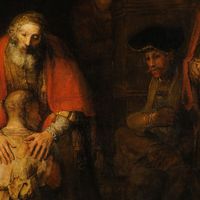
In this excerpt, the French monastic leader Frere Pierre Marie, shares an interpretation of Jesus as the true prodigal son—bringing all of us home with him: He, who is born not from human stock, or ...
The kingdom is present not in grandiose accomplishments, but in showing practical love in humble ways, day after day, and in refusing to allow our failures and disappointments to hide God’s love from ...
Matthew 13:31-33, 2 Corinthians 12:9, Matthew 6:10, Matthew 5:3, 6, 10, 1 Corinthians 1:27, Matthew 26:28, Matthew 19:24, Philippians 3:7, Hebrews 12:2, Matthew 28:19
The context The parables we hear this week are part of a collection of parables of the Kingdom collected by Matthew in chapter 13 of his gospel account. As with the Sermon on the Mount (Matthew 5-7),...
Isaiah 1:1, 10-20, 2 Corinthians 12:9, Matthew 6:10, Matthew 5:3, 10, 1 Corinthians 1:27, 2 Corinthians 12:9, Matthew 26:28, Matthew 19:24, Philippians 3:7, Hebrews 12:2, Matthew 5:6, Matthew 28:19
The context The parables we hear this week are part of a collection of parables of the Kingdom collected by Matthew in chapter 13 of his gospel account. As with the Sermon on the Mount (Matthew 5-7),...
Matthew 13:31-33, 44-52, 2 Corinthians 12:9, Matthew 6:10, Matthew 5:3, 6, 10, 1 Corinthians 1:27, Matthew 26:28, Matthew 19:24, Philippians 3:7, Hebrews 12:2, Matthew 5:6, Matthew 28:19
preaching commentary The context The parables we hear this week are part of a collection of parables of the Kingdom collected by Matthew in chapter 13 of his gospel account. As with the Sermon on t...
Introduction Our text falls within a larger section (Luke 16) in which Jesus deals head-on with questions of money, specifically the need to choose God over mammon (the worship of money), in other wo...
Introduction Our text falls within a larger section (Luke 16) in which Jesus deals head-on with questions of money, specifically the need to choose God over mammon (the worship of money), in other wo...
Matthew 13:, Philippians 3:1, 1 Samuel 3:1–10 , Exodus 7:12, Deuteronomy 6:4–9 , Psalm 136:
In the second century before Christ the great rival to Roman power in the Mediterranean world was Carthage, the Phoenician city-state located on the north African coast. It had been founded in 822 B.C...
Luke 2:22-24, 2 Corinthians 8:9, Isaiah 9:6-7, Philippians 2:6-8, John 1:14, Isaiah 61:1
They were poor. We know this because the two young turtledoves Joseph and Mary brought was the smallest offering they were allowed as devout Jews and yet the largest they likely could afford. With tw...
The Servant Leader The servant leader is the hero of this text. And the example, par excellence, is the Apostle Paul. He has never shied away from holding himself up as a person to be imitated, as...
1 Corinthians 12:8-12, John 1:, John 17:18, Philippians 2:6-11, 1 John 1:7, Romans 8:1, Colossians 1:13-14
The Cave One of the most famous passages in Plato's Republic is his "Allegory of the Cave," which is found at the beginning of book seven . Socrates imagines the human condition al...
preaching commentary The Servant Leader The servant leader is the hero of this text. And the example, par excellence, is the Apostle Paul. He has never shied away from holding himself up as a pe...
Matthew 16:24-25, Philippians 1:21, Romans 8:18, Matthew 23:12, James 4:10, Psalm 23:4
Lord, high and holy, meek and lowly, Thou hast brought me to the valley of vision, where I live in the depths but see thee in the heights; hemmed in by mountains of sin I behold thy glory. Let me lear...
A Great (and Weighty) Work of Literature That Will Delight Like Moby Dick and War and Peace , Les Misérables is a hefty novel. Affectionately known as the ‘Brick’ for its formidable length, it c...
Matthew 13:44, Hebrews 14:26, Colossians 2:2-3, Philippians 3:8, Luke 12:33-34
A first-century Hebrew walks alone on a hot afternoon, staff in hand. His shoulders are stooped, his tunic stained with sweat. But he doesn’t stop to rest. He has pressing business in the city. He vee...
When he found himself desiring to be treated as one of the pigs, he realized he was not a pig but a human being, a son of his father. This realization became the basis for his choice to live instead o...
Matthew 25:35-40, James 1:27, Philippians 2:3-4, John 13:3-5, Micah 6:8, Isaiah 58:6-7, 1 John 3:18
An ancient legend tells of a well-respected rabbi who would vanish from his synagogue for a few hours each Sabbath. His mysterious absences sparked curiosity among his students, who wondered if their ...
Kevin Vanhoozer draws on 1 Corinthians 4 to argue powerfully for reading and teaching the Bible as drama. As Paul talks about his apostolic ministry, he says this: “For, I think, God has exhibite...
James 3:13-4:3, 7-8a, James 3:13-18, James 4:1-3, 7-8, James 1:16-27, Galatians 5:22, Proverbs 1:7, Psalm 37:4, James 4:3, Philippians 2:1-5, Psalm 121:null, Psalm 30:null, Jeremiah 11:18-20, Psalm 54:null, James 1:16-27, Galatians 5:22, Proverbs 1:7, Psalm 37:4, James 4:3, Philippians 2:1-5, Psalm 121:null, Psalm 30:null
Preaching Commentary James' Intent James, the brother of Jesus, the leader of the earliest Christian church in Jerusalem, writes this letter to scattered Jewish believers who were going through...
Philippians 2:5-8, Luke 2:6-7, Isaiah 53:2-3, John 13:4-5, Hebrews 2:14-17, Luke 22:27, Mark 10:42-45
Humble. Before Jesus, almost no pagan author had used “humble” as a compliment. Yet the events of Christmas point inescapably to what seems like an oxymoron: a humble God. The God who came to earth ca...
Luke 2:8-11, Matthew 5:3, Philippians 2:6-8, Isaiah 57:15, Micah 5:2
The shepherds show us that we don’t prepare to receive the king of heaven the same way we prepare to meet the celebrities of our day, through earthly displays of showiness. In fact, receiving our King...
Luke 2:6-7, Philippians 2:6-7, Matthew 2:1-12, Mark 5:25-34, Matthew 5:3-10, Micah 6:8, Isaiah 61:1
Yet as I read the birth stories about Jesus I cannot help but conclude that though the world may be tilted toward the rich and powerful, God is tilted toward the underdog.
John 12:1-8, Mark 14:1-2, Matthew 26:3-13, John 11:45, Luke 7:44-47, Matthew 26:6, Mark 14:3, Luke 7:40, John 11:50-53, Luke 24:41-43, John 21:10-14, Acts 10:40-41, John 12:7, Philippians 2:6-8, Romans 6:1-10
Preaching commentary Introduction This narrative is slightly changed from the Synoptic accounts. Matthew and Mark’s Gospels place this narrative two days prior to the Passover (Matt: 26:6-13; Mark ...
Jesus, though you were in very nature God, you did not consider equality with God as something to be used to your own advantage. Rather, you humbled yourself, you made yourself nothing. Lord, you are ...
John 12:1-8, Mark 14:1-2, Matthew 26:3-13, John 11:45, Luke 7:44-47, Matthew 26:6, Mark 14:3, Luke 7:40, John 11:50-53, Luke 24:41-43, John 21:10-14, Acts 10:40-41, John 12:7, Philippians 2:6-8, Romans 6:1-10
Introduction This narrative is slightly changed from the Synoptic accounts. Matthew and Mark’s Gospels place this narrative two days prior to the Passover (Matt: 26:6-13; Mark 14:1). Three Evangelist...
2 Corinthians 12:2-10, Philippians 2:7-8, John 1:11, John 14:2-3
Inexpressible Things This chapter of Paul’s Corinthian correspondence is rich indeed, revealing so much about Paul and his relationship to the Corinthian church, a church which he himself founded. Bu...
Micah 7:18-19, Colossians 3:13, Matthew 5:44, Philippians 2:3, Romans 5:8
Lord of Hosts, We come before you today in a tone of solemnity. We recognize that while it was Judas who betrayed you for 30 pieces of silver, that we often betray you as well. We know what is right,...
Check out our video discussion of the text with the author, Austin D. Hill. Click here to view! Ancient Lens What can we learn from the historical context? Exile and Catastrophe There is deba...