Titus 1:7, Psalm 131:1, Galatians 6:3, Matthew 23:12, Philippians 2:3, James 4:6
In his highly insightful work, Inside Job , Stephen W. Smith shares the sobering truth of what happens to many leaders when they climb the “ladder of success”: The ground at the foot of the ladde...
Mark 10:43-45, Philippians 2:3-8, 1 Peter 5:2-3, James 3:13
It came down to one essential definition. The central dimension for Level 5 is a leader who is ambitious first and foremost for the cause, for the company, for the work, not for himself or herself; an...
Philippians 2:3, 1 Peter 3:3-4, Proverbs 27:14, James 1:19, Joshua 1:9, 1 Kings 19:11-12
Angela Merkel breaks almost every stereotype we have about world leaders. Her appearances and actions are plain and modest. She's humble. She couldn't care less about showmanship or fancy dis...
Pride, and its more serious cousin, narcissism, really shouldn’t have any place in leadership circles in the church. When I became a serious follower of Jesus at a teenager, Philippians 2 became one o...
2 Corinthians 11:2, Acts 13:50, James 4:13-15, Philippians 2:3-4, Romans 12:17-19, 1 Peter 2:23, 2 Timothy 4:2, 1 Peter 5:2-3, John 21:15-17, 2 Corinthians 4:5, 1 Corinthians 2:1-5
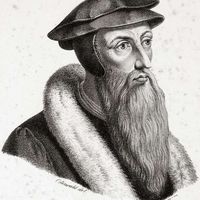
The Protestant Reformer John Calvin (1509-1564) arrived in Geneva to lead the city’s church in 1536, but not, as we might imagine, to universal acceptance. Rather, there was significant resistance and...
Exodus 18:13-27, Judges 6:14, Psalm 23:1-3, Philippians 2:3-4, Matthew 20:25-28
Leadership is not about problems and decisions; it is a profoundly relational enterprise that seeks to motivate people toward a vision that will require significant change and risk on everyone’s part.
Revelation 1:17-18, Revelation 22:13, Colossians 1:16-17, Philippians 2:9-11, Luke 21:33
When the drama of history is over, Jesus Christ will stand alone upon the stage. All the great figures of history—Pharaoh, Alexander the Great, Charlemagne, Churchill, Stalin, Johnson, Mao Tse-tung—wi...
1 Corinthians 1:10-13, Mark 3:24-25, Philippians 2:3-4, James 3:16, Ephesians 4:3-6, Romans 12:8
Our first president, George Washington, refused to run as a member of any political party. He wanted to be a president to all Americans. Washington firmly believed that political parties would divide ...
Colossians 3:16, Philippians 2:5-7, John 13:34-35, Matthew 11:29, Mark 8:34-35, Luke 9:23
Editor’s Note: The following illustration came from one of my own (Stu’s) sermons, as I was trying to help the congregation make a paradigm shift from the church as a building, to the people of God: ...
Picture this: you are just about a year into your first call as a minister. Everything seems to be going swimmingly. You caught up with a seminary friend over the weekend and you slightly brag about h...
James 4:1, Philippians 2:14, 1 Corinthians 14:33, James 1:5
Conflict in Ministry Have you ever whispered to yourself, “I didn’t sign up for this?” I confess those words have passed through my mind more than once over the years. When I started out in ministry...
So the first and most basic task of the Christian leader in the future will be to lead his people out of the land of confusion into the land of hope. Therefore, he must first have the courage to be an...
John 12:1-8, Mark 14:1-2, Matthew 26:3-13, John 11:45, Luke 7:44-47, Matthew 26:6, Mark 14:3, Luke 7:40, John 11:50-53, Luke 24:41-43, John 21:10-14, Acts 10:40-41, John 12:7, Philippians 2:6-8, Romans 6:1-10
Introduction This narrative is slightly changed from the Synoptic accounts. Matthew and Mark’s Gospels place this narrative two days prior to the Passover (Matt: 26:6-13; Mark 14:1). Three Evangelist...
“Good work! You did your job well” (Matt. 25:23 MSG). That phrase reminds me of a story Joe Stowell told me about a time he met the president at the White House. Joe was president of Moody Bible Insti...
Exodus 12:1-14, Psalm 31:9-16, Philippians 2:5-11, Mark 11:1-11
AIM commentary Ancient lens What's the historical context? Original Passover If you frequent any web sites that have thread or message board formats, you occasionally run into the acronym “...
John 12:1-8, Mark 14:1-2, Matthew 26:3-13, John 11:45, Luke 7:44-47, Matthew 26:6, Mark 14:3, Luke 7:40, John 11:50-53, Luke 24:41-43, John 21:10-14, Acts 10:40-41, John 12:7, Philippians 2:6-8, Romans 6:1-10
Preaching commentary Introduction This narrative is slightly changed from the Synoptic accounts. Matthew and Mark’s Gospels place this narrative two days prior to the Passover (Matt: 26:6-13; Mark ...
Preaching Commentary Introduction As we use our acronym (AIM) for understanding the lectionary Psalm 118:1-2, 19-29, we should remind ourselves that the lectionary texts are chosen very carefully t...
Psalm 118:, Matthew 21:9, Mark 11:9, Luke 19:38, John 12:13, Ezra 5:null, Ezra 6:, Mark 12:10-11, 1 Peter 2:5, Deuteronomy 7:8, 1 Corinthians 1:26-27, 1 Corinthians 12:9, Romans 8:26-27, Philippians 2:8-10
Introduction This guide is often read on Palm Sunday and it is especially interesting when read in light of Jesus' triumphal entry into Jerusalem. All the gospels include a quotation of part of P...
Isaiah 9:6-7, Hebrews 1:1-3, Colossians 1:15-17, Philippians 2:6-8, John 3:16-17, John 1:1-4, Luke 1:30-35
In the ancient world, a place where the veil between the earthly and spiritual was easily pierced, rumors and gossip about great leaders being born of the gods, especially amongst royals, was somewhat...
The Servant Leader The servant leader is the hero of this text. And the example, par excellence, is the Apostle Paul. He has never shied away from holding himself up as a person to be imitated, as...
Philippians 2:5-8, Mark 10:45, John 13:3-5, 12-15 , Matthew 25:21, Colossians 3:23-24, Matthew 6:3-4, 1 Peter 5:5-6
The Swiss-German novelist Hermann Hesse published a short story in 1932 called "Journey to the East." In it, a group of men go on a long journey. Throughout their trip, they are accompanied ...
Isaiah 9:6-7, Philippians 2:9-11, Mark 1:16-20, Matthew 11:28-30, John 10:10
H.G. Wells, himself an atheist, makes this point about the nature of greatness as it relates to Jesus: A historian like myself, who doesn’t even call himself a Christian, finds the picture centering...
The most radical social teaching of Jesus was his total reversal of the contemporary notion of greatness. Leadership is found in becoming the servant of all. Power is discovered in submission. The for...
Ancient Lens What can we learn from the historical context? A letter of friendship Paul’s letter to the Philippians is from Paul and his companions to the saints in Philippi. It is a letter fro...
Luke 22:27, Matthew 23:11, Philippians 2:5-7, Galatians 5:13, John 13:14-15, Mark 10:45
The way most of us serve keeps us in control. We choose whom, when, where and how we will serve. We stay in charge. Jesus is calling for something else. He is calling us to be servants. When we make t...
Have you ever noticed geese soaring across the sky in a V formation? Scientists have uncovered the wisdom behind this flight pattern: as each bird flaps its wings, it creates an uplift for the one beh...
Dan B. Allender, in his book Leading Character, tells the story of a friend whose daughter was diagnosed with leukemia. He kept news of his daughter’s illness to himself, fearing that his employees wo...
John 13:14-15, Philippians 2:5-7, Matthew 23:11, James 4:10, Mark 10:45, 1 Peter 5:5-6
In 1878, when William Booth’s Salvation Army was beginning to make its mark, men and women from all over the world began to enlist. One man, who had once dreamed of becoming a bishop, crossed the Atla...
The servant role was completed in Jesus. Though there were auspicious sings that preceded and accompanied his birth, preparing the world for the majestic and kingly, the birth of Jesus itself was of t...