1 John 2:12, Isaiah 11:6, Zechariah 8:5, Luke 18:16, Psalm 8:2, Matthew 18:3, Matthew 19:14
Katja, our seven-year-old granddaughter, stepped in it, as they say. She had doggie droppings on the bottom of her tennies. Not just one foot, mind you, but both. Her mother, Maureen, suggested she le...
Mark 8:35-36, Mark 10:25, Matthew 19:16-26, Luke 18:18-29
Those not familiar with ancient Greek philosophy may be surprised to find deep resonance with the teachings of Jesus. When on trial for his life, the 70-year-old Socrates pugnaciously responded that,...
Isaiah 53:3–5, Daniel 3:16–18, Micah 6:6–8, Matthew 23:23–24, Luke 4:16–30, Psalm 2:1
Jesus, as always, gets caught in the middle—along with a good number of his followers. Many people in America today were brought up in strict Christian homes and churches of one sort or another. There...
Jeremiah 17:9, Proverbs 16:2, Proverbs 21:2, Matthew 7:3-5, Galatians 6:3, 2 Samuel 12:
There is not any thing, relating to men and characters, more surprising and unaccountable, than this partiality to themselves. . . . Hence it is that many men seem perfect strangers to their own chara...
1 Timothy 6:6-8, Proverbs 15:16, Matthew 6:19-21, Philippians 4:11-13, John 6:
The story is told of Socrates walking through the market in Athens, with its groaning abundance of options, and saying to himself, “Who would have thought that there could be so many things that I can...
The man of pseudo faith will fight for his verbal creed but refuse flatly to allow himself to get into a predicament where his future must depend upon that creed being true. He always provides himself...
Exodus 1:15–21, Daniel 3:16–18 , 1 Kings 3:16–28 , Matthew 4:1–11, Galatians 1:6–10, Psalm 73:
Pragmatism may be defined simply as the approach to reality that defines truth as “that which works.” The pragmatist is concerned about results, and the results determine the truth. The problem with t...
Isaiah 29:13, Amos 5:21-24, Proverbs 1:7, James 1:22-25 , Matthew 23:27-28, Psalm 51:16-17
We artful dodgers act as if we do not understand the New Testament, because we realize full well that [if we let on that we did] we should have to change our way of life drastically. That is why we in...
Matthew 14:31, John 20:29, 2 Corinthians 5:7, Proverbs 3:5-6, Mark 9:24, James 1:5-6
We live in an age when belief comes hard because we’re much more afraid of being gullible (believing something that’s not true) than we are of being skeptical (not believing something that is true). W...
Isaiah 58:6–9, Micah 6:6–8, 1 Samuel 16:7, Matthew 23:25–28, James 2:14–17, Psalm 51:16–17
Leo Tolstoy, the great writer, famously renounced his inherited wealth and chose to live as an ascetic and hermit in his later years. One of his disciples, a writer named Chertkov, was a wealthy arist...
Matthew 5:14-16, John 13:34-35, 1 Peter 2:12, Titus 2:7-8, 2 Corinthians 5:20, Matthew 10:16
In another day and age, God, religion and church enjoyed the general respect of the culture. Not today. Religion is suspect, church is weird, and Christians are hypocrites. Distrust has become the nor...
Isaiah 29:13, Judges 2:10-13 , 1 Samuel 8:4-9, Matthew 23:27-28 , 2 Timothy 3:1-5 , Psalm 10:4
Even though it’s now associated with him, Nietzsche didn’t coin the phrase God is dead. As the son of a Lutheran pastor, he would have heard that line in a Lutheran Holy Saturday hymn. And although...
John 5:39-40, Hebrews 4:12-13, Matthew 16:13-15, Mark 10:17-22, John 3:1-10, John 18:33-38, Matthew 12:30
We had thought intellectually to examine him; we find he is spiritually examining us. The roles are reversed between us...A person may study Jesus with intellectual impartiality, he cannot do it with ...
1 Peter 3:8-9, Galatians 3:28, Proverbs 31:8-9, Matthew 5:9, Romans 12:18
Just as Socrates felt that it was necessary to create a tension in the mind so that individuals could rise from the bondage of myths and half-truths to the unfettered realm of creative analysis and ob...
John 1:46, 1 Corinthians 1:26-29, Matthew 20:16, Luke 1:51-53, James 2:1-9, Matthew 11:25, Isaiah 52:2-3, Philippians 2:5-8
The world has always despised people from the wrong places and with the wrong credentials. We are always trying to justify ourselves. We need desperately to feel superior to others. And everything abo...
Isaiah 55:1-3, John 3:1-5, Matthew 1:25-27, John 3:16-17, Psalm 145:8-9
Justin Martyr (ca. 100–165), the most renowned apologist of the second century, dedicated his life to defending Christianity as the one true philosophy. Engaging the Greek philosophers and intellectua...
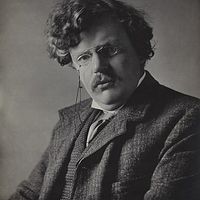
G. K. Chesterton was well-known (and iconoclastic) in his defense of tradition in a time when progress was all the rage in Western Europe- in technology, in the sciences, in philosophy. Chesterton, on...
1 Corinthians 13:2, James 2:19-20, 1 Corinthians 8:1-2, Ecclesiastes 1:18, 1 Corinthians 2:5, Philippians 3:10, Matthew 7:21, 24-27, James 1:22
The Oxford scholar and apologist C. S. Lewis... once closed a lecture to a group of apologists like this: I have found that nothing is more dangerous to one’s own faith than the work of an apologis...
Matthew 5:17-18, Ecclesiastes 12:13-14, Romans 6:23, Proverbs 14:12, James 4:17, 1 John 1:8-9
Postmodernism (the thinking of our age) is fiercely antinomian (without law). It is admitted that people make mistakes, but the word ‘sin’ is seldom mentioned and the idea that we all sin against God ...
Matthew 6:19-21, Isaiah 9:6, Luke 2:10-11, Matthew 2:1-12, 1 Timothy 6:6-7, Luke 12:16-21
If you ever find yourself sympathizing with Charles Dickens’ character Ebenezer Scrooge regarding the commercialization of Christmas, you’re not alone—this has been a common complaint for quite some t...
Matthew 5:11-12, 1 Peter 2:12, Galatians 1:10, Acts 17:16-34, Ephesians 4:29, Matthew 7:1-5, James 4:11-12
In life, whenever someone achieves success, criticism usually follows—regardless of their skill or the effort they’ve invested. An old story illustrates this truth. A woman crafted artificial fruit so...
1 John 4:20, Matthew 6:6-8, Matthew 15:7-9, Titus 1:16, Proverbs 26:24-26, Romans 12:9
The ancient Greek word for actor was hypocritēs (ὑποκρῐτής), which, at first, only implied someone who explained or interpreted something. But by New Testament times, it was more negative. It suggest...
Matthew 5:42, Luke 6:30, Proverbs 19:17, Matthew 25:35-36, Deuteronomy 15:7-8
“Give a man a fish and you feed him for a day. Teach him how to fish, and you feed him for a lifetime. Therefore, don’t give a man a fish.” This is the cultural mantra of many in the middle and upper ...
In the land whose founding metaphor was the mutuality of John Winthrop’s seventeenth-century vision of a “city set on a hill,” we live more and more in estranged, hostile, exclusive enclaves, linked o...
Matthew 23:11, Mark 9:35, Luke 17:33, 2 Corinthians 6:10, James 1:2
Paradox...comes from two ancient Greek words, para meaning “beyond” and doxa meaning “opinion.” Literally, it means “beyond opinion,” but it originally conveyed the sense of “being beyond the pale of ...
If you could cut one or two Beatitudes, which would you drop from the list? Perhaps the ones about the righteous or the persecuted or those who mourn? What might you add? “Blessed are the driven, for ...







![[The decay of Logic results from an]](https://images.unsplash.com/photo-1709399610754-921b7a9ef3b7?ixid=M3w1NzU0OTZ8MHwxfHNlYXJjaHw0NXx8bG9naWN8ZW58MHwwfHx8MTcxMjA3NTI4Mnww&ixlib=rb-4.0.3&q=80&auto=compress&fit=crop&w=200&h=200)