Genesis 3:1-7 , Exodus 32:1-6 , Ecclesiastes 2:1-11, Psalm 73:25-26, Matthew 4:1-11 , James 1:13-15
The church fathers consistently acknowledged the beauty and goodness of desire (e.g., Augustine, above), but they were not naive to the potential for desire to be bent by sin. They knew that our longi...
Colossians 3:5, 2 Corinthians 10:4-5, 1 John 2:16, James 1:14-15, Romans 8:1-2, Galatians 5:16-17
The early church fathers named the primary sin patterns “passions,” borrowing a Latin term that could also be translated “sufferings ” As we live out a unique pattern or “face” of sin, we begin to thi...
Revelation 2:10, Psalm 71:20-21, Philippians 3:10-14, Luke 21:16-19, 2 Corinthians 4:17-18, Romans 8:17-18, James 1:12
One of the great leaders of the first generation after the apostles was a man named Polycarp. Polycarp, it is believed, was discipled by the apostle John and carried out a long and fruitful ministry i...
Matthew 22:37-39, Matthew 25:35-40, Luke 3:11, Ephesians 5:2, Acts 2:42-47, James 2:14-17, Galatians 2:10, Psalm 72:12-14
A passage often referred to in order to describe the sacrificial, countercultural quality of the early church comes to us interestingly enough, from one of its strongest critics, known later to histor...
Matthew 22:39, Philippians 2:3-4, 1 Corinthians 10:24, Romans 15:1-2, Galatians 6:10, Romans 12:10, Acts 20:35, Matthew 25:35-40, Isaiah 58:6-7, Proverbs 19:17, Luke 10:30-37, James 2:15-16, 1 John 3:17, Proverbs 31:8-9, Matthew 25:40, Acts 11:29-30, 2 Corinthians 8:13-15, Acts 2:44-45, Acts 4:32-35, 1 Corinthians 12:25-26
Pursuing the common good has been a strong marker of the Christian church from the very beginning. The early church had many habits that they became known for, of course—including meeting frequently, ...
James 1:27, Isaiah 1:17, Psalm 68:5, Matthew 25:34-40, 1 Timothy 5:3-4, Zechariah 7:9-10, Matthew 12:48-50, Romans 8:14-17, Luke 4:18, Acts 4:34-35, James 2:15-16
Christianity revitalized life in Greco-Roman cities by providing new norms and new kinds of social relationships able to cope with many urgent urban problems. To cities filled with the homeless and im...
The first three items in Paul’s fruit basket sound very spiritual. Heavenly almost. Very nice for Sundays, at least. But his next one, patience, brings us back down to earth on a Monday. What are we l...
Romans 12:1, Matthew 22:37-38, James 2:14-17, John 14:15, Luke 9:23, Philippians 2:5-8, Romans 10:9-10, Psalm 1:1-6
New Testament theology is ‘inherently self-involving as it summons the reader to believe, confess, obey, and understand the entirety of one’s existence—both her or his thinking and willing—in light of...
Isaiah 29:13, Amos 5:21-24, Proverbs 1:7, James 1:22-25 , Matthew 23:27-28, Psalm 51:16-17
We artful dodgers act as if we do not understand the New Testament, because we realize full well that [if we let on that we did] we should have to change our way of life drastically. That is why we in...
Romans 12:2, Galatians 6:1, Proverbs 9:10, James 1:4, Isaiah 61:3
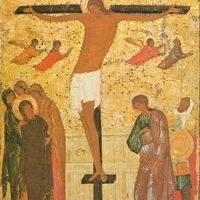
Think of an ancient icon of Christ. Imagine that a thousand-year-old Christ Pantocrator painted on a wooden panel is discovered in some forgotten monastery. The image of Christ is there, but it’s cove...
Luke 6:17-26, Matthew 5:1-12, Luke 4:33, Luke 16:19-31, Psalm 9:10, Psalm 12:6, Isaiah 41:17, Zephaniah 3:12, Luke 4:18, James 4:8-10, Luke 5:11, 28, Luke 14:25-33, 1 Peter 4:14, Jeremiah 17:5-10, Jeremiah 6:13
The context The beatitudes are one of the most well-known aspects of Jesus teaching. As in the more familiar account in Matthew (5:1-12), Luke presents these words as Jesus’ first public teaching; hi...
2 Corinthians 12:9, Isaiah 40:29, 2 Corinthians 3:5, Hebrews 4:16, James 4:6, 1 Peter 5:6-7
Brother Lawrence, a 16th-century Carmelite monk, spent his days scrubbing pots and mending shoes. Largely uneducated, he filled his free time writing letters and notes that, after his death, friends g...
Acts 1:9-11, 1 Thessalonians 1:9-10, 1 Thessalonians 4:16-17, Philippians 3:20-21, James 5:7-8, Revelation 22:20, Luke 21:27-28, Matthew 24:42-44
The early apostolic communities cannot be understood outside of the matrix of intense expectation. They were communities awaiting Christ’s return. They gathered in Eucharist for, among other reasons, ...
Hebrews 12:1-2, Matthew 5:14-16, 1 Corinthians 1:25, Micah 6:8, Colossians 3:16, James 3:17
In Soul-Making , Allen Jones shares an intriguing visit to the Coptic Monastery of St. Macarius out in the Egyptian desert. There, he meets Father Jeremiah, a monk who spins tales of the desert fathe...
1 Corinthians 13:2, James 2:19-20, 1 Corinthians 8:1-2, Ecclesiastes 1:18, 1 Corinthians 2:5, Philippians 3:10, Matthew 7:21, 24-27, James 1:22
The Oxford scholar and apologist C. S. Lewis... once closed a lecture to a group of apologists like this: I have found that nothing is more dangerous to one’s own faith than the work of an apologis...
Revelation 2:10, Matthew 5:10-12, 2 Timothy 4:7-8, 1 Peter 4:12-13, James 1:12, Psalm 46:1-3
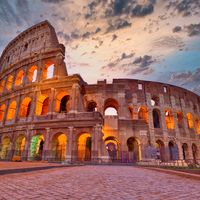
Like a scene straight out of Gladiator, Polycarp was dragged into the Roman Colosseum. Discipled by the apostle John himself, the aged bishop faithfully and selflessly led the church at Smyrna through...
Revelation 3:15-16, Matthew 6:24, James 1:6-8, Luke 14:34-35, Revelation 2:4-5, 1 Corinthians 15:1-4, 1 Corinthians 1:18
Thomas Linacre was king’s physician to Henry VII and Henry VIII of England, founder of the Royal College of Physicians, and friend of the great Renaissance thinkers Erasmus and Sir Thomas More. Late i...
Luke 3:8, 1 Samuel 16:7, Isaiah 1:17, Micah 6:8, James 2:1
In the Christian faith, we frequently take for granted how radically Jesus evens the playing field. No matter your wealth, your position, let alone your race or gender, all of us are equal in God’s ey...
Luke 11:1-13, Matthew 18:23-35, Colossians 3:13, James 1:2-3
Context Jesus’ lesson on prayer in Luke’s gospel comes not in the context of a longer sermon (as with Matthew’s parallel in the Sermon on the Mount), but rather in response to a request from one of h...
Matthew 5:13-20, James 3:1, Matthew 4:16, Matthew 6:23, Matthew 10:27, 1 John 1:4-7, 1 John 1:7, 1 John 2:9-10
Restored or Thrown Out? Having grown accustomed to the redemption theme that permeates Scripture, I find the answer that Jesus provides to his own question in v. 13 unexpected and unsettling—like get...
Psalm 147:3, Jeremiah 30:17, Matthew 11:28-30, James 5:16, Psalm 34:18, Psalm 51:10, Jeremiah 33:6
One of the challenges, at least in the western church, is an inability to deal with our wounds in a healthy way. Our training as Christians has been focused on Bible studies, small groups, and Sunday ...
Father God, too often we show preference to those who appear to have it all together, to those whom we consider complete: the self-motivated, self-made, and self-sufficient. We honor the rich and look...
Isaiah 57:15, Mark 10:43-45, James 4:6, Ephesians 4:2, Micah 6:8, Matthew 23:12
In the Greco-Roman world of Paul’s day, humility was a despised trait. They viewed it as a sign of weakness. And our culture today is no different from that world of two thousand years ago. Maybe it’s...
The Necessity of Memory Memory—or, more actively, remembering , plays an all-important role in our lives. Our culture likes us to focus on the now, "looking forward rather than looking back&q...
1 John 3:18, 2 Corinthians 5:18-19, Micah 6:8, Galatians 6:2, James 1:22, Colossians 3:16, 2 Timothy 3:16-17
When we don’t meet Christ in Scripture and are not regularly being discipled by or discipling others, it is impossible to discern what being a Christian means or to cultivate a relationship with God. ...
Matthew 10:40-42, John 20:21, Acts 1:18, 2 Peter 2:13, Luke 17:10, John 3:18, Matthew 28:19, Ephesians 5:20, James 5:14, Colossians 3:17, Acts 3:6, 1 Corinthians 6:11, Acts 20:35
The Transitive Property of Welcoming In elementary school math you learn various basic principles of working with numbers…the commutative property, the associative property, the distributive property...
James 1:22-24, Matthew 7:24-27, Colossians 3:16, 2 Timothy 3:16-17, Hebrews 5:12-14
I’m a huge advocate of catechisms, for example, having used this approach with my kids. I even wrote one. The strength of a catechism isn’t in memorizing the questions and answers of the catechism; th...
James 3:13-4:3; 7-8a, James 3:13-18, James 4:1-3, 7-8, James 1:16-27, Galatians 5:22, Proverbs 1:7, Psalm 37:4, James 4:3, Philippians 2:1-5, Psalm 121:null, Psalm 30:null, Jeremiah 11:18-20, Psalm 54:null, James 1:16-27, Galatians 5:22, Proverbs 1:7, Psalm 37:4, James 4:3, Philippians 2:1-5, Psalm 121:null, Psalm 30:null
James' Intent James, the brother of Jesus, the leader of the earliest Christian church in Jerusalem, writes this letter to scattered Jewish believers who were going through very difficult times. ...
John 20:19-31, Matthew 17:20, James 1:6, Mark 9:24, Hebrews 11:6
At the heart of this story is Jesus’ generous offer of himself to Thomas... Thomas had established the conditions for his faith: He must be allowed to touch Jesus’ wounds…. Jesus does not censure Thom...
Luke 6:17-26, Matthew 5:1-12, Luke 4:33, Luke 16:19-31, Psalm 9:10, Psalm 12:6, Isaiah 41:17, Zephaniah 3:12, Luke 4:18, James 4:8-10, Luke 5:11, 28, Luke 14:25-33, 1 Peter 4:14, Jeremiah 6:13
Preaching Commentary The context The beatitudes are one of the most well-known aspects of Jesus teaching. As in the more familiar account in Matthew (5:1-12), Luke presents these words as Jesus’ fi...