The Hebrew cosmology represents a revolutionary break with the contemporary world, a parting of the spiritual ways that involved the undermining of the entire prevailing mythological world-view... The...
Maybe the most sacred function of memory is just that: to render the distinction between the past, present, and future ultimately meaningless: to enable us at some level of our being to inhabit that s...
Without the binding force of memory, experience would be splintered into as many fragments as there are moments in life. Without the mental time travel provided by memory, we would have no awareness o...
To frame is to put a language boundary around our experience. It is to name what happens in particular ways, to say how we see the world, and to see the world how we say it is. Framing includes tellin...
Ancient lens What’s the historical context? Psalm of Lament or Psalm of Trust? We’ve categorized this psalm under the psalms of lament. The psalms of lament highlight the problems and enemies tha...
Mark 7:1-23, Mark 7:1-12, Isaiah 29:13, Exodus 12:6-20, Deuteronomy 6:20-25, Joshua 4:1-9
Context Ritual Purity The most important broad contextual issue to address with this passage is the concept of ritual purity, and the ways in which this served as a boundary and identity marker for ...
Mark 7:1-8, 14-15, 21-23, Mark 7:11-12, Isaiah 29:13, Exodus 12:6-20, Deuteronomy 6:20-25, Joshua 4:1-9
Context Ritual Purity The most important broad contextual issue to address with this passage is the concept of ritual purity, and the ways in which this served as a boundary and identity marker for ...
Now I have to ask you: If Jesus Christ, the Son of God, did not presume to face the forces of evil in the world without a profound knowledge of the Bible in mind and heart, how could we try to face li...
There’s a quote by H. Richard Niebuhr that I believe is absolutely true. “The great Christian revolutions,” he argued, “come not by the discovery of something that was not known before. They happen w...
1 Kings 8:27, Isaiah 55:8-9, Matthew 6:33, Deuteronomy 6:5, Psalm 139:7-10, Jeremiah 23:24, Luke 9:23, Romans 11:33
God of all times and places, we confess that we try to limit our exposure to you. We try to limit your presence to a tidy little box, safely tucked away where we can pull you out as needed. We try to ...
Ancient lens What’s the historical context? Psalm of Lament or Psalm of Trust? We’ve categorized this psalm under the psalms of lament. The psalms of lament highlight the problems and enemies tha...
This passage from Joshua underscores a central element of the biblical view of meditation: obedience. This is in marked contrast to the various forms of meditation in many religions around the world. ...
Matthew 9:35-10:8, Deuteronomy 6:6-8, 1 Corinthians 3:7, Acts 1:null
Preaching Commentary Here Comes the Crowd Though he was challenging and divisive, Jesus always could draw a crowd. Some came because he had miraculously healed the lame or fed thousands. Others wer...
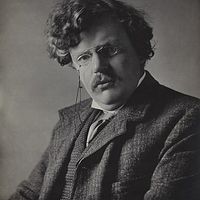
G. K. Chesterton was well-known (and iconoclastic) in his defense of tradition in a time when progress was all the rage in Western Europe- in technology, in the sciences, in philosophy. Chesterton, on...
Matthew 13:, Philippians 3:1, 1 Samuel 3:1–10 , Exodus 7:12, Deuteronomy 6:4–9 , Psalm 136:
In the second century before Christ the great rival to Roman power in the Mediterranean world was Carthage, the Phoenician city-state located on the north African coast. It had been founded in 822 B.C...
Culture is like gravity. We never talk about it, except in physics classes. We don’t include gravity in our weekly planning processes. No one gets up thinking about how gravity will affect their day. ...
There’s a story that used to make the rounds about the German theologian Paul Tillich. Tillich’s theology was considered dangerous by many Christians in the U.S. Supposedly one time after delivering a...
Matthew 9:35-10, Deuteronomy 6:6-8, 1 Corinthians 3:7, Acts 1:null
Here Comes the Crowd Though he was challenging and divisive, Jesus always could draw a crowd. Some came because he had miraculously healed the lame or fed thousands. Others were there for the scandal...
Leader: Scripture teaches us that there is one good and holy God; that we were created in God’s image, to commit ourselves to Him, to do good works, to reflect His glory, and to know Him as loving Fat...
Matthew 7:24, Proverbs 3:5-6, Psalm 119:105, Joshua 1:8, Deuteronomy 6:6-7
In C. S. Lewis’ The Silver Chair, Jill meets the lion, Aslan, high atop a mountain before her quest begins to save a prince. Aslan shares four important signs for her to remember along the way. These ...
My faith life, like that of every one else, fluctuates. There are ups and downs and hot spots and cold spots and boredom and ennui and all the rest can be there. And so I’m not asked on a Sunday morni...
Matthew 23:1-12, Psalm 119:null, Matthew 11:28-30, Deuteronomy 6:8
Preaching Commentary If religion is to be true, its leadership must be true. —Frederick Dale Bruner [1] Humble Leadership Whenever Anthony Bloom, a former bishop and archbishop serving in Londo...
Matthew 6:1-6, Deuteronomy 6:4-9, Matthew 23:4, 5, 13-36, Mark 12:42, Luke 21:2, Isaiah 58:6, Joel 2:1-2, 12-17
Ancient Lens What can we learn from the historical context? "Hear O Israel..." The Shema (Deuteronomy 6:4-9) commands the Israelites to love the Lord their God with heart, soul, and m...
1 Corinthians 3:2, Hebrews 5:12-14, Luke 10:25-26, Deuteronomy 6:7, James 1:22
[M]y husband, Nick, tells a story of when he was a teenager riding his bike with his friends, and his chain came off his bike. Nick took the bike to his dad, who said, “I'll fix it, you watch”. Hi...
Mark 12:28-34, Deuteronomy 6:4-9, Matthew 22:35–40, Mark 12:28–34, Luke 10:27, Leviticus 19:17-18, Ruth 1:1-18, Psalm 146:, Deuteronomy 6:1-9, Psalm 119:1-8, Hebrews 9:11-14
Ancient Lens What's the historical context? An Honest Inquiry from the Religious Leaders It is easy—perhaps tempting—to read this passage with built-in sarcasm because we know the general ton...