Christ followers were first called Christians at Antioch—about fifteen years after the birth of the church at Pentecost. There must have been something remarkable about this particular group of believ...
The South African politician Nic Diederichs—a prominent leader during the apartheid era—once made a rather provocative observation: God, he said, dislikes deadly uniformity. I hate to admit that I lik...
Across all barriers of land and language, wealth and poverty, knowledge and ignorance, we are one, created from the same dust, subject to the same laws, and destined for the same end. With this compas...
What the early Christians did not have to deal with to the same extent that we do today is how race has become an idol. On both sides of the racial divide, so much is twisted by the social constructs ...
As a black man, I pause when I see that Jesus was taken to Africa as a baby for refuge (Matthew 2:13–18). My blackness will not allow me to gloss over the Ethiopian man whom Philip cozies up to in Act...
Lamin Sanneh, the African theologian who would be pivotal in the development of missional theology, was raised in an orthodox Muslim household in Gambia. He found himself drawn to Christianity after e...
John 13:34-35, Isaiah 1:17, Proverbs 31:8-9, Acts 17:26, Micah 6:8, James 2:1, Galatians 3:28
To remain neutral in a situation where the laws of the land virtually criticized God for having created men of color was the sort of thing I could not, as a Christian, tolerate.
Exodus 5:1–2, 1 Kings 18:21–39, Daniel 3:16–18, Matthew 5:14–16, Acts 4:19–20, Psalm 2:1–2, 10–12
Most secularists are too politically savvy to attack religion directly or to debunk it as false. So what do they do? They consign religion to the value sphere—which takes it out of the realm of true a...
So if we want to get the church right, we have to learn to see it as a salad in a bowl, made the Right Way of course. For a good salad is a fellowship of different tastes, all mixed together with the ...
Mark 1:16-28, Acts 8:26-40, Acts 16:11-15, Joshua 21:32
For purposes of practicality and relatability, this series considers the Sea of Galilee to be a lake and classifies other fresh or mostly fresh water locations together under the same banner. The poin...
The United States retains a basic respect for religion though it may be following European trends: surveys show a steady rise in the “nones” (now one-third of those under the age of thirty), that is, ...
Acts 10:34-35, Acts 2:1-12, John 4:1-42, Romans 12:10, 1 John 4:20-21
God and Father of all, in your love you made all the nations of the world to be a family, and your Son taught us to love one another. Yet our world is riven apart with prejudice, arrogance, and pride....
In this short (and humorous) excerpt, author David Zahl shares a definition of the secular: Perhaps secular warrants its own explanation, though. My most immediate association comes from the belov...
Luke 12:33-34, Luke 18:28-30, Acts 2:44-45, Matthew 19:21, Mark 10:29-30, Luke 14:26
Family and property, then, were not for the ancient Jew simply what they are to the modern western world. Both carried religious and cultural significance far beyond personal, let alone “individual,” ...
Today, unlike almost any other earlier period, the money and the strong educational institutions of Christianity are in one part of the world, while a majority of the active believers are located else...
In the book of Hebrews (and elsewhere in the New Testament and theology, generally), the Greek and Jewish worlds collide. A funny parallel may be drawn between this and George's complete meltdown ...
Matthew 28:18-20, Acts 1:8, Acts 10:34-35, Galatians 3:28, Romans 1:16, John 4:21-24, Psalm 22:27-28
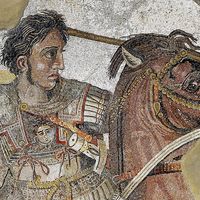
[Speaking of the early church] A cosmopolitan spirit grew, particularly in the cities, that transcended national barriers. Old tribal distinctions and identities were breaking down, leaving people rip...
There are three ways to eat a salad: the American Way; the Weird Way, and the Right Way. The American Way of eating a salad is to fill your bowl with some iceberg lettuce or some spinach leaves, some ...
We didn’t have a lot of rules [at the food pantry at St. Gregory, an Episcopal congregation in San Francisco]. You could be a drunk or junkie, but you couldn’t volunteer if you were high. You couldn’t...
Acts 17:6, Revelation 5:9-10, Galatians 3:28, Romans 8:17, Matthew 5:3
The kingdom of God turns the Darwinist narrative of the survival of the fittest upside down (Acts 17:6–7). When the church honors and cares for the vulnerable among us, we are not showing charity. We ...
Luke 10:25-37, Matthew 16:24, Acts 2:44-45, James 2:14-17, Mark 10:43-45, 1 John 3:17-18, John 13:14-15, Isaiah 58:6-7
Free us, Lord, from our obsession with ourselves long enough to care for others; to be so concerned about the well-being of the human community that me don’t have to worry about our place, our church,...
1 Peter 4:8, 1 Samuel 18:20, Acts 2:42-47, Ephesians 4:2-3, Romans 12:10, 1 John 4:20-21
Our bond, which you resent, consists in mutual love, for we know not how to hate; we call ourselves ‘brethren’ to which you object, as members of one family in God, as partners in one faith, as joint ...
Far too many people, especially within evangelicalism, think that the individual is all that matters, and that the corporate dimension is a distraction or diversion. Of course Christianity is deeply p...
Matthew 25:34-40, Acts 2:42-47, Matthew 21:12-13, Luke 10:25-37, Romans 12:2, Matthew 5:13-16
To focus our expectation in an otherworldly salvation has the potential to dissipate our resistance to societal evil and the dedication needed to work for the redemptive transformation of this world.
Jim was leaving church after Christmas services when the pastor greeted him and said, “Jim, it’s time you joined the Army of the Lord. We need to see you every Sunday.” “I’m already in the Army of th...






![[Speaking of the early church] A](https://a-us.storyblok.com/f/1016915/1200x801/ed572a4861/the-early-church.jpg/m/200x200/smart)