Exodus 3:7–10, Isaiah 58:6–10 , Amos 5:21–24, Luke 4:16–21, James 2:1–7, Psalm 9:9–10
I can count on the fingers of one hand the number of times that I have heard a sermon on the meaning of religion, of Christianity, to the man who stands with his back against the wall. It is urgent th...
Psalm 2:10-11, John 18:36, Matthew 5:13-16, Jeremiah 29:7, Micah 6:8, 1 Samuel 15:22
We can’t separate what we believe in the political arena from who we are in Christ and what obedience to God demands...That said, not every tenet of Christianity should become the law of the state. We...
Mark 7:1-23, Mark 7:1-12, Isaiah 29:13, Exodus 12:6-20, Deuteronomy 6:20-25, Joshua 4:1-9
Context Ritual Purity The most important broad contextual issue to address with this passage is the concept of ritual purity, and the ways in which this served as a boundary and identity marker for ...
The challenge each of these faced in their deconstruction—and what we may face—is walking the tightrope between becoming our own person and honoring our past. In The Homeless Mind , sociologist P...
Mark 7:1-8, 14-15, 21-23, Mark 7:11-12, Isaiah 29:13, Exodus 12:6-20, Deuteronomy 6:20-25, Joshua 4:1-9
Context Ritual Purity The most important broad contextual issue to address with this passage is the concept of ritual purity, and the ways in which this served as a boundary and identity marker for ...
Two-thirds of the story of redemption is known to Christians as the Old Testament. Yet in the decades that I have been teaching Bible, I have found that most Christians, if allowed to answer honestly,...
We can love what we are, without hating what- and who we are not. We can thrive in our own tradition, even as we learn from others, and come to respect their teachings.
Genesis 1:26-27, Genesis 1:27, Song of Solomon 4:7-10, Proverbs 5:18-19 , 1 Corinthians 6:19-20 , Ephesians 5:31-32, Psalm 139:13-14
The spiritual discipline of honoring the body helps us find our way between the excesses of a culture that glorifies and objectifies the body and the excesses of Christian tradition that have often de...
The Church does not stand in a vacuum. Beginning from the beginning, however necessary, cannot be a matter of beginning off one’s own bat. We have to remember the communion of saints, bearing and bein...
Matthew 18:20, 1 Peter 2:5, Hebrews 10:24-25, Acts 2:42-47, Colossians 1:18, Ephesians 4:15-16, Romans 12:4-5
Editor’s Note: The following illustration came from one of my own sermons, as I was trying to help a congregation see itself not as a building, but the body of Christ. It has been adapted for TPW. No...
In particular, there is a noble Christian tradition which takes evil so seriously that it warns against the temptation to “solve” it in any obvious way.
Tradition is a willingness to read Scripture, taking into account the ways in which it has been read in the past. It is an awareness of the communal dimension of Christian faith, which calls shallow i...
The Danish philosopher and contrarian Soren Kierkegaard once compared Christians of his time to a flock of geese in a barnyard. Every week, they listened to an eloquent speaker who recounted the stori...
Tradition means giving votes to the most obscure of all classes — our ancestors. It is the democracy of the dead. Tradition refuses to submit to the small and arrogant oligarchy of those who merely ha...
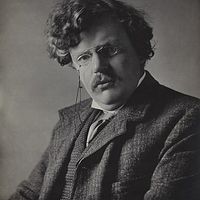
G. K. Chesterton was well-known (and iconoclastic) in his defense of tradition in a time when progress was all the rage in Western Europe- in technology, in the sciences, in philosophy. Chesterton, on...
Ecclesiastes 7:10, Colossians 2:8, Matthew 9:17, 1 Thessalonians 5:21, Romans 12:2, Mark 7:8-9, Isaiah 43:19
It’s funny how sometimes members of the church can associate anything new with “heresy.” We often make the mistake of confusing technological innovations or scientific discoveries for changes to the g...
The farmers in the old prairie days used to prepare for a winter storm by putting up a rope between the house and the barn. They did this because they knew that in a swirling blizzard, even a brief di...
Isaiah 55:8-9, Jonah 4:1-11, Numbers 22:21-34, Matthew 9:10-13, Mark 2:23-28, Psalm 19:12-14
It takes a great deal of freedom and love to be therapeutic with a group. Many years ago when Emil Brunner, the great Swiss theologian, was lecturing in this country, it was reported that when he prea...
Mark 2:27, Isaiah 29:13, Matthew 15:2-6, Mark 7:3-13, Colossians 2:8, Galatians 1:14
Season 3, episode 21 of Bluey (an episode called “Tina”) opens with Bandit telling his daughter Bluey to put her plate in the dishwasher. When Bluey pushes back and asks why, Bandit replies, “Be...
Isaiah 40:1-5, 2 Kings 7:3-9 , Isaiah 61:1-3 , Luke 4:16-21, John 20:11-18, Psalm 96:2-3
When I remember that the literal translation of the term gospel is “good news,” I recall a wonderful encounter with her late Majesty Queen Elizabeth, the Queen Mother. In the summer of 2001, I f...
In 1985, losing market share to Pepsi, Coca Cola decided to revamp its taste, coming up with new formulas and doing blind taste tests. Thus, New Coke was born—a byword for failure. In response, instea...
One of the gifts John Wesley left the church is the Quadrilateral. The Wesleyan Quadrilateral refers to the four ways we come to know something as true: Scripture (what the Bible teaches), tradition (...
In this short excerpt, Father Roderick Strange speaks to those who want to write off the church. It is written primarily to a Roman Catholic audience, but it relates quite well to Protestants as well:...
The fact that a cross became the Christian symbol, and that Christians stubbornly refused, in spite of the ridicule, to discard it in favour of something less offensive, can have only one explanation....
Matthew 5:17-18, Mark 2:27-28, John 8:58, Luke 4:18-21, Matthew 5:7, John 8:1-11, Luke 24:13-27
Jesus appears in the Gospels as a theologian who begins with a mastery of the tradition and then reshapes it by offering a new vision centered on his own person.