By speaking about articulation as a form of leadership we have already suggested the place where the future leader will stand. Not “up there,” far away or secretly hidden, but in the midst of his peop...
I sometimes hear people talk about leaders as people who make things happen. But it takes followers to make Jesus' agenda happen. My friend Julie tells me that physicists define a leader as an ext...
Mark 10:43-45, Philippians 2:3-8, 1 Peter 5:2-3, James 3:13
It came down to one essential definition. The central dimension for Level 5 is a leader who is ambitious first and foremost for the cause, for the company, for the work, not for himself or herself; an...
The Servant Leader The servant leader is the hero of this text. And the example, par excellence, is the Apostle Paul. He has never shied away from holding himself up as a person to be imitated, as...
Mark 10:42-45, Matthew 20:25-28, 1 Corinthians 1:12-13, 1 Timothy 4:12, John 7:16, Galatians 1:10, 2 Timothy 4:3-4, 2 Corinthians 4:5, John 3:30, 1 Corinthians 2:1-2
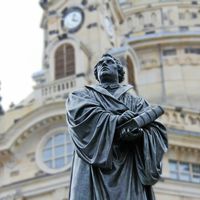
When Martin Luther discovered that some had begun calling the first Protestants “Lutherans,” he strongly objected. It is funny to think that some 500 years later, many are still known by his name: ...
2 Corinthians 11:2, Acts 13:50, James 4:13-15, Philippians 2:3-4, Romans 12:17-19, 1 Peter 2:23, 2 Timothy 4:2, 1 Peter 5:2-3, John 21:15-17, 2 Corinthians 4:5, 1 Corinthians 2:1-5
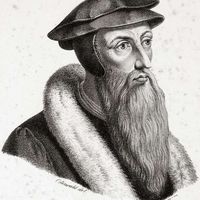
The Protestant Reformer John Calvin (1509-1564) arrived in Geneva to lead the city’s church in 1536, but not, as we might imagine, to universal acceptance. Rather, there was significant resistance and...
People in the world naturally want to boss others. Imagine a boy beginning work with a firm. He has a lowly place and is ordered around by everyone. Do this! Do that! Every dirty job is his. He is the...
John 13:14-15, Philippians 2:5-7, Matthew 23:11, James 4:10, Mark 10:45, 1 Peter 5:5-6
In 1878, when William Booth’s Salvation Army was beginning to make its mark, men and women from all over the world began to enlist. One man, who had once dreamed of becoming a bishop, crossed the Atla...
The servant role was completed in Jesus. Though there were auspicious sings that preceded and accompanied his birth, preparing the world for the majestic and kingly, the birth of Jesus itself was of t...
Philippians 2:5-8, Mark 10:45, John 13:3-5, 12-15 , Matthew 25:21, Colossians 3:23-24, Matthew 6:3-4, 1 Peter 5:5-6
The Swiss-German novelist Hermann Hesse published a short story in 1932 called "Journey to the East." In it, a group of men go on a long journey. Throughout their trip, they are accompanied ...
When Jesus caught his disciples arguing about who among them was the greatest, they felt embarrassed—but Jesus didn’t rebuke them for wanting to be great. He simply gave them an unexpected formula: Be...
preaching commentary The Servant Leader The servant leader is the hero of this text. And the example, par excellence, is the Apostle Paul. He has never shied away from holding himself up as a pe...
Summary This is one of those texts where it’s pretty easy to laugh at the disciples. This is the second time Jesus told them he was going to die and then rise again after three days. And yet they wer...
James 2:1-17, James 1:27, Galatians 3:16, Colossians 3:11, Romans 2:11, Ephesians 6:9, Colossians 3:25
A Highly Practical Text Often we come to scripture passages that require a bit of interpretive twists and turns to find ways of connecting the text to our modern-day lives in the 21st century. But oc...
James 2:1-17, James 1:27, Galatians 3:16, Colossians 3:11, Romans 2:11, Ephesians 6:9, Colossians 3:25
Preaching Commentary A Highly Practical Text Often we come to scripture passages that require a bit of interpretive twists and turns to find ways of connecting the text to our modern-day lives in t...
Ancient Lens What can we learn from the historical context? A letter of friendship Paul’s letter to the Philippians is from Paul and his companions to the saints in Philippi. It is a letter fro...
In Tolkien’s Lord of the Rings trilogy, the characters of Boromir and Frodo illustrate well the dichotomy between exaltation and service. As a mighty warrior and heir-apparent to be the leader his...
John 13:1-17, John 13:31-35, Luke 22:25-27, Matthew 20:25-28, Mark 10:42-45
Reflection We all are aware of cultures that have a hierarchy—a pecking order. The elite and the hoi polloi. The acceptable and the unacceptable. In such cultures, the hierarchy determines the role. ...
Matthew 25:35-40, James 1:27, Philippians 2:3-4, John 13:3-5, Micah 6:8, Isaiah 58:6-7, 1 John 3:18
An ancient legend tells of a well-respected rabbi who would vanish from his synagogue for a few hours each Sabbath. His mysterious absences sparked curiosity among his students, who wondered if their ...
"Maundy" What? Maundy Thursday takes its name from the Latin version of John 13:34: "A new commandment I give to you, that you love one another: just as I have loved you, you also are ...
At this point in the Gospel we move out of the streets into the quiet of a room. “The noise of the cosmos has died away: the stillness of night prevails” (Bultmann). And yet, in [that] quiet room, Jes...
Zechariah 9:9, Exodus 12:1–28 , 2 Kings 9:13 , Matthew 21:1–11, John 12:12–16, Psalm 118:25–26
Frederick Buechner is a master of capturing the excitement of the moment of Palm Sunday. It’s a great reminder that the story itself is a great illustration! We call it Palm Sunday because maybe t...
John 13:1-17, 31B-35, John 13:31-35, Exodus 12:4, Psalm 116:6, 1 Corinthians 11:23
John's Account of the Last Supper This passage is most often preached on on Maundy Thursday (or Holy Thursday). By our modern measure, “Thursday” would also include Gethsemane and other events of...
Psalm 124:8, Psalm 130:3-4, Luke 18:13, John 20:19-23
Pastor: Our help is in the name of the Lord, People: who made heaven and earth. Pastor: If You, O Lord, kept a record of sins, O Lord, who could stand? People: But with You th...