Lord and God, you know what we are about to say in prayer, you know what we ought to say, and even what we need to say but cannot. Our sins trouble us, though they don’t trouble us as much as they sho...
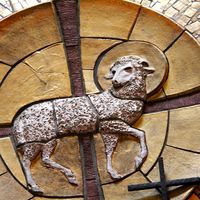
In C.S. Lewis’ famous “children’s story,” The Lion, the Witch, and the Wardrobe , Susan and Lucy mourn the death of the great lion king Aslan, who sacrificed his life for the kingdom of Narnia. The...
The Convert After one moment when I bowed my head And the whole world turned over and came upright, And I came out where the old road shone white. I walked the ways and heard what all men said, Fore...
...left to ourselves we lapse into a kind of collusion with entrophy, acquiescing in the general belief that things may be getting worse but that there's nothing much we can do about them. And we ...
Revelation 21:1-4, John 14:2-3, Hebrews 13:14, Isaiah 65:17, 2 Peter 3:13, Philippians 3:20-21
In her book Keeping Place: Reflections on the Meaning of Home, Jen Pollock Michel reflects on the nature of home in a transient age. In this short excerpt, Michel describes the central longing in both...
To enter into the realm of contemplation one must in a certain sense die: but this death is in fact the entrance into a higher life. It is a death for the sake of life, which leaves behind all that we...
Matthew 28:1-10, Matthew 27:51, Daniel 7:13-14, John 11:null, Psalm 30:null
Earthquakes & Cosmic Animation In Matthew 27:51, we read of an earthquake that occurred the moment Jesus breathed his last breath. Matthew wants us to note that the following chain of events (inc...
Ancient Lens What can we learn from the historical context? Back to Bethany The trans-Jordan village of Bethany was the place in which Jesus’ ministry began. It is now the place in which our text...
Ancient Lens What can we learn from the historical context? Back to Bethany The trans-Jordan village of Bethany was the place in which Jesus’ ministry began. It is now the place in which our text...
John 10:10, John 11:25-26, John 1:4, John 14:6, Romans 6:4, 1 John 5:11-12
The Greek language, in which the New Testament was written, has two words for life. One ( bios ) means “mere biological existence”; the other ( zoe ) means “lie in all its fullness.” What we are being...
Norman Malcolm was an American philosopher who became close friends with Ludwig Wittgenstein (the founder of Analytic Philosophy, one of the most popular schools of philosophy up through today). In 19...
Make no mistake: if he rose at all It was as His body; If the cell’s dissolution did not reverse, the molecule reknit, The amino acids rekindle, The Church will fall. It was not as the flowers, Each ...
It is not easy to convey a sense of wonder, let alone resurrection wonder, to another. It’s the very nature of wonder to catch us off guard, to circumvent expectations and assumptions. Wonder can’t be...
Luke 20:27-38, Mark 12:18-27, Matthew 22:23-33, 1 Corinthians 15:, Genesis 2:18-25
Ancient Lens What can we learn from the historical context? Worldviews Collide In this passage, we have a clash of worldviews similar to some that we find today. While the Sadducees were not mat...
The greatest negative in the universe is the Cross, for with it God wiped out everything that was not of Himself: the greatest positive in the universe is the resurrection, for through it God brought ...
Luke 20:27-38, Mark 12:18-27, Matthew 22:23-33, 1 Corinthians 15:, Genesis 2:18-25
Ancient Lens What can we learn from the historical context? Worldviews Collide In this passage, we have a clash of worldviews similar to some that we find today. While the Sadducees were not mat...
Lifeless are our prayers. Dry and brittle are our spirits. Like Ezekiel’s valley of dry bones, we are a people without the sinews of goodness, the flesh of holiness, and the breath of righteousness. W...
Gracious God, we are called to be a joyful people, giving thanks for You and Your good gifts. There are times, however, when sin and sorrow grow, pushing joy to the side. We lose sight of Your grace, ...
John 12:1-8, Mark 14:1-2, Matthew 26:3-13, John 11:45, Luke 7:44-47, Matthew 26:6, Mark 14:3, Luke 7:40, John 11:50-53, Luke 24:41-43, John 21:10-14, Acts 10:40-41, John 12:7, Philippians 2:6-8, Romans 6:1-10
Introduction This narrative is slightly changed from the Synoptic accounts. Matthew and Mark’s Gospels place this narrative two days prior to the Passover (Matt: 26:6-13; Mark 14:1). Three Evangelist...
John 12:1-8, Mark 14:1-2, Matthew 26:3-13, John 11:45, Luke 7:44-47, Matthew 26:6, Mark 14:3, Luke 7:40, John 11:50-53, Luke 24:41-43, John 21:10-14, Acts 10:40-41, John 12:7, Philippians 2:6-8, Romans 6:1-10
Preaching commentary Introduction This narrative is slightly changed from the Synoptic accounts. Matthew and Mark’s Gospels place this narrative two days prior to the Passover (Matt: 26:6-13; Mark ...
Almighty God, we too often live in fear. Fear drives our self-preservation, our self-centered decisions, and prevents us from comprehending the wonder of your presence among us. Like Peter, we would d...
Living God, we confess the weakness of our faith. While we have heard the news that, “He is risen,” we have kept it to ourselves. In church, in the presence of the Believing, we have professed Christ’...
I love that part in The Silver Chair when old age simply vanishes from frail King Caspian, because age is the unavoidable meltdown, stripping even the bravest and most beautiful of their former glor...
Ancient lens? What can we learn from the historical context? Context and Tone Paul was writing from prison to a Christian community that he didn’t establish. Rather, it was his co-laborer, Epaphr...
The whole history of the Christian life is a series of resurrections. Every time a man bethinks himself that he is not walking in the light, that he has been forgetting himself, and must repent; th...