The finest emotion of which we are capable is the mystic emotion. Herein lies the germ of all art and all true science. Anyone to whom this feeling is alien, who is no longer capable of wonderment and...
The atheist author Richard Dawkins, who wrote, “The universe, at the bottom, has no design, no purpose, no evil, and no other good. Nothing but blind, pitiless indifference. DNA neither knows nor care...
Now, in our lifetime, scientists are finding ever newer evidence for what some religious people called presence in the very organizing energy of the universe—from fractals, to holograms, to electro-ma...
The most beautiful thing we can experience is the mysterious. It is the source of all true art and science. He to whom this emotion is a stranger, who can no longer pause to wonder and stand rapt in a...
In 1884, an English schoolmaster named Edwin Abbott Abbott wrote a story about a two-dimensional world called Flatland, inhabited by various shapes (circles, squares, etc.). In Flatland, there is heig...
We know the Incarnation mysteriously unites all of humankind to God and one another, but so often the lines of Christianity feel like they do nothing but divide us.
It is not the task of Christianity to provide easy answers to every question, but to make us progressively aware of a mystery. God is not so much the object of our knowledge as the cause of wonder.
Genesis 1:, John 1:1-3, Colossians 1:16-17, Hebrews 1:2-3
The Father created the world by a miracle; it is difficult to express its measure. Letters cannot contain it, letters cannot comprehend it. Jesus created for the hosts of Christendom, with miracles...
A conversation in 1784 between Charles Simeon (a Calvinist and believer in unconditional predestination) and John Wesley (a follower of Arminius, who denied unconditional predestination) can help us u...
The first holy truth in God 101 is that men and women of true faith have always had to accept the mystery of God's identity and love and ways. I hate that, but it's the truth.
Matthew 28:16-20, Acts 1:8, Hebrews 1:1-4, John 1:1-5
An Incomplete Trinity? Protestant churches who lean evangelical but not charismatic have occasionally been accused of being more “binitarian” than “trinitarian.” The suggestion is that such churches...
The doctrine of the Trinity is not so much a point among many as the very essence and compendium of Christianity itself. It not only presents a lofty and sublime subject of contemplation to the intell...
Contradictions can bring us into touch with a deeper longing, for the fulfillment of a desire that lives beneath all desires and that only God can satisfy. Contradictions, thus understood, create the ...
Our clawing, grasping attempts at answering every question and making sense of every mystery in life will end up in failure. Instead, God invites us to take a tour of the mad, mad world around us, to ...
When we are regularly shamed away from thoughts that venture near spirituality and transcendence, we learn to avoid it altogether, even in our thoughts. We develop a resistance to thoughts that would ...
The word “sacrament” comes from the Latin word sacramentum. It was used in two ways at the time. First, it described the oath taken by soldiers in the Roman army. It was a sacred pledge of allegiance....
Exodus 32:1-6 , 1 Samuel 4:3-10, Isaiah 40:18-25, Matthew 16:13-20, Acts 5:1-11 , Psalm 115:4-8
A. W. Tozer once wrote, Left to ourselves we tend immediately to reduce God to manageable terms. We want to get Him where we can use Him, or at least know where He is when we need Him. We want a ...
The mystery of the universe, and the meaning of God's world, are shrouded in hopeless obscurity, until we learn to feel that all laws suppose a lawgiver, and that all working involves a Divine ene...
Genesis 1:1-2 , Isaiah 11:1-2, Ezekiel 36:26-27, Matthew 3:16-17 , Psalm 51:10-12 , John 14:16-17
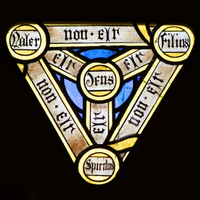
The Bible teaches us that the Holy Spirit is a living being. He is one of the three Persons of the Holy Trinity. To explain and illustrate the Trinity is one of the most difficult assignments to a Chr...
Karl Barth wrote that, “God is always a mystery. Revelation is always revelation in the full sense of the word or it is not revelation” ( CD I.8.2). God’s revelation, to Barth, always exists in a dia...