Revelation 2:10, Psalm 71:20-21, Philippians 3:10-14, Luke 21:16-19, 2 Corinthians 4:17-18, Romans 8:17-18, James 1:12
One of the great leaders of the first generation after the apostles was a man named Polycarp. Polycarp, it is believed, was discipled by the apostle John and carried out a long and fruitful ministry i...
Mark 1:14-15, Romans 1:16, 1 Corinthians 15:1-4, Luke 2:10-11, Colossians 1:23
It would be an understatement to say the term gospel is an important term in the Scriptures. Not only is it central in Scripture, but churches have adopted the term as their most beloved adjective. Yo...
Proverbs 28:20, Revelation 2:10, Matthew 5:10-12, Matthew 10:22, 2 Corinthians 4:8-10, 1 Peter 4:12-14, Romans 8:35-37, John 15:18-20, Psalm 31:23, Matthew 25:21, 1 Corinthians 4:2, 1 Timothy 6:12, Matthew 24:45-46
Pliny, a Roman Governor serving around 112 AD, faced a challenging situation regarding Christianity. Many Church historians believe that by his time, it had become illegal to profess the Christian fai...
Matthew 5:10-12, John 15:18-20, 2 Timothy 3:12, Acts 14:22, Romans 8:35-37, 1 Peter 4:12-14, 2 Corinthians 12:9-10, Acts 1:8, Romans 8:11, Isaiah 41:10
What is the witness of the church in times of persecution? The historical record demonstrates that persecutions of Christians were regular and prolific in the first centuries of the church, especially...
Ancient Lens What can we learn from the historical context? Paul’s Letter to the Church in Rome The Apostle Paul was wrote to a diverse group of Christians he had never met. As believers in Rome,...
Ancient Lens What can we learn from the historical context? Paul’s Letter to the Church in Rome The Apostle Paul was wrote to a diverse group of Christians he had never met. As believers in Rome...
Philippians 3:20, John 17:28-38, John 18:36, Hebrews 13:14, Hebrews 11:8-10, Matthew 22:21, Romans 13:1, 1 John 2:16, James 4:4, Genesis 11:1-9
In 410 AD, Rome fell to the barbarian Germanic tribe known as the Visigoths, led by King Alaric. The idea of a “Christian” city (and empire) falling was a terrible defeat, not just militarily, but als...
Matthew 13:31-33, Matthew 13:44-52, Genesis 28:15-28, Romans 8:26-39
Intro These are incredibly rich texts. This guide recommends taking a detour through salvation history to put them in their right context. This helps your congregation expand their understanding of ...
Exodus 23:2, Daniel 3:16-18, 2 Chronicles 24:20-21, Matthew 5:9-10, Romans 12:19-21 , Psalm 82:3-4
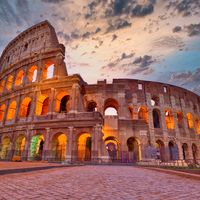
In the early fifth century, even as Rome had officially embraced Christianity, the brutal spectacle of gladiatorial combat continued in the Colosseum, drawing massive crowds. One day, a Christian herm...
James 1:27, Hebrews 13:2-3, 1 Peter 2:12, Galatians 6:10, Romans 12:13, Acts 2:44-45
The fourth-century emperor Julian (AD 331-336) feared [Christians] might take over the empire. Referring to Christians as “Galileans” and Christianity as “atheism” (because of their denial of the exis...
James 1:27, Isaiah 1:17, Psalm 68:5, Matthew 25:34-40, 1 Timothy 5:3-4, Zechariah 7:9-10, Matthew 12:48-50, Romans 8:14-17, Luke 4:18, Acts 4:34-35, James 2:15-16
Christianity revitalized life in Greco-Roman cities by providing new norms and new kinds of social relationships able to cope with many urgent urban problems. To cities filled with the homeless and im...
Matthew 27:57-60, John 19:41-42, Luke 23:50-56, Romans 6:4, Colossians 2:14-15, Isaiah 53:9-11, 1 Corinthians 15:20-22
They took the body down from the cross and one of the few rich men among the first Christians obtained permission to bury it in a rock tomb in his garden the Romans setting a military guard lest there...
John 19:38-42, 2 Corinthians 5:17, Romans 6:4, Acts 2:24, Colossians 2:12, Isaiah 53:9, Luke 24:6-7
They took the body down from the cross and one of the few rich men among the first Christians obtained permission to bury it in a rock tomb in his garden the Romans setting a military guard lest there...
The term ‘adoption’ (used here in older English versions [of Romans 12:15] may have a somewhat artificial sound in our ears; but in the Roman world of the first century AD an adopted son was a son del...
Acts 2:42-47, 1 Corinthians 1:9, 1 Timothy 3:1-13, 1 John 1:3, Acts 17:16-34, Romans 12:4-8, 1 Corinthians 1:18-25, John 14:6, Matthew 16:18
In the beginning the church was a fellowship of men and women centered on the living Christ. Then the church moved to Greece, where it became a philosophy. Then it moved to Rome, where it became an in...
The world that we enter in the book of Acts is the most modern in all the Bible by virtue of its urban identity. Most of the action occurs in the famous cities of the Greco-Roman world, not in the loc...
John 15:13, 1 John 4:10-11, Romans 12:10, Song of Solomon 8:6-7, Genesis 29:20, 1 Samuel 18:20
Valentine’s Day commemorates the date on which Valentine, a roman priest, was executed by order of Emperor Claudius II. Claudius II was embroiled in a number of wars and believed that married men mad...
Colossians 3:12, Romans 12:3, 1 Peter 3:8, Proverbs 22:4, James 4:6, Philippians 2:5-8, Luke 18:14
In the Greco-Roman world of Paul’s day, humility was a despised trait. They viewed it as a sign of weakness. And our culture today is no different from that world of two thousand years ago. Maybe it’s...
Job 1:42, Daniel 3:, Matthew 5:10-12, Romans 8:35-39, Psalm 23:4
John Chrysostom, the eloquent Church Father, had incurred the wrath of the Byzantine (aka Roman) Emperor Arcadius. Enraged, the emperor consulted his counselors on how to punish the powerful preacher....
Introduction In Romans 10 we are encouraged to call upon the Lord. Lest we believe that our returning to God is ultimately a matter of works or our own merit, Paul wants us to see that repentance fi...
Roman imprisonments were brutal. There was no concern for prisoner comfort, no plan for meals or for medical care, and no concern for a just and speedy trial. Paul’s imprisonment in Caesarea went on f...
Romans 3:23-24, Acts 3:13-15, 1 Peter 2:22-23, Isaiah 53:7, John 18:38, Luke 23:13-15
One of the fascinating features of the Gospel writers’ accounts of the trial of Jesus is this blending of the legal and moral factors. They all indicate that in both Jewish and Roman courts a certain ...
Introduction This text is used in the first week of Advent, but preparing for Jesus' return isn't something for just one time of the year. For a treatment that is more focused on Advent, see ...
Matthew 22:39, Philippians 2:3-4, 1 Corinthians 10:24, Romans 15:1-2, Galatians 6:10, Romans 12:10, Acts 20:35, Matthew 25:35-40, Isaiah 58:6-7, Proverbs 19:17, Luke 10:30-37, James 2:15-16, 1 John 3:17, Proverbs 31:8-9, Matthew 25:40, Acts 11:29-30, 2 Corinthians 8:13-15, Acts 2:44-45, Acts 4:32-35, 1 Corinthians 12:25-26
Pursuing the common good has been a strong marker of the Christian church from the very beginning. The early church had many habits that they became known for, of course—including meeting frequently, ...
Leader: There is therefore now no condemnation for those who are in Christ Jesus. For the law of the Spirit of life has set you free in Christ Jesus from the law of sin and death. For God has done wha...
Ephesians 1:9-10, Romans 13:11-12, Matthew 13:39-43, Revelation 22:6-7, Luke 21:24-28, 1 Corinthians 10:11, Psalm 98:7-9
Early Christian writing has the ends of the world upon it, hence its emphasis on fulfillment, fullness of time: the shape of the world-plot can now be seen.
Ancient Lens What can we learn from the historical context? All are Unrighteous By the time you get to chapter five of Paul’s letter to the Romans, you’ve heard the argument build: we are unrigh...