Eternal God of grace, host of banquets who invites the lost, you have nourished us here with your grace. Send us now into the world in the power of your Spirit to preach the Good news, to do justice, ...
Guests? Or Hosts? After picking up the first verse of the chapter in order to provide a setting for Jesus’ words, this week’s gospel reading contains two teachings. The first (v. 7-11) is addressed t...
Guests? Or Hosts? After picking up the first verse of the chapter in order to provide a setting for Jesus’ words, this week’s gospel reading contains two teachings. The first (v. 7-11) is addressed t...
Introduction Our text falls within a larger section (Luke 16) in which Jesus deals head-on with questions of money, specifically the need to choose God over mammon (the worship of money), in other wo...
Introduction Our text falls within a larger section (Luke 16) in which Jesus deals head-on with questions of money, specifically the need to choose God over mammon (the worship of money), in other wo...
Context: The Grumblers Jesus tells the three parables of Luke 15 to “the Pharisees and scribes” who were grumbling. Throughout Luke’s gospel account Jesus has been involved in controversy with the Ph...
Context: The Grumblers Jesus tells the three parables of Luke 15 to “the Pharisees and scribes” who were grumbling. Throughout Luke’s gospel account Jesus has been involved in controversy with the Ph...
Luke 6:17-26, Matthew 5:1-12, Luke 4:33, Luke 16:19-31, Psalm 9:10, Psalm 12:6, Isaiah 41:17, Zephaniah 3:12, Luke 4:18, James 4:8-10, Luke 5:11, 28, Luke 14:25-33, 1 Peter 4:14, Jeremiah 6:13
Preaching Commentary The context The beatitudes are one of the most well-known aspects of Jesus teaching. As in the more familiar account in Matthew (5:1-12), Luke presents these words as Jesus’ fi...
Luke 19:1-10, Luke 3:7-9, Luke 7:36-50, Luke 15:1-32
Context Luke 19:1-10 is a part of the central section of the gospel of Luke (9:51-19:28), largely consisting of parables and teachings that Jesus shares with his disciples while on the way to Jerusal...
Luke 19:1-10, Luke 3:7-9, Luke 7:36-50, Luke 15:1-32
Context Luke 19:1-10 is a part of the central section of the gospel of Luke (9:51-19:28), largely consisting of parables and teachings that Jesus shares with his disciples while on the way to Jerusal...
Luke 6:17-26, Matthew 5:1-12, Luke 4:33, Luke 16:19-31, Psalm 9:10, Psalm 12:6, Isaiah 41:17, Zephaniah 3:12, Luke 4:18, James 4:8-10, Luke 5:11, 28, Luke 14:25-33, 1 Peter 4:14, Jeremiah 17:5-10, Jeremiah 6:13
The context The beatitudes are one of the most well-known aspects of Jesus teaching. As in the more familiar account in Matthew (5:1-12), Luke presents these words as Jesus’ first public teaching; hi...
Introduction Luke 16:1-13 isn’t an easy parable to preach on. It looks for all the world like Jesus is commending a guy who’s basically a dishonest rascal. You will sometimes see interpreters tying ...
Introduction Hard Sayings These hard sayings of Jesus come at the end of a section spanning two chapters (Luke 13:10-14:35). In it, Jesus’s actions and teachings are set in parallel structure: hea...
Context This passage takes a number of turns that may, at first, seem disconnected from one another. Our text is part of a larger teaching discourse of Jesus in Luke’s gospel that has been causing te...
Textual Overview The Gospel of Luke has a clear narrative path that begins with links to Israel’s past and God’s promises to her. Those promises are now going to be fulfilled in the life, death, resu...
Textual Overview The Gospel of Luke has a clear narrative path that begins with links to Israel’s past and God’s promises to her. Those promises are now going to be fulfilled in the life, death, resu...
Context This passage takes a number of turns that may, at first, seem disconnected from one another. Our text is part of a larger teaching discourse of Jesus in Luke’s gospel that has been causing te...
The Upside-Down Kingdom The final Sunday of the church year is often called Christ the King Sunday. As we move towards Advent, the lectionary readings typically grow more eschatological, focusing on ...
The Upside-Down Kingdom The final Sunday of the church year is often called Christ the King Sunday. As we move towards Advent, the lectionary readings typically grow more eschatological, focusing on ...
Introduction Hard Sayings These hard sayings of Jesus come at the end of a section spanning two chapters (Luke 13:10-14:35). In it, Jesus’s actions and teachings are set in parallel structure: hea...
Context Jesus’ lesson on prayer in Luke’s gospel comes not in the context of a longer sermon (as with Matthew’s parallel in the Sermon on the Mount), but rather in response to a request from one of h...
Luke 11:1-13, Matthew 18:23-35, Colossians 3:13, James 1:2-3
Context Jesus’ lesson on prayer in Luke’s gospel comes not in the context of a longer sermon (as with Matthew’s parallel in the Sermon on the Mount), but rather in response to a request from one of h...
Ancient Lens What can we learn from the historical context? Missing the point? In the days when the tourist business was good in Israel, some entrepreneurial chap set up a tent between Jerusalem ...
Matthew 11:28-30, Revelation 19:9, Psalm 23:5-6, Isaiah 55:1-2, Luke 14:16-17, Luke 22:19-20, John 6:35, Psalm 34:8, Isaiah 25:6, Matthew 22:2-4, Proverbs 9:5-6
In the midst of all you are facing Your burdens Your responsibilities Your hustle Hear the invitation “Come to the Table” In the midst of all you are facing Your longing Your ambition Your distractio...
Philippians 2:6-8, John 1:10-11, Isaiah 53:3-4, Matthew 11:19, Mark 15:34, Isaiah 53:12, Luke 15:20-24, Revelation 7:13-14
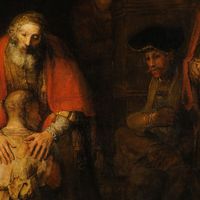
In this excerpt, the French monastic leader Frere Pierre Marie, shares an interpretation of Jesus as the true prodigal son—bringing all of us home with him: He, who is born not from human stock, or ...
Luke 6:27-38, Isaiah 50:6, Lamentations 3:28-30, Psalm 37:null, Romans 5:7-8, Matthew 18:23-35, Deuteronomy 10:17-19, Leviticus 19:33-34, Ephesians 2:11-22, Galatians 3:28
The context Having addressed his disciples with the blessings and woes (6:20-26), Jesus now addresses the multitude of people (6:17, cf. 7:1). As with the blessings and woes, Luke records four impera...
Ancient Lens What can we learn from the historical context? Missing the point? In the days when the tourist business was good in Israel, some entrepreneurial chap set up a tent between Jerusalem ...
Context We haven’t been following the story of Luke yet. We’re now jumping into Luke partway through, so it helps to do one of those review clips you see at the beginning of an episode in a TV series...
Ancient Lens What can we learn from the historical context? Small Town Boys The towns in this area were small and close together, but they were not particularly large. As such, even a few thousa...
Matthew 25:14-30, Matthew 24:42, Matthew 24:3, Matthew 24:36, Matthew 25:1-13, Luke 19:11-27, Matthew 7:11
Preaching Commentary Introduction Our Gospel reading for today, the well-known “Parable of the Talents,” is one of a series of Jesus’ teachings in the Gospel of Matthew that focuses on what Davies ...