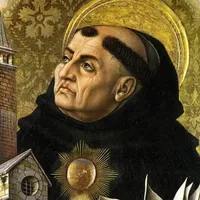
Of the medieval church’s many intellectual leaders, none has had more influence than the philosophical theologian Thomas Aquinas. He was born to a noble family near Naples, Italy, and joined the Domin...
If the phrase “theology of the body” seems odd, perhaps it’s because we haven’t taken the reality of the incarnation as seriously as Scripture does. There’s nothing surprising about looking to the hum...
Genesis 18:1–8, 2 Kings 4:8–10 , Ruth 2:10–12, Luke 8:43–48 , Matthew 15:21–28, Psalm 145:8–9
I have a friend who says he wants to write a book on the life of Jesus and call it “a theology of interruptions.” Because, he says, so many of the things that Jesus said or did in the Gospel stories h...
Genesis 1:1-2 , Isaiah 11:1-2, Ezekiel 36:26-27, Matthew 3:16-17 , Psalm 51:10-12 , John 14:16-17
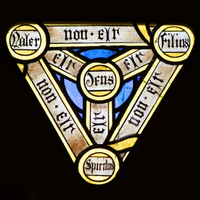
The Bible teaches us that the Holy Spirit is a living being. He is one of the three Persons of the Holy Trinity. To explain and illustrate the Trinity is one of the most difficult assignments to a Chr...
Genesis 2:7, 2 Corinthians 4:18, James 1:17, John 1:9, Job 12:7-10
Robert Burns was a widely heralded poet and lyricist (1759-1796), considered by many as the National Poet of Scotland. Burns’ poems continue to be read around the world and many have been put to song,...
Think of your own experiences as a human being: your body is not just a “shell” in which you dwell. Your body is not just a body. Your body is not just any body. Your body is somebody—you! Through the...
Mythology by its nature seeks to explain how the world works and how it came to work that way, and therefore includes a culture’s “theory of origins.” We sometimes label certain literature as “myth” b...
I love watching young boys and girls build things with Legos. Their small, creative masterpieces cannot help but reflect their image-bearing nature and remind us we were all made to make things. When ...
In the novel The Fellowship of the Ring by J. R. R. Tolkien, there is a poem called the “Riddle of Strider.” One stanza goes like this: All that is gold does not glitter; Not all who wan...
Preaching Commentary Plenipotentiary Anyone know what a “plenipotentiary” is? Try that compound Latin word on for size! It is derived from the Latin words plenus “full” and potens “power.” It r...
Sometimes great stories introduce the protagonist in the very first paragraph. In Charles Dickens’s Great Expectations, for example, we are immediately introduced to Pip, the central figure of the nov...
Names in the ancient world were associated with identity, role and function. Consequently, naming is a typical part of the creation narratives. The Egyptian Memphite Theology identifies the Creator as...
The fact [is] that original sin is really original. Not merely in theology but in history it is a thing rooted in the origins. Whatever else men have believed, they have all believed that there is som...
Plenipotentiary Anyone know what a “plenipotentiary” is? Try that compound Latin word on for size! It is derived from the Latin words plenus “full” and potens “power.” It refers to a person who p...
1 Corinthians 7:1-9, Matthew 19:3-12 , Psalm 139:13-16 , Genesis 2:18-25, Song of Solomon 4:1-16, Proverbs 5:15-19, Genesis 2:18
James Nelson describes sexuality as the central clue to what God is up to in the world. While this might seem a little over the top, when you think about it, sexuality factors integrally in our relati...
John 1:1-14, John 1:1, Genesis 1:null, Colossians 1:null
God expressed Himself J.B. Phillips paraphrases the first line of John 1:1, “At the beginning God expressed himself ”. God’s word is more than mere speech. His word is action. When God speaks in Gen...
Romans 10:9-10, Luke 1:26-38, Romans 8:11, Matthew 1:20-23, Philippians 2:6-11, John 1:1-3, Genesis 1:1
We believe in one God, the Father, the Almighty, maker of heaven and earth, of all that is, seen and unseen. We believe in one Lord, Jesus Christ, the only Son of God, eternally b...
Ancient Lens What can we learn from the historical context? From Noah to Abraham Last week, we looked at the story of Noah and how God became angry with the wickedness of the people, but decided ...
Genesis 50:15-21 , Exodus 16:2-15 , Jonah 3:4, Psalm 103:8-12 , Matthew 20:1-16 , Luke 15:11-32
One of the biggest challenges in the Christian journey is grasping the heart of grace. Oftentimes there is an internal battle between our theology and our lived experience. In this short excerpt, Fred...
Many of the modern controversies surrounding the Bible—for example, human sexuality, creationism and the “openness” of God—revolve around questions concerning hermeneutics. The science of hermeneutics...
Lamin Sanneh, the African theologian who would be pivotal in the development of missional theology, was raised in an orthodox Muslim household in Gambia. He found himself drawn to Christianity after e...
Psalm 98, for both Israel and the Church, is an intriguing statement about God’s work in Israel and the world, especially in regard to how they are related. Ancient Lens What's the historical c...
Summary The lectionary texts since Easter have focused on the accounts of the spread of gospel after Pentecost. There has been opposition in Jerusalem, to the point of imprisoning apostles. But the b...
John 1:1-14, John 1:1, Genesis 1:null, Colossians 1:null
Preaching Commentary God expressed Himself J.B. Phillips paraphrases the first line of John 1:1, “At the beginning God expressed himself ”. God’s word is more than mere speech. His word is action....
Matthew 4:12-23, Romans 5:12-21, Matthew 3:2-3, Isaiah 42:1-4, Hebrews 12:2, Genesis 1:3, Ephesians 2:1-10, Romans 8:3, Psalm 68:18, Ephesians 4:8
Preaching Angle: John Arrested, Jesus Preaches the Kingdom The major event in redemptive history which immediately precedes this passage is Jesus’ temptation in the wilderness. I can’t imagine a 40 d...
Matthew 4:12-23, Romans 5:12-21, Matthew 3:2-3, Isaiah 42:1-4, Hebrews 12:2, Genesis 1:3, Ephesians 2:1-10, Romans 8:3, Psalm 68:18, Ephesians 4:8
Preaching Commentary Preaching Angle: John Arrested, Jesus Preaches the Kingdom The major event in redemptive history which immediately precedes this passage is Jesus’ temptation in the wilderness....
Mark 11:1-11, Mark 14:, Mark 15:, Mark 8:32, Mark 9:32, Mark 10:37, Zechariah 9:9, Genesis 49:11, Mark 1:1, Mark 5:7, 2 Samuel 7:12-16, 1 Kings 1:38, Revelation 4:8, Psalm 146:2-8
Ancient Lens What can we learn from the historical context? Connecting the Triumphal Entry and the Passion At last we come to Jerusalem. On this sixth Sunday of Lent, lectionary-following congreg...
Ancient Lens What's the historical context? Dissolving the Divisions Generally speaking, the Psalms divide the people of the earth into two groups: “Israel” and “the nations.” Psalm 98 surpr...
Mark 11:1-11, Mark 14:, Mark 15:, Mark 8:32, Mark 9:32, Mark 10:37, Zechariah 9:9, Genesis 49:11, Mark 1:1, Mark 5:7, 2 Samuel 7:12-16, 1 Kings 1:38, Revelation 4:8, Psalm 146:2-8
Lent 2021: A 40-day Heart Restoration The Triumphal Entry Bonus Content: Video prep session with Heather Ghormley on Mark 11:1-11 . Passcode: 0DU^5?GZ AIM Commentary Ancient Lens What can w...
Lent 2021: A 40-day Heart Restoration A Promise to Bless AIM Commentary Ancient Lens What can we learn from the historical context? From Noah to Abraham Last week, we looked at the story ...










![The fact [is] that original sin is](https://images.unsplash.com/photo-1416862291207-4ca732144d83?ixid=M3w1NzU0OTZ8MHwxfHNlYXJjaHwxMXx8bmF0dXJhbCUyMHxlbnwwfDB8fHwxNzM4MzM3MTUzfDA&ixlib=rb-4.0.3&q=80&auto=compress&fit=crop&w=200&h=200)