2 Timothy 3:16-17, Romans 15:4, Isaiah 55:11, Hebrews 4:12-13, 2 Peter 1:19-21, Matthew 4:4, Matthew 24:35, Isaiah 41:8-10, 2 Corinthians 1:3-4, Psalm 46:, Genesis 37:12-36, 1 Samuel 19:, 1 Samuel 20:, 2 Corinthians 11:23-30, 2 Corinthians 4:17, Acts 21:27-36
For seven years, Terry Anderson was held as a hostage of Shiite Muslim fundamentalists. The former reporter for the Associated Press had been taken captive and held as a political prisoner, and for se...
Genesis 22:1-19, Exodus 32:1-35, Ecclesiastes 1:1-18, Matthew 20:1-16 , John 6:53-66, Psalm 73:1-28
Thomas Merton’s words about the Bible in general apply to the Old Testament in particular: There is, in a word, nothing comfortable about the Bible — until we manage to get so used to it that we ...
Martin Luther said that every Christian ought to read the Bible from cover to cover every year. But, likening the Bible to a forest, he also said that reading the Bible doesn’t become really enjoyable...
Genesis 22:1-14, Exodus 14:21-31, Micah 6:6-8, Matthew 22:36-40 , James 1:22-25, Psalm 119:105
Søren Kierkegaard offers two suggestions for the reader who tackles difficult portions of the Bible. First, read it like a love letter, he says. As you struggle with language, culture, and other barri...
Romans 12:2, John 15:18-19, Psalm 24:1-2, Micah 6:6-8, Genesis 1:31
We need to be careful to define what the Bible does and does not mean by “the world.” It does not mean the created order—mountains, lakes, forests, deserts, seas, animals and people—especially people...
Genesis 2:8, Genesis 3:23-24, Exodus 15:27, Song of Solomon 4:12-15, John 18:1, Matthew 26:36
The Bible has its own garden path. It runs from Genesis to Revelation. In fact, some of the most important events in the Christian faith take place in Biblical gardens, evens around which Christianity...
Many of the modern controversies surrounding the Bible—for example, human sexuality, creationism and the “openness” of God—revolve around questions concerning hermeneutics. The science of hermeneutics...
From its very beginning the Bible sees human life in terms of relationships...The Bible does not speak about "humanity" but about "all the families of the earth" or "all the n...
The Bible has its own garden path. It runs from Genesis to Revelation. In fact, some of the most important events in the Christian faith take place in Biblical gardens, evens around which Christianity...
In the 2008 Batman film, The Dark Knight , the Joker (played by Heath Ledger) tries to get Batman to reveal his identity by kidnapping and executing one citizen every day until he reveals himself...
One only needs to open the Bible at the beginning of Genesis and read a few pages to be left with the impression that place is important to the writer. The second creation account (Genesis 2) revolves...
2 Timothy 3:14-4:5, 2 Timothy 3:14-17, 2 Timothy 4:1-5, Matthew 4:5, 1 Corinthians 9:13, Genesis 2:7, 1 Peter 2:4-5
Introduction In Paul’s second extant letter to his beloved Timothy, the passage of 3:10-4:5 records Paul’s final charge to Timothy. Calling on Timothy’s trust of Paul’s ministry and character (3:10-1...
Sometimes great stories introduce the protagonist in the very first paragraph. In Charles Dickens’s Great Expectations, for example, we are immediately introduced to Pip, the central figure of the nov...
While I was born much too late to be the legal property of a person in America, I have been the recipient of racism. When a classmate called me a racial epithet in my first year of college, I was deva...
When the Reformers broke with Rome and claimed the view that the Bible was to be the supreme authority of the church (sola Scriptura), they were very careful to define basic principles of interpretati...
Genesis 15:5, Isaiah 41:8, Isaiah 2:2-4, Matthew 28:16-20, John 12:32, Acts 2:1-11
The central vision of world history in the Bible is that all of creation is one, every creature in community with every other, living in harmony and security toward the joy and well-being of every oth...
Genesis 12:1–3, Exodus 3:1–12, Isaiah 53:, Matthew 22:15–22 , John 4:1–42 , Acts 17:16–34
The world of Jesus was not the Old Testament Hebrew world. Like the United States now, Israel was multicultural, including a combination of Aramaic, Greek, and Roman influences. The people looked Jewi...
Some years ago when radio was still a primary source of entertainment, a French dramatist was commissioned to write the script for the debut episode of a Bible study radio series. For the most part, ...
Genesis 1:1–3 , Exodus 20:1–17, Daniel 6:16–23, Luke 10:25–37, Romans 3:21–26, Psalm 119:105
In the sixteenth century the Reformers declared their total confidence in what they called the perspicuity of Scripture. What they meant by that technical term was the clarity of Scripture. They maint...
Karl Barth (1886-1968), the famous Swiss theologian, once wrote that all human sin finds its roots in three basic human problems. He included pride (hubris), dishonesty and slothfulness in his list of...
Genesis 1:1-2 , Isaiah 11:1-2, Ezekiel 36:26-27, Matthew 3:16-17 , Psalm 51:10-12 , John 14:16-17
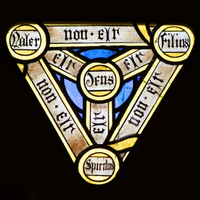
The Bible teaches us that the Holy Spirit is a living being. He is one of the three Persons of the Holy Trinity. To explain and illustrate the Trinity is one of the most difficult assignments to a Chr...
Mark 4:35-41, Job 38:1-11, Psalm 107:, Jonah 1:, Genesis 1:, Matthew 8:23-27, Luke 8:22-25, Psalm 74:14, Psalm 104:26, Genesis 1:21
A Sopping Wet Week in the Lectionary Today’s readings are thoroughly wet. In Job, God is master of the sea, Psalm 107 concerns mariners in the storm, Paul is a little drier, but still gets shipwrecke...
Some time ago, I read about the work of a Wycliffe Bible translator in a remote village in Papua New Guinea. When the opening chapters of Genesis were first translated into the native language, the at...
Job 38:1-11, Genesis 1:, Matthew 8:23-27, Luke 8:22-25, Psalm 74:14, Psalm 104:26, Genesis 1:21
Note: This was originally part of a guide for the Fifth Sunday after Pentecost (RCL Year B) , which includes Job 38:1-11 and Mark 4:35-11 . I have adapted the discussion of each of these t...
2 Timothy 3:14-4:5, 2 Timothy 3:14-17, 2 Timothy 4:1-5, Matthew 4:5, 1 Corinthians 9:13, Genesis 2:7, 1 Peter 2:4-5
Preaching Commentary Introduction In Paul’s second extant letter to his beloved Timothy, the passage of 3:10-4:5 records Paul’s final charge to Timothy. Calling on Timothy’s trust of Paul’s ministr...
Mark 4:35-41, Psalm 107:, Jonah 1:, Genesis 1:, Matthew 8:23-27, Luke 8:22-25, Psalm 74:14, Psalm 104:26, Genesis 1:21
Note: This was originally part of a guide for the Fifth Sunday after Pentecost (RCL Year B) , which includes Job 38:1-11 and Mark 4:35-11. I have adapted the discussion of each of these two...
Ancient Lens What can we learn from the historical context? The Old, Old Story Jesus’ resurrection and ascension (and perhaps Pentecost) are the resolution of a story that starts with all the way...
Ephesians 1:4, 1 John 4:19, Romans 5:8, John 1:1-2, Genesis 1:1
In his classic work, Basic Christianity , John Stott shares this most fundamental truth about God: God always makes the first move. Whether it is the creation or our personal relationship, we are n...
Exodus 20:1–17, Genesis 22:1–14 , Micah 6:6–8 , Luke 10:25–37 , Matthew 5:17–20, Psalm 82:3–4
Interpretive strategies have gone through cycles of strict-constructionist (or Originalism) and broad-constructionist (or Living Constitution) perspectives. Originally the procedure of interpreting th...
Many years ago a great Arctic explorer started on an expedition to the North Pole. After two long years in the lonely northland, he wrote a short message, tied it under the wing of a carrier pigeon, a...