3 John 1:5-8, Genesis 18:1-5, Acts 28:2, Luke 14:13-14, Matthew 25:35, 1 Peter 4:9
Tom Clegg, a consultant with Church Growth Institute, states, "When visitors walk through the door, they will decide in 3 to 8 minutes whether they will take you seriously and whether they will r...
Galatians 1:10, Jeremiah 29:7, Matthew 5:13-14, Colossians 2:8, John 17:15-16, Acts 17:22-23, Romans 12:2
To reach people we must appreciate and adapt to their culture, but we must also challenge and confront it. This is based on the biblical teaching that all cultures have God's grace and natural rev...
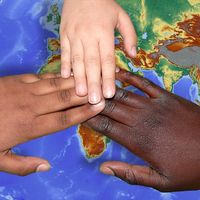
Across all barriers of land and language, wealth and poverty, knowledge and ignorance, we are one, created from the same dust, subject to the same laws, and destined for the same end. With this compas...
Ezra 4:7–24, Daniel 2:4–49, Nehemiah 8:1–8, Mark 5:41 , John 19:19–22, Acts 2:1–13
One development of the exile was an additional language for the Jewish people. The Babylonians and Persians spoke Aramaic, and out of necessity the Jews learned it. Some even became more conversant in...
John 6:15, Matthew 5:38-39, Matthew 7:24-27, Matthew 15:1-9, Matthew 16:13-17, John 18:36, Luke 4:18-19, Acts 9:1-9, Psalm 1:
Jesus is understood in the light of the assumptions which control our culture. When “reason” is invoked as a parallel or supplementary authority to “Scripture” and “tradition,” what is happening is t...
Matthew 28:18-20, Acts 1:8, Acts 10:34-35, Galatians 3:28, Romans 1:16, John 4:21-24, Psalm 22:27-28
[Speaking of the early church] A cosmopolitan spirit grew, particularly in the cities, that transcended national barriers. Old tribal distinctions and identities were breaking down, leaving people rip...
Lamin Sanneh, the African theologian who would be pivotal in the development of missional theology, was raised in an orthodox Muslim household in Gambia. He found himself drawn to Christianity after e...
2 Peter 3:18, Acts 9:1-19, Luke 15:11-32, Colossians 3:9-10, Romans 12:2
Though conversion may be pinpointed to a moment, salvation is a process that continues over a lifetime. I am still being saved from old ways of thinking and behaving and am coming to new understanding...
One of [Lamin] Sanneh's key arguments is that while the spread of Islam has drawn ever-increasing numbers to the globalizing influence of Arabic, the spread of Christianity binds ever-increasing n...
Cultural diversity was built into the Christian faith…in Acts 15, which declared that the new gentile Christians didn’t have to enter Jewish culture…. The converts had to work out…a Hellenistic way of...
Paul’s insight that Gentiles are co-heirs, co-members, and co-participants in the gospel is not a mere sociological adjustment—it is a radical theological revelation.
1 Peter 3:8, Psalm 133:1, Philippians 2:2, Acts 2:1-47
One of the most critically acclaimed fantasy films in recent years was a piece of science fiction called Arrival . It is the story of beings from outer space who arrive on earth, igniting a wildfire ...
Luke 12:33-34, Luke 18:28-30, Acts 2:44-45, Matthew 19:21, Mark 10:29-30, Luke 14:26
Family and property, then, were not for the ancient Jew simply what they are to the modern western world. Both carried religious and cultural significance far beyond personal, let alone “individual,” ...
Romans 8:28, Psalm 119:71, Proverbs 19:20, Luke 22:61-62, Acts 9:1-9
I have learned throughout my life as a composer chiefly through my mistakes and pursuits of false assumptions, not by my exposure to founts of wisdom and knowledge.
They devoted themselves to the apostles’ teaching, and to fellowship, to the breaking of bread; and to prayer. Everyone was filled with awe at the many wonders and signs performed by the apostles. ...
What the early Christians did not have to deal with to the same extent that we do today is how race has become an idol. On both sides of the racial divide, so much is twisted by the social constructs ...
Isaiah 49:6, Revelation 7:9, John 3:16, Galatians 3:28, Romans 10:12, Acts 1:8, Matthew 28:19-20
The Gospel as such has no native country. He who goes out humbly with Christ in the world of all races will perpetually discover the multiple, but constant, relevance of what he takes. It takes a whol...
People don’t rise from nothing. We do owe something to parentage and patronage. The people who stand before kings may look like they did it all themselves. But in fact they are invariably the benefici...
Luke 22:19-20, 1 Corinthians 11:23-26, Matthew 26:26-28, Acts 2:42, Acts 20:7, John 6:35
If we are honest with ourselves, for many of us who celebrate the sacraments on a regular basis, at times we take them for granted. We lose sight of their nature to inspire and remind us of our covena...
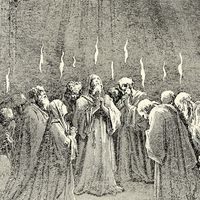
It is well known that Pentecost reverses Babel. The people who built the tower of Babel sought to make a name, and a unity, for themselves. At Pentecost, God builds his temple, uniting people in Chris...
Luke 1:46-55, Acts 9:, 1 Timothy 1:12-17, 2 Samuel 7:18-22, 1 Samuel 2:1-10, Luke 17:11-19, Psalm 100:4-5
Grace and gratitude belong together like heaven and earth. Grace evokes gratitude like the voice an echo. Gratitude follows grace like thunder lightning.
John 1:14, Psalm 139:7-10, Jeremiah 23:23-24, Matthew 28:20, Acts 17:27-28
The great pattern of life is the ecstasy and intimacy of God, who went out of the self to the extreme point, and so dwells among us in an intimacy we can hardly imagine.
Transition is one of the givens in our lives, and we only live well, we only manage our lives well, when we manage these transitions well. Our world changes; the circumstances of our lives change. The...
Acts 10:34-35, Acts 2:1-12, John 4:1-42, Romans 12:10, 1 John 4:20-21
God and Father of all, in your love you made all the nations of the world to be a family, and your Son taught us to love one another. Yet our world is riven apart with prejudice, arrogance, and pride....
As a black man, I pause when I see that Jesus was taken to Africa as a baby for refuge (Matthew 2:13–18). My blackness will not allow me to gloss over the Ethiopian man whom Philip cozies up to in Act...
There are three ways to eat a salad: the American Way; the Weird Way, and the Right Way. The American Way of eating a salad is to fill your bowl with some iceberg lettuce or some spinach leaves, some ...







![[Speaking of the early church] A](https://a-us.storyblok.com/f/1016915/1200x801/ed572a4861/the-early-church.jpg/m/200x200/smart)