Here is the heart of the paradox: Technology is a brilliant, praiseworthy expression of human creativity and cultivation of the world. But it is at best neutral in actually forming human beings who ca...
As a baby, Albert Einstein caused his parents some concern. His head seemed disproportionately large, and he did not start speaking until he was three. As a young man, his career faced setbacks, in...
Philippians 3:13-14, Matthew 11:12, Galatians 1:10, Daniel 3:18, 1 Corinthians 1:27, Acts 17:6
The reasonable man adapts himself to the world; the unreasonable one persists to adapt the world to himself. Therefore all progress depends on the unreasonable man.
The Double Helix, James Watson’s 1968 memoir about discovering the structure of DNA, describes the roller coaster of emotions he and Francis Crick experienced through the progress and setbacks of the ...
The most powerful choices we will make in our lives are not about specific decisions but about patterns of life: the nudges and disciplines that will shape all our other choices. This is especially tr...
I’ve served on staff at a few different churches throughout Silicon Valley for the last decade and a half, including a medium-sized church, a young church plant, and a multisite megachurch. At each, w...
Raising kids today is more complicated than it was when I was a kid. Parents feel out of control, hopelessly overmatched by the deluge of devices. And we can’t even count on one another to back us up....
Intellect is therefore a vital force in history, but it can also be a dissolvent and destructive power. Out of every hundred new ideas ninety-nine or more will probably be inferior to the traditional ...
Our family is radical, but we are definitely not Amish—although we love to eat the fruit, vegetables, meat, and cheese produced by our Amish neighbors forty miles away in Lancaster County, Pennsylvani...
The earth had been completely unformed and empty; in the six-day process of development God had formed it and filled it—but not completely. People must now carry on the work of development: by being f...
As early as April 2020, a debate raged about the responsibilities of those of us turned safely inside during this global storm. For those time privileged enough to find their calendars suddenly cleare...
1 Corinthians 6:12, 1 Peter 5:8, Matthew 6:22-33, Proverbs 4:23, 1 Corinthians 10:13
We don’t necessarily need to wade through research studies or the expert opinions of psychologists to prove that devices and social media apps are designed to become invasive, habit-forming and compul...
Philippians 2:3-4, Matthew 23:11-12, Galatians 5:13, 1 Corinthians 10:24
Writer Philip Yancey notes that toward the end of his life, Albert Einstein removed the portraits of two scientists–Newton and Maxwell–from his wall. He replaced those with portraits of Gandhi and Sch...
The Greek word used here (1 Cor. 13:4) for patience is a descriptive one. It figuratively means “taking a long time to boil.” Think about a pot of boiling water. What factors determine the speed at wh...
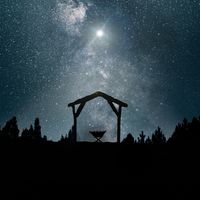
Isaiah 9:6, Philippians 2:6-7, 1 Corinthians 1:27-29, Luke 2:10-12, Micah 5:2, Matthew 2:1-2, 11, John 1:14, Isaiah 52:2-3, John 18:36
Politicians compete for the highest offices. Business tycoons scramble for a bigger and bigger piece of the pie. Armies march and scientists study and philosophers philosophise and preachers preach an...
Mark 8:36, Matthew 16:26, Romans 12:2, 1 Corinthians 1:26-31, Mark 4:18-19, Mark 10:43-44, Matthew 19:23-24, Matthew 6:19-21, 24-34, Luke 12:13-21, Luke 12:32-34, Mark 10:24-25, Hebrews 10:25
The defining problem driving people out is …just how American life works in the 21st century. Contemporary American life simply isn’t set up to promote mutuality, care, or common life. Rather, it is d...
1 Corinthians 13:13, Titus 2:11-13, Hebrews 11:1, Philippians 3:20, 1 Peter 1:3-4, 2 Corinthians 4:17-18, Romans 8:24-25
Hope is one of the Theological virtues. A continual looking forward to the eternal world is not as some modern people think, a form of escapism or wishful thinking. But it's one of the great thing...
The day will come when, after harnessing the winds, the tides and gravitation, we shall harness for God the energies of Love. And on that day, for the second time in the history of the world, man will...
Matthew 13:31-32, Mark 4:30-32, Luke 13:18-19, 1 Corinthians 12:, Romans 12:4-8
One could imagine a comparison between a car’s oil drain plug and its electronic ignition system. One is as low-tech (and unimpressive) as could be, while the other is highly sophisticated. But a car ...
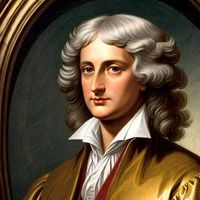
Sir Isaac Newton was one of the great scientists of all time. Most men of science today agree that his great book Principia is the greatest scientific book ever written. Yet of his achievemen...
In one of his letters, the philosopher and psychologist William James shares a conviction regarding his focus not on big, grand things, but with the small “almost invisible” decisions: I am done wit...
Revelation 21:10, Revelation 21:2, 10, 22-27, Revelation 22:1-5, 1 Kings 6:20, Genesis 12:1-3, Genesis 2:9, Genesis 3:23-24, Genesis 1:28, Genesis 2:15, Genesis 3:17-19, 1 Corinthians 15:58, Ephesians 6:5-9, Colossians 3:23, Genesis 1:26-27, Exodus 33:20-23, John 14:9, Colossians 1:15, Hebrews 1:3, Mark 15:34, 2 Corinthians 5:21, Exodus 28:15-21, 29-30, John 4:13-14, John 7:37-38, Matthew 27:46, John 3:2, Romans 8:29
Pulling Back the Curtain The Revelation of Jesus Christ is a “pulling back of the curtain” to reveal both the unseen realities of the present (what is really going on in the world from God’s perspect...
Thomas Aquinas, the famous medieval theologian, created one of the greatest intellectual achievements of Western civilization in his Summa Theologica. It’s a massive work: thirty-eight treatises, thre...
Isaiah 28:16 , Proverbs 3:5-6 , 2 Samuel 22:2-3, Matthew 7:24-27, 1 Corinthians 3:11, Psalm 127:1
The Chase Manhattan Bank building, a towering sixty-story skyscraper in Manhattan's financial district, faced a major crisis during its construction. Midway through the project, builders discovere...
We have the best materials, media, and methods, but we lack spiritual power. Christians of the apostolic era had none of our advantages; they didn't even have the New Testament. Still, they turned...