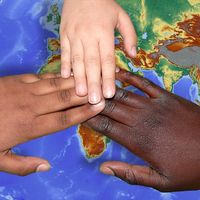
In his book, A Short History of Nearly Everything, author Bill Bryson details the complexity within the human body: No one really knows, but there may be as many as a million types of protein in the ...
Luke 16:13, Matthew 6:21, 1 Corinthians 14:33, 2 Corinthians 5:17, Titus 2:11-12, 1 Peter 1:14-16
Less is more. Coined by Robert Browning and popularized by the German-born American architect Ludwig Mies van der Rohe, nothing could be further from the literal truth. But when people use this exp...
Raising kids today is more complicated than it was when I was a kid. Parents feel out of control, hopelessly overmatched by the deluge of devices. And we can’t even count on one another to back us up....
In fractal geometry, there is a complex set of numbers that produces an infinitely intricate shape when plotted on a plane. It’s called a Mandelbrot set, after the founder of fractal geometry, Benoit ...
The Church is not a clean, well-lit place where everything runs smoothly and actions automatically match ideals. It is, in the words of the Gospel, a field of chaff and wheat growing up together and b...
1 Corinthians 1:10-13, Mark 3:24-25, Philippians 2:3-4, James 3:16, Ephesians 4:3-6, Romans 12:8
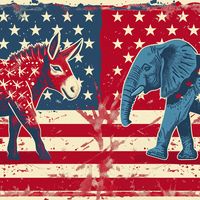
Our first president, George Washington, refused to run as a member of any political party. He wanted to be a president to all Americans. Washington firmly believed that political parties would divide ...
The man who prosecuted the infamous Manson family for their murders later wrote a book titled Helter Skelter. This phrase was taken from a song performed by a well-known rock music group. Manson...
Sharan Merriam and Carolyn Clark, in their fine study Lifelines , effectively show that life is fundamentally about two things—our work and our relationships. And maturity is found in having the c...
The average adult brain consists of more than 10 billion neurons communicating with one another through more than 10 trillion synaptic connections. (Synaptic connections are the junctions or gaps betw...
Have you heard the acronym “K. I. S. S”? It stands for “Keep It Simple, Stupid.” Paul doesn’t exactly call the Corinthians stupid (in 1 Cor. 15), though elsewhere Paul sounds tempted to do so, when ...
The most powerful choices we will make in our lives are not about specific decisions but about patterns of life: the nudges and disciplines that will shape all our other choices. This is especially tr...
Our bodies, created in the image of the Triune God, have much to teach us about the virtues of conversation. The human body is a wondrous symphony of diverse parts: 206 bones and over 600 muscles, con...
Divine Creator, your ways are above our ways. No matter how hard we try, you will always confound us. Too often we try to reduce you into something we can fully comprehend, or something we can control...
I remember when ordering coffee was easy. There were really only two decisions—regular or decaf, and black or cream and sugar. Today, ordering coffee feels like applying for a bank loan. There are lit...
Matthew 11:28-30, Galatians 5:1, Deuteronomy 30:19-20, 1 Corinthians 10:23, John 10:10
When every option is available to us, we don’t actually have freedom; we tend to shut down. I experienced what sociologists call choice overload (or paralysis) and decision fatigue. If you’ve ever tri...
I remember playing a game as a child in which we would bend one knee and grab our foot behind us and then try to race—limping, stumbling and falling over as we struggled across the grass toward a fini...
Here is the heart of the paradox: Technology is a brilliant, praiseworthy expression of human creativity and cultivation of the world. But it is at best neutral in actually forming human beings who ca...
Philippians 3:13-14, Matthew 11:12, Galatians 1:10, Daniel 3:18, 1 Corinthians 1:27, Acts 17:6
The reasonable man adapts himself to the world; the unreasonable one persists to adapt the world to himself. Therefore all progress depends on the unreasonable man.
In this short poem, the psychologist Daniel Goleman (the developer of the concept of Emotional Intelligence (E.Q.)) builds on the work of R. D. Laing’s “knots.” The poem is a helpful reminder that our...
I remember playing a game as a child in which we would bend one knee and grab our foot behind us and then try to race—limping, stumbling and falling over as we struggled across the grass toward a fini...
Mark 8:36, Matthew 16:26, Romans 12:2, 1 Corinthians 1:26-31, Mark 4:18-19, Mark 10:43-44, Matthew 19:23-24, Matthew 6:19-21, 24-34, Luke 12:13-21, Luke 12:32-34, Mark 10:24-25, Hebrews 10:25
The defining problem driving people out is …just how American life works in the 21st century. Contemporary American life simply isn’t set up to promote mutuality, care, or common life. Rather, it is d...
Have you ever heard the phrase “Mise En Place?" (translated literally everything in its place) Pronounced [mi zɑ̃ ˈplas], it comes from the French culinary world, and has to do with putting all ...
Intellect is therefore a vital force in history, but it can also be a dissolvent and destructive power. Out of every hundred new ideas ninety-nine or more will probably be inferior to the traditional ...







![[The decay of Logic results from an]](https://images.unsplash.com/photo-1709399610754-921b7a9ef3b7?ixid=M3w1NzU0OTZ8MHwxfHNlYXJjaHw0NXx8bG9naWN8ZW58MHwwfHx8MTcxMjA3NTI4Mnww&ixlib=rb-4.0.3&q=80&auto=compress&fit=crop&w=200&h=200)