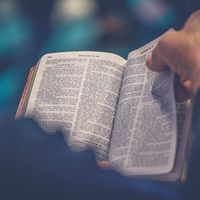
The people God used to record his words were themselves uncommonly moved by them. They said the Word of God is honey in my mouth (Ezekiel 3:3) spiritual food for the hungry (Job 23:12) dwel...
When the Reformers broke with Rome and claimed the view that the Bible was to be the supreme authority of the church (sola Scriptura), they were very careful to define basic principles of interpretati...
Many of the modern controversies surrounding the Bible—for example, human sexuality, creationism and the “openness” of God—revolve around questions concerning hermeneutics. The science of hermeneutics...
Martin Luther said that every Christian ought to read the Bible from cover to cover every year. But, likening the Bible to a forest, he also said that reading the Bible doesn’t become really enjoyable...
Genesis 1:1–3 , Exodus 20:1–17, Daniel 6:16–23, Luke 10:25–37, Romans 3:21–26, Psalm 119:105
In the sixteenth century the Reformers declared their total confidence in what they called the perspicuity of Scripture. What they meant by that technical term was the clarity of Scripture. They maint...
Proverbs 4:23, Genesis 4:3–7, Ezekiel 36:26 , Luke 6:43-45 , Matthew 15:18-19, Psalm 51:10
When the Bible uses the term heart , it means the causal core of your personhood. The heart is your directional system. The heart is your steering wheel. Your behavior isn’t caused by the situati...
Genesis 22:1-14, Exodus 14:21-31, Micah 6:6-8, Matthew 22:36-40 , James 1:22-25, Psalm 119:105
Søren Kierkegaard offers two suggestions for the reader who tackles difficult portions of the Bible. First, read it like a love letter, he says. As you struggle with language, culture, and other barri...
Genesis 22:1-19, Exodus 32:1-35, Ecclesiastes 1:1-18, Matthew 20:1-16 , John 6:53-66, Psalm 73:1-28
Thomas Merton’s words about the Bible in general apply to the Old Testament in particular: There is, in a word, nothing comfortable about the Bible — until we manage to get so used to it that we ...
The prophet Isaiah describes God as a purveyor of righteousness and justice continually, and speaks to God’s expectation that his children will bring about righteousness and justice as well. Justice i...
Matthew 22:21, Isaiah 5:8-9, John 6:63, Matthew 22:15-22, John 8:1-11, Colossians 2:2-3, 2 Timothy 3:16-17
Jesus Christ was prone to making comments which seem to support an almost infinite variety of exegesis. A remark like ‘Render unto Caesar the things that are Caesars and ‘unto God the things that are ...