In AD 312, the Roman emperor Constantine became a Christian. On the night before he led his army into the massive Battle of the Milvian Bridge, he had a vision of the Christian God. They won that batt...
John 13:1-17, John 13:31-35, Luke 22:25-27, Matthew 20:25-28, Mark 10:42-45
Reflection Most of us are familiar with the words attributed to the Roman Emperor Julius Caesar, “ Veni, Vidi, Vici .” I came. I saw. I conquered. That is the way of imperial rulers in their conquest...
Exodus 1:8–22, 1 Kings 21:, Daniel 5:, Luke 22:24–27 , Acts 12:20–23, Psalm 2:
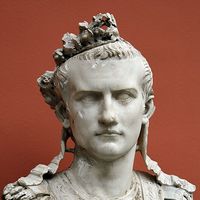
Gaius Caesar, more commonly known as Caligula (AD 12–41), was a Roman emperor notorious for his cruelty. He developed an insatiable appetite for gladiatorial games and other violent spectacles. On one...
Matthew 22:15-22, Matthew 20:18-19, Matthew 22:18-20, Acts 5:29, Matthew 20:25-28
A Notoriously Difficult Passage This passage includes one of the most iconic and quotable of Jesus’s interactions with his contemporary opponents. Jesus deftly steps out of a trap set for him by the ...
Matthew 25:15-22, Matthew 20:18-19, Matthew 21:45-46, Matthew 22:18-20, Exodus 20:4, Acts 5:29, Matthew 20:25-28
Preaching Commentary A Notoriously Difficult Passage This passage includes one of the most iconic and quotable of Jesus’s interactions with his contemporary opponents. Jesus deftly steps out of a t...
In her book, Grateful: The Subversive Practice of Giving Thanks , Diana Butler Bass provides an insightful reflection on how Zaccheaus rose to become chief tax collector of Jericho: Since Zacchaeu...
Exodus 14:, Daniel 5:, Isaiah 40:22–24, Luke 1:51–52, Revelation 18:, Psalm 33:16–17
In this poem by Lord Byron, the poet re-imagines the ancient battle of Salamis, in which Xerxes, king of Persia was defeated by a Greek coalition in 480 B.C. The poem highlights how quickly the fortun...
Mark 6:14-29, Mark 6:6b-13, Mark 6:30, John 1:14, Mark 6:30, Mark 8:29, Mark 6:4, Mark 8:27-28, 1 Kings 19:1-10, 1 Kings 21:17-26, Mark 9:13, Romans 7:18-25, Mark 14:1-12
Context Between the Sending and Return of the Twelve The fate of John the Baptist appears in a Markan ‘sandwich,’ where the story is told almost as a detour between the sending (ἀποστέλλω) of the ...
Mark 6:14-29, Mark 6:6b-13, Mark 6:30, John 1:14, Mark 6:30, Mark 8:29, Mark 6:4, Mark 8:27-28, 1 Kings 19:1-10, 1 Kings 21:17-26, Mark 9:13, Romans 7:18-25, Mark 14:1-12
Between the Sending and Return of the Twelve The fate of John the Baptist appears in a Markan ‘sandwich,’ where the story is told almost as a detour between the sending (ἀποστέλλω) of the Twelve (6...
Since Jesus isn’t attached to the same things we are, he can take the God-view, which is about more than redeeming our individual lives. God means to redeem the world, which is going to require some m...
Matthew 24:42-44, Proverbs 31:8-9, 2 Corinthians 1:3-4, 1 Peter 1:3-4, James 5:7-8, Joshua 1:9, Matthew 28:20
Lord God, we rejoice in your resurrection and in your promise to return. Help us live today as people who await the fulfillment of your kingdom. We confess we often look for comfort outside of you. Be...
John 1:46, 1 Corinthians 1:26-29, Matthew 20:16, Luke 1:51-53, James 2:1-9, Matthew 11:25, Isaiah 52:2-3, Philippians 2:5-8
The world has always despised people from the wrong places and with the wrong credentials. We are always trying to justify ourselves. We need desperately to feel superior to others. And everything abo...
The standard account of power says there’s only one kind of power in the world and we, the good people, must get on the right side of it, using it to bring justice into the world. Power is power. It i...
One of the great lies humans have been told is that if we gain enough power and influence, we can be remembered and make a lasting impact. In his short poem Ozymandias , Percy Bysshe Shelley highligh...
Matthew 2:13–23 sits within Matthew’s infancy narrative (chapters 1–2), which serves as a theological introduction to Jesus’ identity and mission. Unlike Luke’s account, which emphasizes the humble bi...
Matthew 5:9, Psalm 2:2-4, Isaiah 9:6, Proverbs 21:1, Daniel 2:21
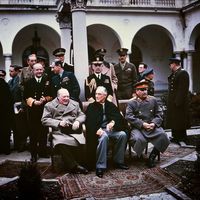
The Yalta Conference, helmed by Allied leadership (Most notably Franklin D. Roosevelt, Winston Churchill and Joseph Stalin) came at the conclusion of hostilities in Europe during WWII. It dealt with a...
Matthew 2:13–23 sits within Matthew’s infancy narrative (chapters 1–2), which serves as a theological introduction to Jesus’ identity and mission. Unlike Luke’s account, which emphasizes the humble bi...
Jesus, you do not exploit Power over Power used as advantage Power plays You empty yourself of power’s privileges You choose solidarity, even with slaves You choose womb and flesh vulnerability and b...
O King of all people, Master of our lives, entering into your glory by your cross, to whom all authority is given, both in heaven and on earth: We acknowledge your sovereignty over every realm of life...
Luke 1:46b-55, Luke 1:26-38, 1 Samuel 2:1-10, Matthew 5:null, Matthew 19:24
AIM Commentary “Mary’s ‘Magnificat’ has been banned from public proclamation in many countries due to the revolutionary nature of these verses. ‘He has brought down rulers from their thrones’? Just...
John 20:31, 2 Timothy 1:10, Isaiah 61:1-3, 1 John 1:5b–7, Ezekiel 36:26-27, John 8:12
Leader: Jesus said, “I am the light of the world. Whoever follows me will not walk in darkness, but will have the light of life.” People: God is light, and in Him is no darkness at ...
Franklin D. Roosevelt had hoped the Yalta conference (which discussed the future of Europe and Germany post-WWII) wouldn’t last more than five or six days. Winston Churchill, however, remarked, “I do ...
Isaiah 2:4, Matthew 5:9, Romans 12:18, Ephesians 2:14
Rabbi Jonathan Sacks tells a true story in one of his books about peacemaking in what is arguably one of the world's most difficult places to achieve it: the Middle East. One evening in the early ...
Jesus, you sow yourself The Word of Truth, generously The Word of Life, graciously Defend us from the Evil One Who seeks to snatch us away Fortify us for hard times and costly discipleship That we m...
Most Holy Lord, we speak with eloquence, but have no love. We speak truth to power, pontificate, and smugly consider our knowledge superior to others, but display little to no charity. We give sacrifi...
The Hebrew word for “fool” is very close to the Hebrew for “noble,” with only one letter different, and it is sometimes only in the outcome of their lives that the people considered noble by the peopl...
Luke 1:46-55, Luke 1:26-38, 1 Samuel 2:1-10, Matthew 5:null, Matthew 19:24
“Mary’s ‘Magnificat’ has been banned from public proclamation in many countries due to the revolutionary nature of these verses. ‘He has brought down rulers from their thrones’? Just imagine this plas...
Psalm 37:3-6 , Luke 12:16-21, Matthew 6:19-21 , Micah 6:6-8, 1 Kings 3:4-14
What do you want to achieve? Greater riches? Cheaper chicken? A happier life, a longer life? Is it power over your neighbors that you are after? Are you only running away from your death? Or are you s...
Matthew 23:13, Matthew 23:3, Proverbs 16:18, Luke 14:11, Romans 12:3, Mark 10:42-45, 1 Peter 5:2-3, Ecclesiastes 10:1
My wife is a big fan of an advice column called “Ask a Manager.” The articles offer a variety of subjects, many of which are serious, but some are downright hilarious. They often capture the absurditi...
In the day-to-day trenches of adult life, there is actually no such thing as atheism. There is no such thing as not worshipping. Everybody worships. The only choice we get is what to worship. And the ...