Genesis 18:10-14 , Isaiah 7:14 , Exodus 4:1-5, Psalm 139:13-16 , Luke 1:26-38, John 20:24-29, Matthew 1:22-25
To a twentieth-century mind the notion of a virgin birth is intrinsically and preposterously inconceivable. If a woman claims–such claims are made from time to time–to have become pregnant without sex...
One key difference between much of the early church vs. the church of today (at least in the West) was the belief in, and regular experience of, miracles. As Joel Green, the noted professor and writer...
Matthew 5:18, John 1:1-14, Colossians 2:9, 1 Corinthians 15:20-22, Philippians 2:9-11, 2 Timothy 3:16-17, Hebrews 4:12, 2 Peter 1:20-21
The great American statesman and president Thomas Jefferson was a man of science who did not believe in miracles but really liked Jesus. Unfortunately, right next to Jesus’ ethical teachings are stori...
In comparison to other societies, Americans and other North Atlantic peoples are naturalistic. Non-Western peoples are frequently concerned about the activities of supernatural beings . . . The wide-r...
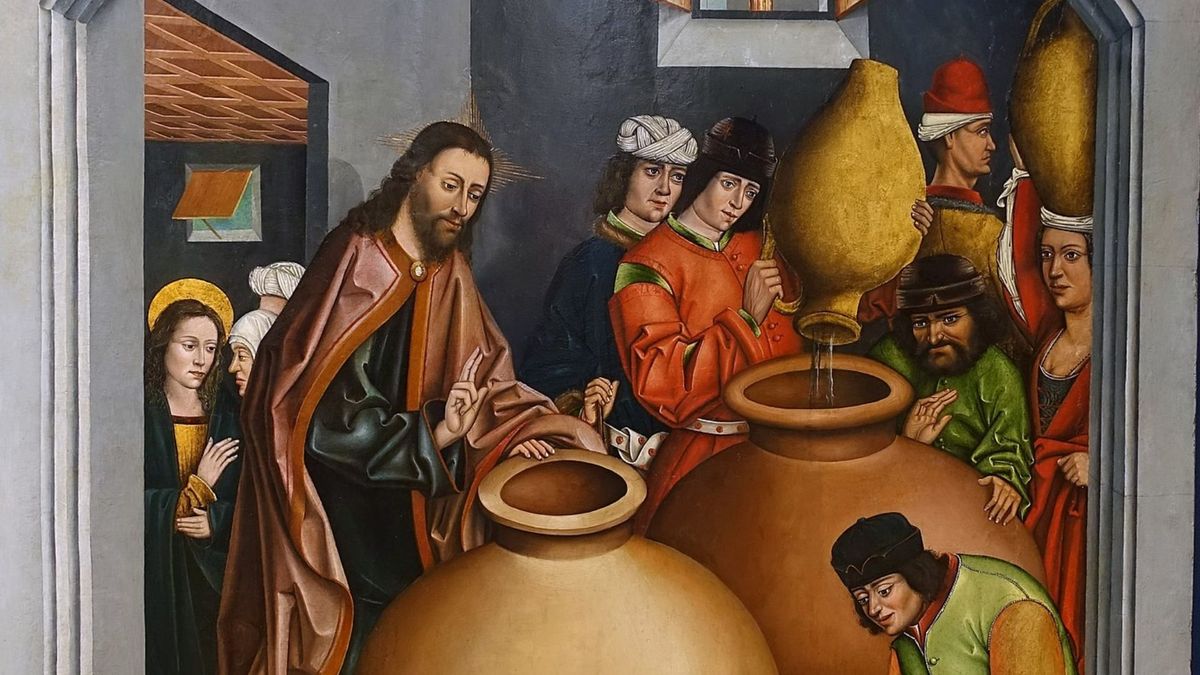
Exodus 17:1-7, 2 Kings 4:1-7, John 2:1-11, Matthew 25:14-30 , Psalm 19:1
John Dryden (1631–1700), an English critic and poet laureate, often skipped classes at Westminster School in London and rarely prepared his lessons. One day, when tasked with writing a poem on the gos...
“Since man cannot live without miracles, he will provide himself with miracles of his own making. He will believe in witchcraft and sorcery, even though he may otherwise be a heretic, an atheist, and ...
Scholars have come to realize that one cannot dismiss Jesus’s miracles simply on modern rationalist grounds, for the oldest traditions show him as a healer.
[Jesus] probably saw his miracles as indications that the new age was at hand. He shared the evangelists’ view that he fulfilled the hopes of the prophets—or at least that these hopes were about to be...
Events that we commonly call miracles are not supernatural, but are part of a spectrum of more-or-less improbable natural events. A miracle, in other words, if it occurs at all, is a tremendous stroke...
That is, there is no concept of a “natural” world in ancient Near Eastern thinking. The dichotomy between natural and supernatural is a relatively recent one. Deity pervaded the ancient world. Nothin...
Introduction Leaning Toward the Light What does it mean to lean towards the light of Christ? What does it mean to be open to the work of God? For the Pharisee in Jesus’ time, the answer was clear: y...
Christ's miracles were not the suspension of the natural order but the restoration of the natural order. They were a reminder of what once was prior to the fall and a preview of what will eventual...
God is not a prisoner of the laws of nature . . . God, who set the regularities there, can himself feed a new event into the system from outside. Science cannot stop Him from doing that.
Thus, from the standpoint of the gospels, the mighty deeds of Jesus, healings and exorcisms alike, were the product of the power which flowed through him as a holy man. His powers were charismatic, th...
When human reason has exhausted every possibility, the children can go to their Father and receive all they need. ... For only when you have become utterly dependent upon prayer and faith, only when a...
[Jesus’s] healings and exorcisms were an intrinsic part of his proclamation of the kingdom (or rule) of God. The mighty deeds and the proclamation must go together; neither can be understood without t...
1 Kings 17:8-16, Daniel 6:16-23, Matthew 14:25-31, Luke 4:33-36, John 2:1-11 , Psalm 77:14-15
It is impossible to use electric light and the wireless and to avail ourselves of modern medical and surgical discoveries, and at the same time believe in the New Testament world of spirits and miracl...
John 6:1-21, 2 Samuel 11:1-15, Psalm 14:, Ephesians 3:14-21, 2 Kings 4:42-44, Psalm 145:10-18
Ancient Lens What's the historical context? A New Kind of Feast A mountain, a gathering of thousands, and a great feast make for a classic ancient worship scene. Add in the frequency of loca...
John 6:1-21, 2 Samuel 11:1-15, Psalm 14:, Ephesians 3:14-21, 2 Kings 4:42-44, Psalm 145:10-18
Ancient Lens What's the historical context? A New Kind of Feast A mountain, a gathering of thousands, and a great feast make for a classic ancient worship scene. Add in the frequency of loca...
AIM Commentary Introduction Leaning Toward the Light What does it mean to lean towards the light of Christ? What does it mean to be open to the work of God? For the Pharisee in Jesus’ time, the an...
Martin of Tours became a great leader of the monastic movement in the West. In his early life, Martin was conscripted as a soldier in the Roman army. During this time, he became a catechumen (that is,...
Many Israelites Had Leprosy, but Naaman Was Healed As we go from mountains to fresh water, we go from Elijah to Elisha. Despite having a double dose of Elijah’s power and a fraction of his hair, Eli...
My guide must be my reason, and at the thought of miracles my reason is rebellious. Personally, I do not believe that Christ laid claim to doing miracles, or asserted that he had miraculous power . . ...