In the midst of a busy schedule of activities—healing suffering people, casting out devils, responding to impatient disciples, traveling from town to town, and preaching from synagogue to synagogue—we...
Genesis 1:, John 1:1-3, Colossians 1:16-17, Hebrews 1:2-3
The Father created the world by a miracle; it is difficult to express its measure. Letters cannot contain it, letters cannot comprehend it. Jesus created for the hosts of Christendom, with miracles...
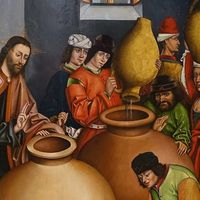
The transformation from water to wine is of course meant by John to signify the effect that Jesus can have, can still have today, on people’s lives. He came, as he says later, that we might have life...
Intertwined Narratives Jesus’ encounters with Jairus’ daughter and the bleeding woman are sandwiched together with the intention that the two narratives would unlock and help to interpret the other....
Jesus’ first sign Uniquely, John refers to Jesus’ miracles as “signs,” and changing the water into wine is recorded as being Jesus’ first sign. The use of the term “sign” is significant in that Joh...
Intertwined Narratives Jesus’ encounters with Jairus’ daughter and the bleeding woman are sandwiched together with the intention that the two narratives would unlock and help to interpret the other....
Ancient Lens What's the historical context? Back to the Wilderness As he has been doing, Jesus calls the people’s minds back to the wilderness during The Exodus and reminds them of the manna ...
Jesus’ first sign Uniquely, John refers to Jesus’ miracles as “signs,” and changing the water into wine is recorded as being Jesus’ first sign. The use of the term “sign” is significant in that Joh...
Ancient Lens What's the historical context? Back to the Wilderness As he has been doing, Jesus calls the people’s minds back to the wilderness during The Exodus and reminds them of the manna ...
R. C. Sproul recounts an unusual healing by Jesus. In Mark 8, when Jesus visits Bethsaida, a blind man is brought to him to be healed. Jesus leads him out of the village, puts saliva on his eyes, and ...
Pastor: In the name of the Father, and of the Son, and of the Holy Spirit. People: Amen. Pastor: Alleluia! Christ is risen! People: He is risen indeed! Alleluia! Pastor: ...
John 6:1-21, 2 Samuel 11:1-15, Psalm 14:, Ephesians 3:14-21, 2 Kings 4:42-44, Psalm 145:10-18
Ancient Lens What's the historical context? A New Kind of Feast A mountain, a gathering of thousands, and a great feast make for a classic ancient worship scene. Add in the frequency of loca...
Thus, from the standpoint of the gospels, the mighty deeds of Jesus, healings and exorcisms alike, were the product of the power which flowed through him as a holy man. His powers were charismatic, th...
John 6:1-21, 2 Samuel 11:1-15, Psalm 14:, Ephesians 3:14-21, 2 Kings 4:42-44, Psalm 145:10-18
Ancient Lens What's the historical context? A New Kind of Feast A mountain, a gathering of thousands, and a great feast make for a classic ancient worship scene. Add in the frequency of loca...
Genesis 18:1–15, Exodus 16:1–36, 2 Kings 4:1–7 , John 2:1–11 , Luke 9:10–17 , Psalm 23:5
In John 2, Jesus creates an abundance of wine during a wedding. There are six jars that hold 20-30 gallons each (that’s about a half barrel each!). So, let’s do the math… 20x6=120 gallons (or ...
Mark 4:35-41, Jonah 1:, Psalm 107:23-32, Matthew 8:23-27, Luke 8:22-25
Peter's Perspective? While this narrative of Jesus calming the storm occurs in Matthew (8:23-27) and Luke (8:22-25), Mark’s account in 4:35-41 is the fullest account of that day. This has led som...
Mark 4:35-41, Jonah 1:, Psalm 107:23-32, Matthew 8:23-27, Luke 8:22-25
Peter's Perspective? While this narrative of Jesus calming the storm occurs in Matthew (8:23-27) and Luke (8:22-25), Mark’s account in 4:35-41 is the fullest account of that day. This has led som...
Mark 4:35-41, Psalm 107:, Jonah 1:, Genesis 1:, Matthew 8:23-27, Luke 8:22-25, Psalm 74:14, Psalm 104:26, Genesis 1:21
Note: This was originally part of a guide for the Fifth Sunday after Pentecost (RCL Year B) , which includes Job 38:1-11 and Mark 4:35-11. I have adapted the discussion of each of these two...
Exodus 17:1-7, 2 Kings 4:1-7, John 2:1-11, Matthew 25:14-30 , Psalm 19:1
John Dryden (1631–1700), an English critic and poet laureate, often skipped classes at Westminster School in London and rarely prepared his lessons. One day, when tasked with writing a poem on the gos...
Pastor: As people redeemed by Christ and made His Bride, let us pray to Him for ourselves and for everyone in need. For this Holy Meal, where You have again given us a tangible reminder that all ...
How Do We Deal With Jesus? Jesus’ own family asked the question. The Pharisees asked it as well. Both groups arrived at slightly different answers, but their aim was essentially the same⸺to shut Jesu...
Mark 4:35-41, Job 38:1-11, Psalm 107:, Jonah 1:, Genesis 1:, Matthew 8:23-27, Luke 8:22-25, Psalm 74:14, Psalm 104:26, Genesis 1:21
A Sopping Wet Week in the Lectionary Today’s readings are thoroughly wet. In Job, God is master of the sea, Psalm 107 concerns mariners in the storm, Paul is a little drier, but still gets shipwrecke...
How Do We Deal With Jesus? Our lectionary passage this week forces us to ask this question. Jesus’ own family asked the question. The Pharisees asked it as well. Both groups arrived at slightly diffe...
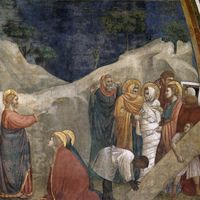
When Lazarus left his charnel-cave, And home to Mary’s house return’d, Was this demanded—if he yearn’d To hear her weeping by his grave? ‘Where wert thou, brother, those four days?’ There lives no ...
Luke 4:21-30, Mark 6:2-3, 1 Kings 17:7-34, 2 Kings 5:
Leaving Home I moved away from my hometown for graduate school when I was just shy of 30. I never went back. When I struck out from home, I lived in cities larger and more diverse than anything I had...
Luke 4:21-30, Mark 6:2-3, 1 Kings 17:7-34, 2 Kings 5:
Preaching Commentary Leaving Home I moved away from my hometown for graduate school when I was just shy of 30. I never went back. When I struck out from home, I lived in cities larger and more dive...
Luke 9:28-43, Matthew 17:1-3, Mark 9:2-13, Luke 9:19, Luke 9:22-27, Exodus 14:19-20, Numbers 9:15-16, Ezekiel 10:, Psalm 18:, Isaiah 4:, Daniel 7:9-14, Exodus 34:29-35, Deuteronomy 18:15-19, 2 Peter 1:16-18, John 1:4-9, John 1:14, Exodus 13:21, Exodus 24:15-18, Exodus 40:34-35, 2 Chronicles 5:13-14, Luke 9:37
The Context Introduction The Transfiguration stands out like, well, a bright light on a dark mountainside in the Gospel of Luke. The customary earthiness of the rest of the gospel falls away as heav...
Luke 9:28-36, (37-43a), Luke 9:28-43, Matthew 17:1-13, Mark 9:2-13, Luke 9:19, Luke 9:22-27, Exodus 14:19-20, Numbers 9:15-16, Ezekiel 10:, Psalm 18:, Isaiah 4:, Daniel 7:9-14, Exodus 34:29-35, Deuteronomy 18:15-19, 2 Peter 1:16-18, John 1:4-9, John 1:14, Revelation 1:12-16, Exodus 13:21, Exodus 24:15-18, Exodus 40:34-35, 2 Chronicles 5:13-14, Luke 9:37
Preaching Commentary The Context Introduction The Transfiguration stands out like, well, a bright light on a dark mountainside in the Gospel of Luke. The customary earthiness of the rest of the go...
Mark 6:30-34, 53-56, Mark 6:6b-13, Mark 6:30, John 1:14, Mark 6:30, Mark 8:29, Mark 6:4, Mark 8:27-28, 1 Kings 19:1-10, 1 Kings 21:17-26, Mark 9:13, Romans 7:18-25, Mark 14:1-12
Context Mark 6 began with Jesus being rejected in his hometown and sending the Twelve on a ‘mission trip.’ At the high point of the disciples’ success, Mark interrupts his narrative to relay the deat...
Matthew 14:19-20, John 9:6-7, Mark 2:3-4, John 13:4-5, Mark 1:40-42, Luke 2:7, John 1:14
The gospels are earthy. People are close to the earth. They travel here and there by foot. They eat the live heads of grain growing from the soil as they walk through the fields. They get grubby and h...