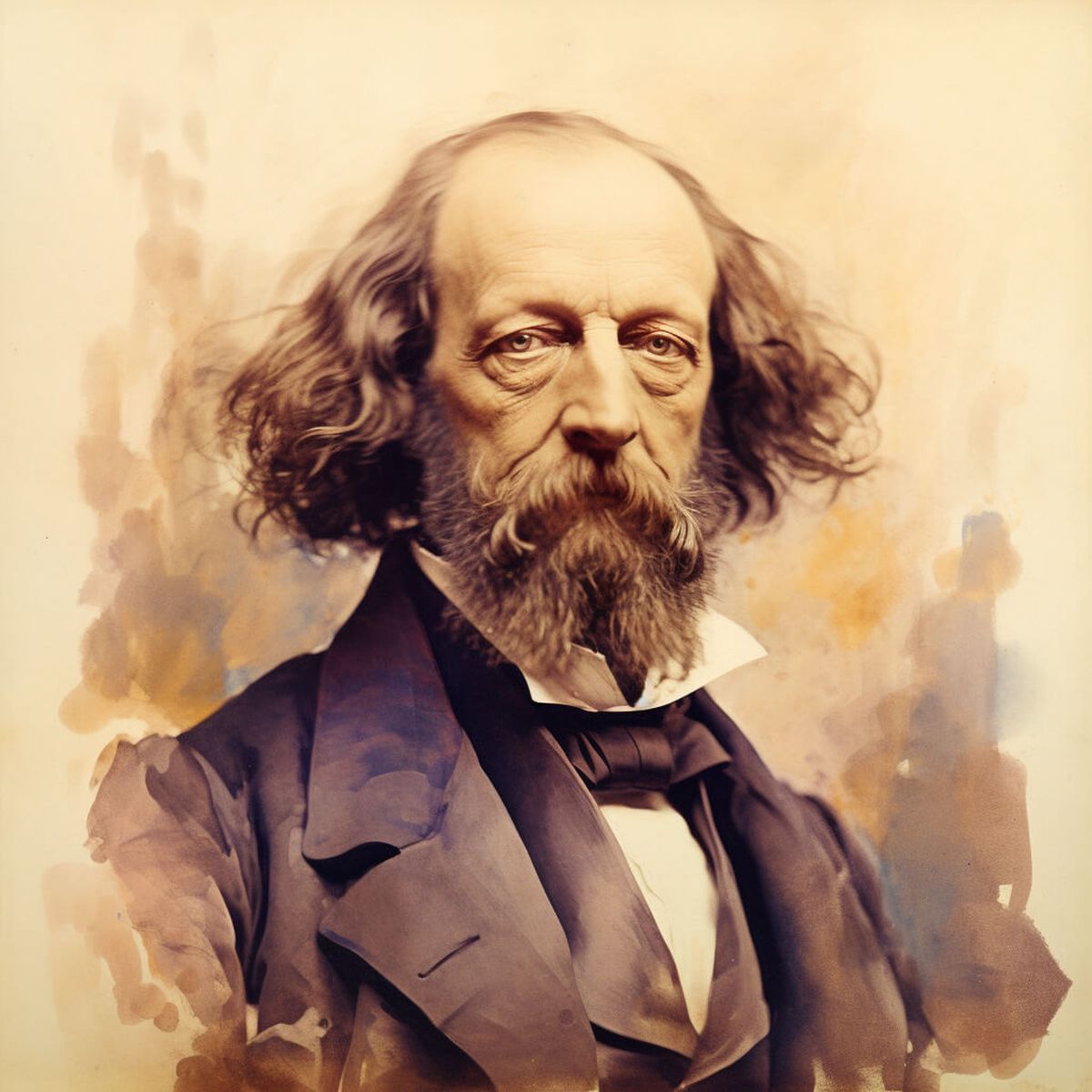
Alfred Lord Tennyson
Alfred, Lord Tennyson (1809–1892) was one of the most influential poets of the Victorian era and is regarded as one of the greatest British poets of all time. Born in Lincolnshire, England, Tennyson showed an early talent for writing poetry, publishing his first collection at the age of 17. He went on to become Poet Laureate of the United Kingdom in 1850, a position he held until his death, and his poetry came to define much of the Victorian period's literary landscape.
Tennyson’s works are known for their lyrical beauty, emotional depth, and exploration of themes such as nature, love, loss, faith, and the human condition. His poems often reflect the tensions of the time, addressing the rapid changes in society, including the impact of industrialization and scientific discoveries, as well as the challenges of maintaining faith in an increasingly secular world.
Among his most famous works are In Memoriam, an elegy written in memory of his close friend Arthur Henry Hallam, who died suddenly in 1833. The poem is widely regarded as a masterpiece of Victorian poetry, exploring themes of grief, faith, and the quest for meaning in life. Other notable works include The Charge of the Light Brigade, a dramatic and stirring account of the ill-fated military charge during the Crimean War, and Idylls of the King, an epic retelling of the legend of King Arthur and the Knights of the Round Table.
Tennyson’s ability to blend emotional depth with formal poetic craft earned him widespread recognition during his lifetime. His influence extended beyond poetry, shaping Victorian culture and the development of English literature for generations. Alfred Lord Tennyson’s legacy continues to endure as a key figure in the canon of English poetry.