James 3:1-12, James 1:17, Jeremiah 17:9, Proverbs 18:21
Preaching Commentary The Dangers of Our Words No matter how much we might wish it weren’t the case, the perception others have of us is directly connected to the words (and actions) we use througho...
James 3:1-12, James 1:17, Jeremiah 17:9, Proverbs 18:21
The Dangers of Our Words No matter how much we might wish it weren’t the case, the perception others have of us is directly connected to the words (and actions) we use throughout our lives. Most of u...
1 Corinthians 1:27, Romans 12:15, Luke 4:18-19, Psalm 34:18, James 1:27
God bless us with discomfort at easy answers, half-truths and superficial relationships, so that we may live deep within our hearts. God bless us with righteous anger at injustice, oppression, and exp...
1 Kings 19:11-13 , Exodus 33:12-14, Isaiah 30:15 , Mark 1:35-38, Luke 5:15-16, Psalm 46:10
Jesus’ actions, in and of themselves, often make no sense unless we see them as responses to some hidden invitation—an invitation received from time spent alone with his Father. When Jesus was interru...
Jesus, the Promised Shepherd, you who are always making a way for your people to rest when other shepherds demand performance and success: reveal the green pastures where we can heal...
Genesis 1:26-28, Exodus 24:3-8, Matthew 26:26-29, John 15:1-17, Psalm 22:
And they watched Him now, And they wondered. What could Jesus mean? This bread was His body? This wine was His blood? And they didn’t yet know, But one day they would. That before He...
I preached my first sermon at National Community Church on January 14, 1996. The only thing I remember about that message is my opening illustration. I can’t remember the original source, but I think ...
Matthew 6:32; 11:28-30, Luke 12:7, Hebrews 4:15- 16, 1 Peter 5:7
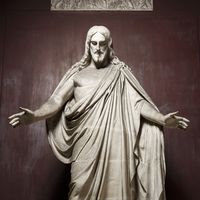
When Albert Berte Thorwaldsen, the renowned Dutch sculptor, finished the clay model of his statue of Christ with arms raised in blessing, he left it to harden overnight in his studio. The next morni...
Looking through the lens of Holy Scripture, human work must be seen first and foremost as value contribution, not economic compensation. We can have a flourishing, fruitful life even if we don’t get a...
Isaiah 9:6-7, Philippians 2:9-11, Mark 1:16-20, Matthew 11:28-30, John 10:10
H.G. Wells, himself an atheist, makes this point about the nature of greatness as it relates to Jesus: A historian like myself, who doesn’t even call himself a Christian, finds the picture centering...
As we become more intentional about living according to our deepest desires, it becomes increasingly important to notice the effects of technology on our mind, our soul and our relationships. The ...
Christ as incarnate Word does not ‘exercise an influence’ on finite agents like that of ordinary finite causal agencies, nor does he introduce extra causal factors into the finite world or simply init...
The United States retains a basic respect for religion though it may be following European trends: surveys show a steady rise in the “nones” (now one-third of those under the age of thirty), that is, ...
“Whatever you do, work at it with all your heart,” said the apostle Paul, “as working for the Lord, not for human masters.” (Colossians 3:23) ...[H]ow you do anything is how you’ll do everything. Dr. ...
We should also note that while Jesus had the biggest work assignment in human history-he had been invited to "save the world"-he never spent weeks writing a vision statement with steps for s...
Sometimes what seems like a failure is actually the seed of God’s work. As Mark Batterson tells the story, it started with David and Svea Flood. Sent to the Congo by a church in Sweden, they helped es...
Jeremiah 29:7 , Isaiah 58:6-7, Micah 6:8, Matthew 5:14-16, James 2:14-17, Psalm 82:3-4
Robert Lewis so pointedly asks in his book The Church of Irresistible Influence , if your church closed its doors today, would anyone but its own members notice?
Scripture is filled with examples of men and women whom God used late in life, often with great impact - men and women who refused to use old age as an excuse to ignore what God wanted them to do.
Matthew 6:19-21, Matthew 16:24-26, Mark 10:29-30, Romans 12:1-2, Matthew 10:38-42, Matthew 25:14-40, Acts 1:1-11, Acts 2:32-47, Acts 9:1-19, Acts 13:42-52, Acts 28:28-31
Nearly 200 years ago there were two Scottish brothers named John and David Livingstone. John had set his mind on making money and becoming wealthy, and he did. But under his name in an old edition of ...
In one of his letters, the philosopher and psychologist William James shares a conviction regarding his focus not on big, grand things, but with the small “almost invisible” decisions: I am done wit...
Genesis 16:, 2 Samuel 9:, Jonah 3:4 , Luke 7:36-50, Matthew 9:9-13 , Psalm 146:7-9
In his book Breaking the Rules , Fil Anderson talks about the scandalous reputation of Jesus: He breaks all social etiquette in relating to people. He acknowledges no barriers or human divisions....
Psalm 127:1–2, Matthew 25:14–30, Mark 6:3, Proverbs 22:29, 1 Kings 6:7, Exodus 31:1–5
Understanding Jesus’ economic interest and competency should not be surprising when we remember that Jesus spent the majority of his life on earth learning carpentry and running a small business. In J...