Romans 15:4, Acts 8:26-40, Luke 24:13-35, Hebrews 4:12, Psalm 119:105, 2 Peter 1:20-21, 2 Timothy 3:16-17
Eternal God, your Spirit inspired those who wrote the Bible and enlightens us to hear your Word fresh each day. Help us to rely always on your promises in Scripture. In Jesus’ name we pray. Amen.
Lord our God, we pray these same words written in Ephesians may true of us as we come to your Word today, we pray that you might give us a spirit of wisdom and revelation as we come to know you, so th...
Holy and gracious God, may your Holy Spirit give us a spirit of wisdom and revelation, so that, with the eyes of our hearts enlightened, we may know the hope to which Christ has called us, the riches ...
Leader: "The law of the Lord is perfect, reviving the soul;" People: "the precepts of the Lord are right, rejoicing the heart;" Leader: "the commandment of the Lord is pur...
God of all creation, the heavens declare your glory and the firmament proclaims your handiwork. Enlighten our eyes and make our hearts to rejoice in you as we worship you today. And may everything we ...
Leader: The law of the Lord is perfect, reviving the soul; the testimony of the Lord is sure, making wise the simple; People: The precepts of the Lord are right, rejoicing the heart; the commandment...
Leader: The law of the Lord is perfect, reviving the soul; the testimony of the Lord is sure, making wise the simple; the precepts of the Lord are right, rejoicing the heart; People: The commandment...
John 14:16-17, Matthew 26:36-46, Psalm 32:8, 2 Corinthians 12:7-10, Acts 9:1-19, 1 Corinthians 2:2, 1 Timothy 1:17
Lord, may your glorious Majesty surround us, the blessed Trinity protect us, and the eternal Godhead preserves us. Your unlimited mercy support us; your loving kindness encompass us; your favor c...
Matthew 5:14-16 , 1 John 4:18-19 , Acts 4:29-31 , Romans 12:9-11 , 2 Corinthians 3:12, Esther 4:14, James 2:14-17
Gracious God, you have called us to be light in a dark world, and we have remained hidden. Thinking of ourselves first, we have withheld courage and compassion. Merciful God, hear our confessions and ...
One key difference between much of the early church vs. the church of today (at least in the West) was the belief in, and regular experience of, miracles. As Joel Green, the noted professor and writer...
1 Samuel 16:7, Proverbs 11:3, Matthew 5:8 , Philippians 4:8, Psalm 15:1-2
Bernard de Fontenelle (1657–1757), was a French author and philosopher, and was once engaged in conversation with the “Sun King”, Louis XIV. Louis began expressing his skepticism about the existence...
Ancient lens? What can we learn from the historical context? Context and Tone Paul was writing from prison to a Christian community that he didn’t establish. Rather, it was his co-laborer, Epaphr...
Introduction Easter stands out from every other day. It’s time to celebrate and to reflect: how will you “preach the resurrection” and proclaim the new life we have in Jesus Christ? How do we invite ...
Romans 8:6-11, Psalm 130:, John 11:1-41, Ezekiel 37:1-14
Ancient Lens When Paul writes to the church about struggles between body and spirit, he is not the first to join this discussion. Even if you limit the conversation to just the Mediterranean world,...
Ancient Lens What can we learn from the historical context? Body versus Spirit When Paul writes to the church in Rome about struggles between body and spirit, he is not the first to join this di...
In 1773, Denis Diderot, the French philosopher, visited the court of St. Petersburg, invited by Catherine the Great. Known for his atheistic and materialistic views, he shared these ideas with the cou...
In the land whose founding metaphor was the mutuality of John Winthrop’s seventeenth-century vision of a “city set on a hill,” we live more and more in estranged, hostile, exclusive enclaves, linked o...
Thomas Aquinas, the famous medieval theologian, created one of the greatest intellectual achievements of Western civilization in his Summa Theologica. It’s a massive work: thirty-eight treatises, thre...
Matthew 5:18, John 1:1-14, Colossians 2:9, 1 Corinthians 15:20-22, Philippians 2:9-11, 2 Timothy 3:16-17, Hebrews 4:12, 2 Peter 1:20-21
The great American statesman and president Thomas Jefferson was a man of science who did not believe in miracles but really liked Jesus. Unfortunately, right next to Jesus’ ethical teachings are stori...
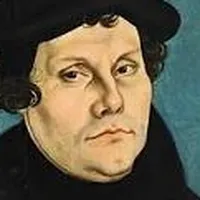
Noteworthy in this regard is the contribution of the Reformers, particularly Martin Luther, though John Calvin’s contribution is also very significant. Both called for a spirituality in the world that...
Have you ever heard of the Greatest Books of the Western World collection? Published by Encyclopedia Britannica in 1954, this comprehensive series was edited by Robert Hutchins and Mortimer J. A...
Many have heard of the polymath and famous atheist Bertrand Russell (1872-1970), whose career as a public intellectual touched on a variety of disciplines, including philosophy (he is considered one o...
In his June 1749 letter to Voltaire, the French Atheist Denis Diderot famously ruled that is is “very important not to mistake the hemlock for parsley; but to believe or not believe in God, is not imp...
What we need to realize, however, is that there is no such thing as autonomous or “self-grounding” knowledge. All systems of interpretation and all claims to true knowledge are ultimately grounded out...
Isaiah 55:8-9, Jonah 4:1-11, Numbers 22:21-34, Matthew 9:10-13, Mark 2:23-28, Psalm 19:12-14
It takes a great deal of freedom and love to be therapeutic with a group. Many years ago when Emil Brunner, the great Swiss theologian, was lecturing in this country, it was reported that when he prea...
People try to persuade us that the objections against Christianity spring from doubt. The objections against Christianity spring from insubordination, the dislike of obedience, rebellion against all a...
There’s a quote by H. Richard Niebuhr that I believe is absolutely true. “The great Christian revolutions,” he argued, “come not by the discovery of something that was not known before. They happen w...
We live in a culture that has, for centuries now, cultivated the idea that the skeptical person is always smarter than one who believes. You can almost be as stupid as a cabbage as long as you doubt.