Eternal God, lead me now out of the familiar setting of my doubts and fears, beyond my pride and my need to be secure into a strange and graceful ease with my true proportions and with yours; ...
Exodus 2:1–10, 1 Samuel 16:11–13, Jeremiah 1:4–7, Luke 2:7, 40, 1 Corinthians 1:26–29, Psalm 139:13–16
British author Leonard Ravenhill told the story of a group of tourists visiting a picturesque village where they saw an old man sitting by a fence. In a rather patronizing way, one of the visitors ask...
1 Kings 19:11-13 , Exodus 33:12-23, Jeremiah 1:4-10 , Luke 10:38-42, John 1:1-14 , Psalm 139:1-18
Contemplation is also the response to a call: a call from Him Who has no voice, and yet Who speaks in everything that is, and Who, most of all, speaks in the depths of our own being: for we ourselves ...
Psalm 139:13-16, John 16:33, Ephesians 4:3-6, Isaiah 40:29-31, 2 Corinthians 12:9, Jeremiah 1:4-10, Matthew 5:9
Faithful God, our Father, Lord and Counselor: By your grace you know our names before we are even born. By your grace you call us your own sons and daughters. By your grace you give us an eternal purp...
Jeremiah 1:4-10, Isaiah 6:null, Acts 1:8, 1 Peter 4:10-12, Mark 16:15, Galatians 1:15, Ephesians 4:12
Calling People often give me weird looks when I talk about being “called” by God. A pastor can be “called” to devote their working time to shepherding a church. A parent can be “called” to invest in ...
Jeremiah 1:4-10, Isaiah 6:null, Acts 1:8, 1 Peter 4:10-12, Mark 16:15, Galatians 1:15, Ephesians 4:12
Preaching Commentary Calling People often give me weird looks when I talk about being “called” by God. A pastor can be “called” to devote their working time to shepherding a church. A parent can be...
Hebrews 11:39-40, Jeremiah 1:5, Philippians 3:14, Galatians 6:9, Matthew 25:21
In his landmark work, Habits of the Heart, the sociologist Robert Bellah describes thee distinct orientations people take with respect to their work. The first orientation is to see your work as a job...
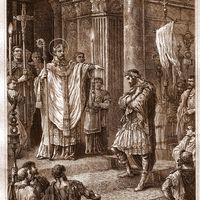
Serving at the time as provincial governor of Northern Italy, St. Ambrose was called in this capacity in 374 to the cathedral in Milan, where a riot was threatening between two rival factions of Chris...