Matthew 5:20, Romans 14:17, Luke 17:20-21, Matthew 28:18-20, Philippians 2:14-15
T. S. Eliot once described the current human endeavor as that of finding a system of order so perfect that we will not have to be good. The way of Jesus tells us, by contrast, that any number of syste...
Matthew 13:, Philippians 3:1, 1 Samuel 3:1–10 , Exodus 7:12, Deuteronomy 6:4–9 , Psalm 136:
In the second century before Christ the great rival to Roman power in the Mediterranean world was Carthage, the Phoenician city-state located on the north African coast. It had been founded in 822 B.C...
A friend of mine, lecturing in a theological college in Kenya, introduced his students to “The Quest for the Historical Jesus.” This, he said, was a movement of thought and scholarship that in its ear...
Philippians 2:6-8, John 1:10-11, Isaiah 53:3-4, Matthew 11:19, Mark 15:34, Isaiah 53:12, Luke 15:20-24, Revelation 7:13-14
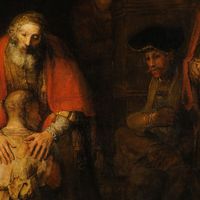
In this excerpt, the French monastic leader Frere Pierre Marie, shares an interpretation of Jesus as the true prodigal son—bringing all of us home with him: He, who is born not from human stock, or ...
John 1:18, John 6:46, Philippians 2:5-8, 1 Timothy 3:16, John 14:9, John 1:1-5, John 10:30, John 12:44-46, Colossians 1:15-20, Hebrews 1:
There is thus no God behind the back of Jesus Christ but only this God whose face we see in the face of the Lord Jesus. There is no deus absconditus , no dark inscrutable God, no arbitrary Deity ...
Isaiah 9:6-7, Philippians 2:9-11, Mark 1:16-20, Matthew 11:28-30, John 10:10
H.G. Wells, himself an atheist, makes this point about the nature of greatness as it relates to Jesus: A historian like myself, who doesn’t even call himself a Christian, finds the picture centering...