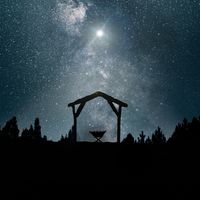
John 1:14, Matthew 9:36, Luke 19:10, John 15:15, Mark 10:45, Philippians 2:5-7, 1 John 4:9-10
The ways Jesus goes about loving and saving the world are personal: nothing disembodied, nothing abstract, nothing impersonal. Incarnate, flesh and blood, relational, particular and local. The ways em...
Every creator, from a child with Play-Doh to Michelangelo, learns that creation involves a kind of self-limiting. You produce something that did not exist before, yes, but only by ruling out other opt...
Isaiah 43:19, Song of Solomon 4:7, Philippians 4:8, 2 Corinthians 4:16, Ecclesiastes 3:11, Psalm 147:3, Isaiah 61:3
If the too obvious, too straight branches of Truth and Good are crushed or amputated and cannot reach the light—yet perhaps the . . . unexpected branches of Beauty will make their way through and soar...
Philippians 2:5-8, John 1:14, 1 Corinthians 10:13, 1 Peter 2:24, Romans 8:3, Matthew 20:28
What self denial! What self abasement! What self emptying! He, whom no infinitudes can hold, is contained within infant’s age, and infant’s form. Can it be, that the great ‘I AM THAT I AM’ shrinks int...
I would not give a fig for the simplicity this side of complexity, but I would give my life for the simplicity on the other side of complexity. On the near side of complexity is simplistic; on the far...
C.S. Lewis on the Incarnation: We catch sight of a new key principle—the power of the Higher, just in so far as it is truly Higher, to come down, the power of the greater to include the less. . . . ...
2 Corinthians 3:18, Romans 8:29, Philippians 2:12-13, James 1:22-25, Colossians 3:10, Ephesians 4:22-24, 1 Peter 2:2-3, Hebrews 12:11
There was once a sculptor who worked hard with hammer and chisel on a large block of marble. A little child who was watching him saw nothing more than large and small pieces of stone falling away left...
1 Corinthians 12:8-12, John 1:, John 17:18, Philippians 2:6-11, 1 John 1:7, Romans 8:1, Colossians 1:13-14
The Cave One of the most famous passages in Plato's Republic is his "Allegory of the Cave," which is found at the beginning of book seven . Socrates imagines the human condition al...
John 6:53-56, Matthew 26:26-28, Colossians 1:19-20, Hebrews 2:14-15, 1 Corinthians 11:24-25, Philippians 2:6-8
The Incarnation [and I might add Communion] remains a scandal to anyone who wants religion to be a purely spiritual matter, an etherized, bloodless bliss.
Philippians 2:null, 1 Corinthians 15:22, Romans 6:4, John 12:24, Luke 24:5-6, Matthew 20:28
In the Christian story God descends to reascend. He comes down; down from the heights of absolute being into time and space, down into humanity; down further still, if embryologists are right, to reca...
1 Timothy 6:6-8, Proverbs 15:16, Matthew 6:19-21, Philippians 4:11-13, John 6:
The story is told of Socrates walking through the market in Athens, with its groaning abundance of options, and saying to himself, “Who would have thought that there could be so many things that I can...
Gracious God, sometimes I am so caught up in my failures, in all the ways I am not like you, that I neglect the deeper truth, the earlier truth of Genesis 1. You have made me, as a human being, in you...
A simple refusal motivates my argument: refusal to believe that the present time and place, and the people who are here with us, are somehow not enough. Platforms such as Facebook and Instagram act li...
John 1:14, Philippians 2:6-8, Luke 2:6-7, Isaiah 7:14, Hebrews 2:14-17, Colossians 1:15-17
Imagine for a moment becoming a baby again. Imagine giving up language and muscle coordination. Imagine losing the ability to eat solid food and control your bladder. God as a fetus! Or imagine yourse...
Matthew 5:48, 1 John 3:2-3, Galatians 5:16-17, Philippians 3:13-14, Colossians 3:1-2, Ephesians 4:22-24
The scholastics used to say: Homo non proprie humanus sed superhumanus est —which means that to be properly human, you must go beyond the merely human.
John 1:1-17, 1 John 2:3-6, Matthew 6:6-8, Philippians 1:6, John 15:1-10
Abide is an old English word for “remain,” “stay steady” and “keep your position.” What it means to abide in Christ—that is, always to be resting on him, anchored to him, fixed in him, drawing from hi...
Philippians 2:6-7, Galatians 2:20, John 10:30, Ephesians 5:21, Colossians 1:19-20, John 15:13, Matthew 20:28
There are two wonderful Greek words that the early church theologians used to describe the Trinity: kenōsis and perichōrēsis. Kenosis is the act of self-giving for the good of another. It is found in ...
Here is the path to the higher life: down, lower down! Just as water always seeks and fills the lowest place, so the moment God finds men abased and empty, His glory and power flow in to exalt and to ...
Ephesians 5:1-2, Philippians 2:12-13, 2 Corinthians 3:18, 1 Corinthians 11:1, 1 Peter 2:21-23, John 13:15
My father was an artist. He had a black leather sketchbook filled with cartoons and doodles. As a boy I was enthralled by his drawings and wondered how I could learn to draw like him. I began by traci...
During a retreat at the Taizé compound in France, a young American shared a remarkable discovery. He said: “Back home, surrounded by all my possessions, I often feel uncertain about many things. Here,...
Psalm 19:1, Genesis 1:2, John 4:1-26, Philippians 4:8, Genesis 1:27
You can’t, except in the lowest animal sense, be in love with a girl if you know (and keep on remembering) that all the beauties both of her person and of her character are a momentary and accidental ...



![[I]f we chose to project the human](https://images.unsplash.com/photo-1571984269640-474565658a7f?ixid=M3w1NzU0OTZ8MHwxfHNlYXJjaHwxM3x8aHVtYW4lMjB8ZW58MHwwfHx8MTczODMzNzAwMnww&ixlib=rb-4.0.3&q=80&auto=compress&fit=crop&w=200&h=200)